
.webp)
TL;DR:
- Elite cosmetic dentistry in Marbella combines advanced technology with human artistic judgment to produce natural, individualized smiles. Skilled practitioners focus on subtle details like shade, contour, and tissue preservation, ensuring results that are both beautiful and harmonious with a patient’s face. Digital workflows enhance precision, but true artistry lies in the finishing, meticulous layering, and bespoke adjustments that create truly exceptional smiles.
The finest cosmetic dentistry in Marbella is not simply a matter of owning the latest scanner or milling machine. Technology provides the foundation, but it is human artistic judgement that determines whether a finished smile looks genuinely natural or unsettlingly uniform. As dental artistry bridges precision technology and human skill, the clinics that attract the world’s most discerning patients are those where the dentist functions as both scientist and visual artist. This article explains what dental artistry truly means, how it is applied in advanced cosmetic practice, and why it is the single most important factor in achieving a result that reflects your identity rather than simply improving your teeth.
Table of Contents
- What sets dental artistry apart in modern cosmetic dentistry
- Techniques and technologies that shape elite dental artistry
- Expert nuances: the subtle art that elevates results
- Navigating challenges and limitations for bespoke outcomes
- Why artistry, not just technology, creates truly elite smiles
- Experience elite dental artistry in Marbella
- Frequently asked questions
Key Takeaways
| Point | Details |
|---|---|
| True artistry is essential | Elite smile transformations rely on artistic skill for natural, bespoke results. |
| Digital planning matters | Modern techniques like digital mock-ups ensure predictably beautiful outcomes. |
| Subtle details last longer | Nuanced expert techniques improve the longevity and authenticity of cosmetic work. |
| Personalised solutions win | Leading clinicians tailor every restoration to the individual, not just the procedure. |
| Not all challenges are equal | Complex cases require advanced artistry to overcome limitations and deliver results. |
What sets dental artistry apart in modern cosmetic dentistry
Most people assume that a premium price tag in cosmetic dentistry buys superior technology. In reality, many clinics along the Costa del Sol share access to the same digital scanners, ceramics, and bonding resins. What separates an extraordinary result from a competent one is the practitioner’s ability to perceive, interpret, and execute nuance. Evidence-based dental aesthetics consistently confirm that shade selection, contour, and surface characterisation are the variables most likely to determine whether a restoration is detectable by others.
“Dental artistry bridges precision technology and human skill in cosmetic dentistry, essential for natural-looking aesthetic enhancements. Without artistic judgement, even the most accurate digital workflow can produce results that appear over-engineered or artificial.”
Teeth are among the most reflective surfaces on the face. A millimetre of excess length, or a slightly over-brightened shade, can shift the entire emotional message of a smile. Elite cosmetic dentists read a patient’s facial proportions, skin tone, eye colour, and personality before they reach for any instrument. The goal is always for the smile to follow the face, not fight it.
Here is what genuine dental artistry addresses that a purely technical approach misses:
- Shade complexity: Natural teeth are never a single colour. They are translucent at the incisal edge, more opaque in the body, and subtly chromatic at the cervical margin. Skilled layering recreates this.
- Surface texture: A polished, perfectly smooth surface reflects light in a way real enamel never does. Controlled micro-texturing returns vitality to a restoration.
- Papilla preservation: Ensuring the soft tissue between teeth fills the embrasure space prevents the “black triangles” that betray the presence of restorations.
- Margin invisibility: When a restoration’s margin is finished with care, it becomes biologically stable and visually undetectable.
- Emotional harmony: The contour and length of the central incisors communicate character. Rounder forms read as softer; squared forms as stronger. The artistic dentist calibrates this to the patient’s aspirational identity.
Reviewing before and after smile transformations from high-level clinics reveals one consistent theme: the best results are the ones you cannot immediately identify as dental work. That invisibility is not accidental. It is the direct product of artistry. Equally, maintaining a radiant smile at home reinforces what the clinician achieves in the chair, making the partnership between patient and practitioner central to long-term success.
Techniques and technologies that shape elite dental artistry
Advanced technology and artistic skill are not in competition. They are partners. The role of technology in elite cosmetic dentistry is to remove guesswork, reduce irreversible steps, and give the artist a precise canvas. Digital smile design, CAD/CAM, and intraoral scanning have transformed what is achievable, shortening timelines and improving accuracy considerably.
The following comparison illustrates why the digital workflow is now the standard of care in ambitious aesthetic cases:
| Feature | Traditional workflow | Digital workflow |
|---|---|---|
| Impression accuracy | Variable, prone to distortion | Sub-50 micron intraoral scan precision |
| Treatment planning | Manual wax-up on plaster model | 3D digital mock-up with instant iteration |
| Patient preview | Limited, static photos | Real-time digital visualisation |
| Chair time | Multiple appointments | Reduced through pre-milled restorations |
| Communication with lab | Physical impressions via courier | Instant digital file transfer |
| Revision ease | Labour-intensive remodelling | Software-based adjustments in minutes |
The advanced dental technology available at leading Marbella clinics means patients can see a working simulation of their new smile before a single tooth is prepared. This removes anxiety and creates an agreement between patient and clinician about the expected outcome.
The steps in a digitally guided aesthetic case typically follow this sequence:
- Facial and photographic analysis: Full-face, profile, and close-up images calibrated to proportion grids.
- Intraoral scanning: A detailed 3D record of existing dentition, soft tissue, and bite.
- Digital Smile Design: Overlay of the digital mock-up onto facial photography, aligning tooth proportions with facial midline, lip line, and gingival contour.
- Physical mock-up trial: Temporary resin placed intraorally for the patient to wear, speak with, and evaluate in natural light before any preparation.
- Minimally invasive preparation: Using the mock-up as a guide to remove only what is necessary, preserving natural tooth structure wherever possible.
- Artisan fabrication: Master ceramists layer pressed or cut-back ceramic to match the agreed design, with the dentist providing bespoke shade instructions.
- Finishing and bonding: Final marginal refinement, polishing, and adhesive luting under magnification.
Pro Tip: Always prioritise digital mock-ups for complex aesthetic cases. A physical mock-up worn for even 48 hours reveals phonetic issues, proportion concerns, and shade preferences that no digital render can fully predict. This step avoids irreversible tissue removal based on assumptions.
The smile makeover process at its highest level is iterative and collaborative. Viewing the Marbella smile makeover portfolio at R&H Dental demonstrates how this workflow produces results that are consistent, individualised, and genuinely remarkable. Staying aware of the future of oral care technology also helps patients understand how home-care tools are evolving to support complex restorations over time.
Expert nuances: the subtle art that elevates results
If digital planning is the architecture of a great smile, then finishing technique is the craftsmanship. This is where the majority of aesthetic dentists reach their ceiling. The difference between a result that photographs beautifully and one that looks natural under every lighting condition comes down to a series of micro-decisions made in the final stages of treatment.
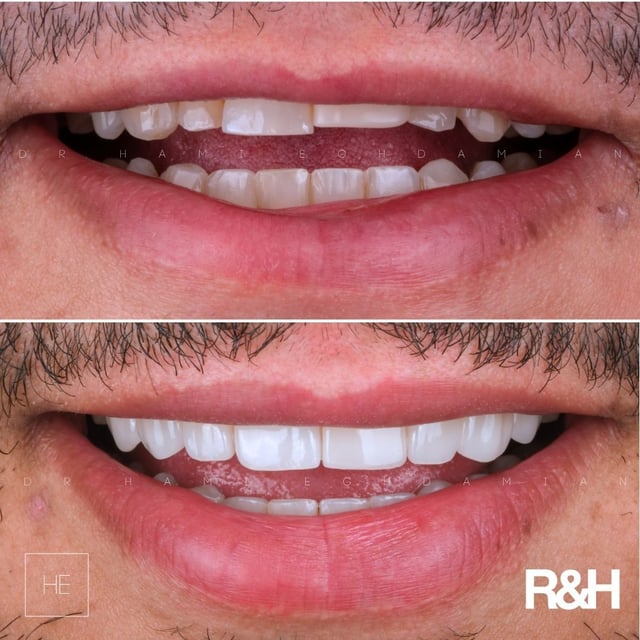
One of the most clinically significant is papilla management. Research confirms that interproximal contact placed 5mm from the bone crest maintains the papilla in over 95% of cases, while a 6mm distance sees the papilla present only 50% of the time. This single anatomical consideration determines whether the soft tissue frames a restoration beautifully or creates unsightly dark triangles between teeth. Elite cosmetic dentists plan for this from the outset, adjusting crown length, contact point, and embrasure form accordingly.
Surface finishing is equally decisive. Composites finished at low RPM with polishing sequences preserve marginal integrity and reduce micro-fracture risk at the restoration edge. High-speed instrumentation near margins is a common cause of early marginal failure in anterior restorations, which is why experienced clinicians use magnification loupes or microscopes during this phase.
Key finishing principles that distinguish artisan-level results include:
- Stratified layering using different opacity and fluorescence for body, enamel, and incisal zones
- Mock-up guided preparation to ensure only the minimum necessary tooth structure is removed
- Conservative tissue training preferred over laser gingivectomy wherever possible, preserving biological width
- Controlled surface characterisation using fine diamond burs and silicone points at low torque
- Translucency calibration at the incisal edge to replicate how natural enamel transmits and scatters light
Composite veneers placed by an expert practitioner show over 85% survival at five years, making them a clinically sound and aesthetically competitive choice when patient selection and occlusion are carefully considered. Veneers longevity and quality depend heavily on the precision of these finishing protocols.
Pro Tip: Ask your dentist explicitly about mock-up guided, minimally invasive protocols. If the answer is that preparation is done by eye or that a mock-up is optional, seek a second opinion. The best aesthetic outcomes are predictable because every step is pre-validated before irreversible treatment begins.
Navigating challenges and limitations for bespoke outcomes
Not every aesthetic case is straightforward. Understanding the real clinical challenges of dental artistry helps patients set informed expectations and ask better questions during consultations.
Severe single-tooth discolouration is one of the most demanding scenarios. Whether caused by trauma, previous root canal treatment, or developmental anomalies, masking severe single-tooth discoloration challenges even indirect ceramic restorations. Opaque layers within pressed ceramics can address moderate intrinsic staining, but the most extreme cases may require internal bleaching, custom opaque build-ups, or in rare circumstances, implant-supported solutions. This is precisely why bespoke planning matters so much.
“Bond strength can be reduced by up to 50% in parafunctional cases or where contamination during bonding is not rigorously controlled. Tailored occlusal protection and protocol adjustments are essential for lasting results in these edge cases.”
Parafunctional habits, particularly nocturnal grinding (bruxism), remain one of the most significant threats to cosmetic restorations. Bite habits affect every restoration’s longevity, from composite bonding to full-coverage ceramics. Patients with bruxism require custom night guards fabricated to the same precision as the restorations themselves, not generic over-the-counter appliances. Hygiene compliance is equally important. Restorations around the gingival margin are only as durable as the tissue health that surrounds them.
Consider these scenarios where tailored solutions are non-negotiable:
- Post-orthodontic aesthetics: Teeth straightened but still showing white spot lesions, erosion, or peg laterals require careful composite layering to restore uniformity without full coverage veneers.
- Gummy smile correction: Combining crown-lengthening with veneers or bonding demands coordination between surgical and aesthetic phases, as the tissue must stabilise before final restorations are placed.
- Implant-supported single tooth: Recreating natural papilla and emergence profile around a single implant in the aesthetic zone is arguably the most technically demanding case in cosmetic dentistry.
For cases involving structural tooth loss or advanced treatment, advanced implant solutions that incorporate soft tissue management and aesthetic planning can bridge the gap between functional restoration and genuinely beautiful outcomes. Understanding tooth whitening options and their limitations is also worthwhile for patients considering whitening as a foundation before cosmetic bonding or veneers.
Why artistry, not just technology, creates truly elite smiles
Here is an observation worth sitting with: most high-end dental clinics in any major city or resort destination now possess broadly comparable technology. Intraoral scanners, CAD/CAM milling units, and digital smile design software are no longer rare. They are, in a sense, commodities. What is not commoditised is the dentist’s eye, their patience with nuance, and their willingness to iterate until a result is genuinely perfect rather than merely good.
Technology enables precision but artistry ensures natural results. This is the fundamental tension that separates adequate cosmetic dentistry from truly exceptional work. A digital workflow executed without aesthetic intelligence simply produces uniform, precisely milled restorations that look exactly like what they are. The artistic layer, the individual assessment of how this particular patient’s face moves, how their personality expresses itself through their smile, and how light interacts with their skin tone, is entirely human.
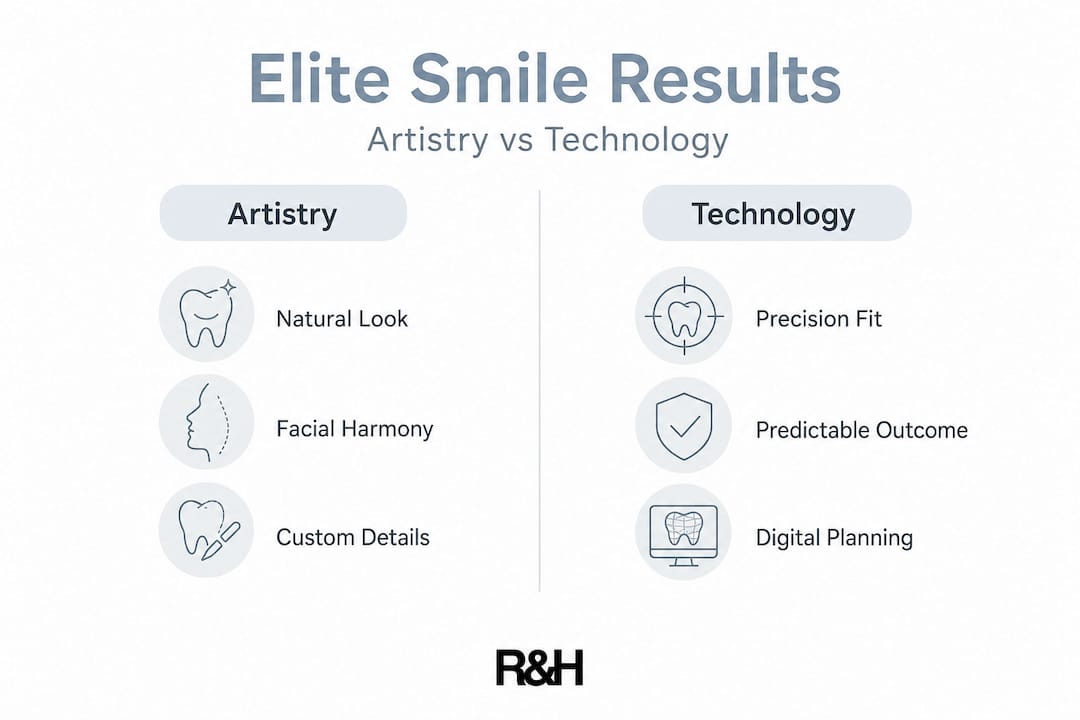
At R&H Dental in Marbella, the philosophy embedded in smile makeovers in Marbella reflects this understanding deeply. The clinic’s approach pairs digital precision with hands-on artisan finishing, ensuring that every case is treated as a unique creative and clinical problem, not a repeatable procedure. For patients who are image-conscious and understand what genuinely bespoke means, this distinction matters enormously.
Our perspective is direct: when selecting a cosmetic dentist in Marbella, look beyond equipment lists. Ask to see a portfolio of anterior aesthetic cases, enquire about the finishing and mock-up protocols used, and seek testimonials from patients whose situations resemble your own. Artistry cannot be inferred from a price list; it must be demonstrated visually and validated by patient experience. The clinics that are genuinely excellent at this level welcome that scrutiny with confidence.
Experience elite dental artistry in Marbella
At R&H Dental, our aesthetic cases begin where most clinics end. From full facial analysis and Digital Smile Design to bespoke ceramics and magnification-guided finishing, every decision is made in service of a result that is natural, long-lasting, and entirely yours.
You can see our smile portfolio to explore the real outcomes achieved for patients from across Europe and beyond, including complex full-arch transformations, single-tooth restorations, and smile makeovers tailored to individual facial aesthetics. When you are ready to take the first step, we invite you to visit our dental clinic in Marbella for a personalised consultation and, where appropriate, a digital mock-up that lets you preview your new smile before any treatment begins. Exceptional artistry deserves to be experienced in person.
Frequently asked questions
What makes dental artistry different from standard cosmetic dentistry?
Dental artistry combines precision technology with human aesthetic skill to create individualised, natural-looking results rather than standardised improvements. It is the practitioner’s visual judgement and finishing technique that separates a genuinely beautiful smile from a merely corrected one.
How do digital mock-ups improve my smile makeover outcome?
Digital mock-ups and guided planning allow you to preview, adjust, and approve your new smile before any irreversible preparation occurs, dramatically reducing the risk of disappointment and ensuring outcomes align precisely with your expectations.
How long do composite veneers really last?
Expertly placed direct composite veneers demonstrate an 85% or greater survival rate at five years, provided that occlusion is stable, maintenance is consistent, and the patient does not have uncorrected parafunctional habits such as grinding.
Can dental artistry address deep stains or a single dark tooth?
Severe single-tooth discolouration presents genuine clinical challenges, and results depend heavily on the cause, degree of staining, and case selection. Advanced artistry, combined with internal bleaching or precision ceramic layering, can produce remarkable improvements in the right cases.
Why is the choice of dentist so important for an aesthetic smile?
Artisan finishing techniques and layering are what produce restorations indistinguishable from natural teeth in anterior zones. The dentist’s technical artistry and aesthetic sensibility are the most significant determinants of whether your result looks genuinely natural or obviously treated.
.png)