TL;DR:
- Knowing how to respond quickly to dental emergencies in Marbella can save your tooth and prevent complications. Preparing essential documents, understanding urgent versus non-urgent conditions, and accessing English-speaking clinics ensure relief with minimal delay. Building a relationship with a trusted dental provider and following aftercare advice promote long-term oral health in the expat community.
A sudden cracked tooth or throbbing abscess can turn a relaxed day on the Costa del Sol into a genuinely frightening experience, especially when you are unfamiliar with local services and unsure how to communicate your pain clearly in Spanish. For expats and international visitors in Marbella, the combination of an unfamiliar healthcare system, language barriers, and the raw urgency of dental pain creates a uniquely stressful situation. This guide cuts through that uncertainty. You will find clear, actionable steps for identifying a genuine emergency, preparing the essentials before one strikes, and accessing reliable, English-speaking dental professionals in Marbella without delay.
Table of Contents
- Types of dental emergencies and first response
- Essential tools and information for emergency preparation
- Step-by-step guide to getting emergency dental treatment in Marbella
- Aftercare and prevention tips for expats
- The expat experience: what most guides miss about dental emergencies in Marbella
- Find trusted dental emergency care in Marbella
- Frequently asked questions
Key Takeaways
| Point | Details |
|---|---|
| Immediate action matters | The first response to dental emergencies is critical for pain relief and preventing complications. |
| Prepare essentials | Having ID, insurance, and emergency contacts ready streamlines urgent visits. |
| English-speaking specialists | Marbella offers English-speaking dental teams for rapid, quality emergency help. |
| Step-by-step process | Follow clear steps for booking, arrival, and communicating to get effective care. |
| Prevention for expats | Regular check-ups and family-friendly clinics keep emergencies at bay during your stay. |
Types of dental emergencies and first response
Not every dental problem demands a sprint to the nearest clinic, but some situations genuinely cannot wait. Understanding the difference is the first act of good self-care, and it could protect both your health and your wallet.
Conditions that require immediate professional attention include:
- A knocked-out tooth (avulsed tooth): time is critical; ideally, you have 30 to 60 minutes to save it
- A severe dental abscess with swelling extending to the jaw, neck, or eye
- Uncontrolled bleeding after an extraction or oral injury
- A cracked or fractured tooth exposing the nerve, causing sharp pain to temperature and pressure
- Significant trauma to the jaw or soft tissue, especially if swelling increases rapidly
Situations that are urgent but can typically wait a few hours:
- A lost filling or crown with mild sensitivity
- A broken veneer or cosmetic restoration without pain
- Moderate toothache that responds to over-the-counter pain relief
Knowing which category you fall into lets you act calmly rather than panic. For immediate pain relief at home, rinsing with warm salt water helps reduce inflammation in the gum tissue. Applying a cold compress against the outside of the cheek in 10 minute intervals reduces swelling effectively. If you have a knocked-out adult tooth, keep it moist by placing it back in the socket if possible, or in a small container of milk, and get to a clinic immediately.
“Dental emergencies do not wait for convenient moments. Knowing how to respond in the first 30 minutes can mean the difference between saving a tooth and losing it permanently.”
Pro Tip: Never place an aspirin tablet directly on the gum next to an aching tooth. It is a widespread myth that this relieves pain, but aspirin is acidic and will chemically burn the delicate gum tissue, creating a painful ulcer on top of your existing problem. Take the tablet orally or use a topical anaesthetic gel designed specifically for oral use.
Round-the-clock emergency dental services are available in Marbella, meaning you do not need to endure hours of suffering waiting for a standard appointment slot. Following proven emergency care steps before you arrive at the clinic helps the clinical team treat you faster and more effectively upon arrival.
Now that you understand how urgent dental emergencies can be, let’s see which tools and preparations can help you act calmly and efficiently.
Essential tools and information for emergency preparation
Preparation is not pessimism; it is practical wisdom. Expats who have everything organised in advance spend less time scrambling when pain strikes at an inconvenient hour. Think of it as keeping a first-aid kit: you hope you never need it, but you are enormously glad it exists when you do.
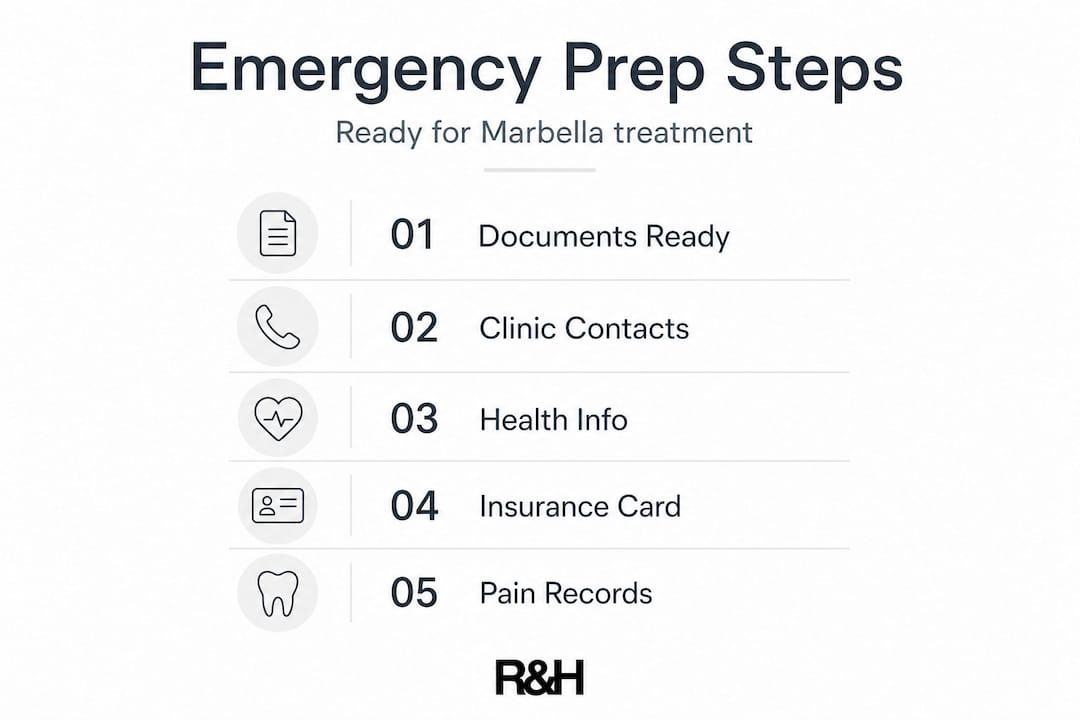
Key documents and items to keep accessible:
- Passport or national identity card: Clinics require valid identification to register you as a patient
- European Health Insurance Card (EHIC) or private insurance documentation: Essential for any insurance reimbursement claims
- Insurance policy number and emergency helpline number: Store these in your phone, not just a physical wallet
- Previous dental X-rays or treatment records: If you have digital copies, keep them in a cloud folder you can access anywhere
- List of current medications and known allergies: This is critical information for safe treatment, especially for local anaesthetic decisions
- A brief written description of your symptoms in Spanish: Even a simple note goes a long way in an urgent situation
Many expats living in Marbella benefit enormously from scheduling routine check-ups and dental hygiene services with a consistent clinic so that your records are already on file when an emergency occurs. This saves precious time during triage and means the treating dentist has clinical context before they even examine you.
| Item | Why you need it | Where to store it |
|---|---|---|
| Identification document | Patient registration | Physical wallet and phone photo |
| Insurance card and policy number | Billing and reimbursement | Phone notes and physical wallet |
| Previous X-rays or dental records | Clinical context for treatment | Cloud storage (Google Drive, iCloud) |
| Medication and allergy list | Safe anaesthetic and drug choices | Phone notes app |
| Emergency clinic address and phone | Contact without internet search | Phone favourites and printed card |
| Dental first-aid kit (mirror, temporary filling material, dental wax) | Manage symptoms before the appointment | Travel bag |
It is also worth understanding the clinic’s guarantee policy before an emergency arises, so you know exactly what standards of care and aftercare protection you are entitled to. High-quality clinics in Marbella serving the expat community operate with transparent policies, so there are no unpleasant billing surprises when you are already in discomfort.
Once you are prepared with the essentials, you are ready to act confidently if an emergency arises. The next step is knowing exactly how to get help fast.
Step-by-step guide to getting emergency dental treatment in Marbella
When pain hits, clarity is everything. The following steps are designed to take you from the moment you realise you have an emergency to sitting in a treatment chair with minimum stress.
-
Assess the severity using the categories outlined in the first section. If there is significant swelling near the throat, jaw, or eye, go directly to the nearest Urgencias (emergency room) first, as a spreading dental infection can become medically dangerous.
-
Call the clinic before you travel. Phoning ahead, even five minutes before you arrive, allows the reception team to prepare for your case, potentially prioritise your triage, and give you specific instructions relevant to your condition.
-
Use clear English phrases such as: “I have severe tooth pain and swelling”, “I have knocked out a tooth”, or “I have an abscess.” A reputable clinic with 24/7 dental emergency services will have English-speaking staff available to assist you immediately.
-
Bring everything prepared in your emergency folder (see the previous section). This speeds up registration considerably, which matters when you are in pain.
-
On arrival, communicate openly about your pain level using a simple 1-to-10 scale. Describe when the pain started, what makes it worse, and any medication you have already taken.
-
Request digital X-rays if not immediately offered. Modern digital radiography reduces radiation exposure and gives the dentist an immediate, high-resolution view of the problem, allowing faster and more accurate diagnosis.
-
Confirm the treatment plan and cost before any procedure begins. Reputable clinics are transparent about pricing, and you should never feel pressured to make an immediate decision on complex, elective work during an emergency visit.
| Method | Typical waiting time | Best for |
|---|---|---|
| Pre-booked same-day appointment | 30 to 90 minutes | Urgent but not life-threatening pain |
| Walk-in emergency visit | 1 to 3 hours depending on clinic load | Immediate severe pain or trauma |
| Out-of-hours emergency line | Varies; often within 2 hours | Late night or weekend emergencies |
You can book an online appointment in advance during more predictable pain episodes, which generally results in shorter waiting times and a more structured consultation. However, genuine emergencies are always accommodated promptly at a well-equipped Marbella clinic.
Pro Tip: Ask the dentist whether they use digital X-rays and whether the clinic operates under a written guarantee policy. These two factors alone are strong indicators of clinical quality and operational transparency. A clinic confident in its standards will answer both questions clearly and without hesitation.
Immediate dental intervention is most effective when you arrive informed and prepared. The more context you give the clinical team, the faster they can focus treatment where it is needed.
After treatment, it is vital to ensure you recover well and prevent future emergencies. Here’s what you should do next.
Aftercare and prevention tips for expats
The relief after emergency treatment is real, but recovery is not passive. How you care for yourself in the days following treatment directly influences healing speed, comfort, and the long-term success of any restoration.
Following your dentist’s aftercare instructions includes:
- Taking prescribed antibiotics for the full course, even when you feel better after 48 hours
- Avoiding hard, crunchy, or extremely hot foods for the period recommended
- Not smoking or consuming alcohol for at least 24 to 48 hours after extractions or oral surgery
- Rinsing gently with warm salt water or a prescribed mouthwash, beginning the day after treatment
- Attending any scheduled follow-up appointments, even if the pain has fully resolved
Preventive habits that dramatically reduce emergency risk:
- Brushing twice daily with a fluoride toothpaste and flossing every evening
- Wearing a custom mouthguard if you participate in contact sports or grind your teeth at night
- Limiting sugary drinks and acidic foods, which erode enamel and weaken existing restorations
- Scheduling a professional check-up and hygiene appointment at least twice a year
Pro Tip: If you are a high-risk individual (meaning you grind your teeth, have existing crowns or bridges, or have had previous root canal treatments), consider asking your dentist about preventive treatments such as bite splints or the early replacement of ageing restorations. Treating a worn crown proactively costs a fraction of treating a dental emergency caused by a fractured one.
For expat families, the picture is even broader. Dental treatments for expat families in Marbella are readily available, covering everything from adult preventive care to specialist paediatric services. Children are particularly vulnerable to dental injuries during active play, so knowing in advance where to access children’s dental emergencies care in Marbella is genuinely valuable. Registering your whole family with a single, trusted clinic means the entire household’s records are in one place, simplifying care enormously in any urgent situation.
Researching expat dental care options before an emergency is an investment that pays back the moment you need it most.
The expat experience: what most guides miss about dental emergencies in Marbella
Most emergency dental guides focus on the clinical steps. Fewer address the genuinely human challenges that expats face, and these are often the ones that cause the most distress.
The first hidden challenge is a cultural one. In many Northern European and British contexts, people are conditioned to manage dental pain stoically, sometimes for days, before seeking help. Spanish dental culture, conversely, tends towards earlier intervention. Expats who wait too long often arrive at clinics with infections that have progressed further than necessary. Adopting a Spanish mindset about this one thing, acting sooner rather than later, is genuinely protective.
The second challenge involves insurance. Many expats arrive in Marbella with travel insurance that covers emergency dental work but with significant conditions attached. Policies may require pre-authorisation for anything beyond pain relief, and reimbursement timelines can be lengthy. The practical solution is to pay for urgent treatment immediately at a transparent, price-listed clinic, then claim back from your insurer with the detailed invoice. Clinics that provide itemised receipts and clear treatment codes make this process far simpler. Always ask for an itemised factura (invoice) before you leave.
The third reality is that language barriers are more of an emotional challenge than a practical one in Marbella, provided you choose the right clinic. The expat community here is large, and established clinics have adapted genuinely to serve it. The dental solutions for expats available in this area are not a niche addition; they are a core part of how quality dental practices operate. The language barrier dissolves entirely in an English-speaking clinical environment, which is worth actively seeking out rather than simply hoping for.
Finally, the most effective long-term strategy is not a better emergency kit; it is a proactive relationship with a single trusted clinic. Expats who attend regular check-ups, know their dentist by name, and have their records on file handle emergencies with far less disruption than those who start from zero in a moment of crisis. Dental care here is not something to navigate once a problem arises. It is a consistent, relationship-based practise that pays dividends in both oral health and peace of mind.
Find trusted dental emergency care in Marbella
When a dental emergency strikes, you deserve more than guesswork. You deserve a clinical team that speaks your language, understands your urgency, and has the technology to diagnose and treat you swiftly.
R&H Dental Marbella provides emergency dental care alongside a full spectrum of preventive and restorative services, from dental implant solutions for complex cases to routine hygiene programmes for the whole family. Our English-speaking team, advanced digital diagnostics, and transparent guarantee policy are designed specifically to serve the expat and international community in Marbella with the standard of care you are accustomed to. Take a moment to explore our dental clinic and familiarise yourself with our team before you ever need us urgently. Being prepared is the most confident choice you can make.
Frequently asked questions
What should I do if I have a dental emergency late at night in Marbella?
Contact a clinic offering round-the-clock emergency services and follow recommended first-aid steps, such as rinsing with warm salt water and applying a cold compress, until you arrive for treatment.
Are there English-speaking dentists available for urgent cases?
Yes, Marbella has established English-speaking dental professionals who specifically serve expats and international visitors, including for after-hours and urgent appointments.
Can children receive emergency dental care in Marbella?
Yes, paediatric dental care for emergencies is readily available in Marbella, with English-speaking specialists experienced in treating children calmly and effectively.
What documents or information will I need for an emergency dental visit?
Bring valid identification, your insurance documentation or policy number, and any previous dental records you can access, as these allow the clinical team to treat you more quickly and safely.
How can I prevent dental emergencies during my stay?
Maintain regular oral hygiene, attend preventive check-up appointments, and consider protective treatments such as night guards or early restoration replacement if you are at higher risk.
.png)