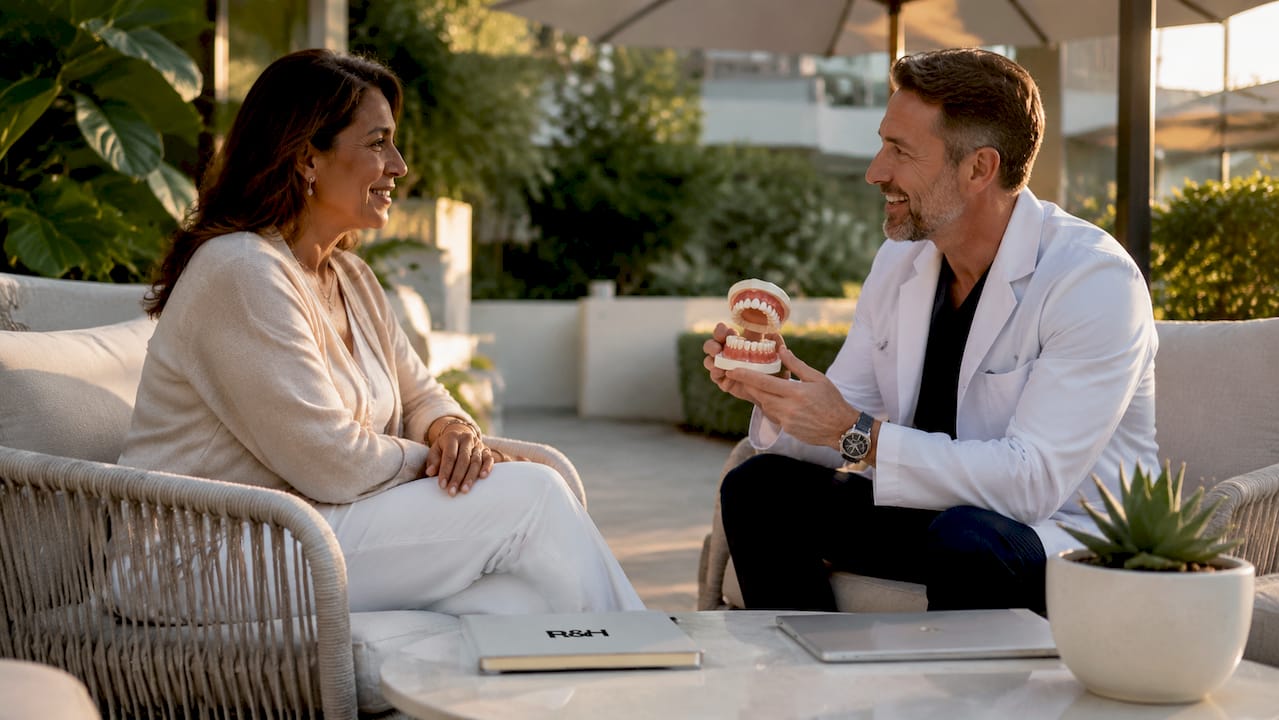
A solid dental care checklist for travellers is defined as a pre-planned set of hygiene tools, preventive habits, and emergency protocols that protect your oral health from departure to return. Most travellers pack sunscreen and travel insurance without giving a second thought to their teeth. Yet disrupted routines, unfamiliar food, and limited access to dental care abroad create real risks. A structured approach, ideally reviewed with your dentist before you leave, is the most reliable way to avoid a painful and expensive surprise mid-trip.
1. What are the must-pack dental essentials for trips?
Packing the right tools is the foundation of any oral hygiene travel guide. A compact kit does not need to be heavy to be effective. The key is choosing products that travel well and cover every base.
Core items to include:
- Compact toothbrush with a ventilated travel case. Airflow prevents bacterial build-up between uses.
- Travel-sized toothpaste (under 100ml for carry-on compliance). Fluoride content of at least 1,000ppm is the clinical standard for adults.
- Dental floss or interdental brushes. These take up almost no space and are non-negotiable for gum health.
- Antiseptic mouthwash in a mini bottle. Useful after meals when brushing is not possible.
- Portable water flosser. Compact models fit in most toiletry bags and are worth the space for longer trips.
- Tongue scraper. Lightweight and effective at reducing bacteria that cause bad breath.
- Temporary filling material and dental cement. Available over the counter, these protect an exposed tooth until you reach a dentist.
- Topical anaesthetic gel. A small tube manages acute pain from a cracked tooth or ulcer while you arrange care.
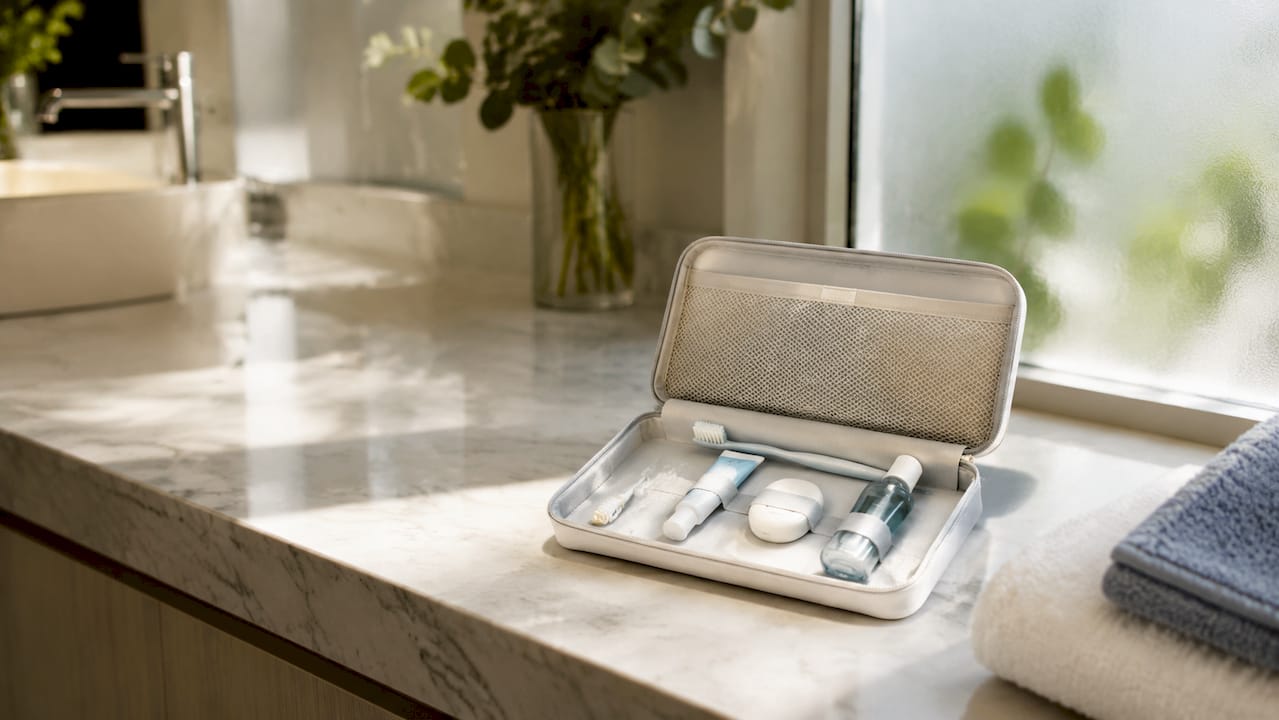
Packing a travel dental kit with compact, versatile tools including floss and antiseptic mouthwash ensures care continuity on the road.
Pro Tip: Storing a wet toothbrush in an airtight container promotes bacterial growth within hours. Always air-dry your brush before placing it in its case, or use a vented cover.
2. How to maintain oral hygiene routines while travelling
Routine is the first casualty of travel. Changing time zones, early flights, and long days make it easy to skip brushing or forget flossing entirely. The solution is not willpower. It is structure.
Habit stacking is more effective than fixed timing during travel. Link your oral hygiene to reliable anchors: brush after your morning coffee, floss after your evening shower. These anchors stay consistent even when your schedule does not.
Practical habits to build into every trip:
- Brush for two minutes, twice daily, regardless of time zone.
- Floss or use interdental brushes every evening. Interdental cleaning is the most skipped step during travel and the most important for preventing gum disease.
- Rinse with mouthwash after meals when brushing is not possible.
- Chew xylitol gum after meals when brushing is unavailable. Xylitol reduces dental caries incidence by 58% at 6–10 grams daily by neutralising acids and stimulating saliva.
- Stay hydrated. Dry mouth reduces saliva, which is your mouth’s natural defence against decay.
Water quality is a factor many travellers overlook. Use bottled or filtered water for brushing in destinations where tap water quality is uncertain. Tap water in some regions contains bacteria that cause gastrointestinal and oral infections.
“The travellers who maintain the best oral health abroad are not those with the most products. They are those with the clearest habits.”
3. What steps prepare you for dental emergencies abroad?
Dental emergencies are more common during travel than most people expect. A cracked tooth from unfamiliar food, a lost crown on a long-haul flight, or a sudden abscess can derail an entire trip. Preparation reduces both the clinical risk and the stress.
Follow these steps before you depart:
-
Book a professional dental checkup 2–4 weeks before travel. Routine checkups identify small cavities and loose restorations before they become emergencies abroad. This single step prevents the majority of travel dental crises.
-
Build a small emergency dental kit. Include temporary filling material, dental cement, topical anaesthetic gel, and floss. Temporary dental cements protect an exposed tooth when a filling or crown is lost until professional care is available.
-
Research dental clinics at your destination. Note the contact details of at least 2–3 clinics before you travel. Having this information ready reduces stress and speeds access to care if an emergency occurs.
-
Check your insurance cover. Review your travel insurance policy specifically for dental emergencies. Many standard policies exclude dental treatment or cap it at a low amount. Upgrade if necessary.
-
Know the first-aid response for common emergencies. For a knocked-out tooth, immediate reinsertion or storage in milk and reaching a dentist within 30 minutes greatly improves the chance of saving it. For a lost crown, sugar-free gum or dental cement provides temporary protection.
Pro Tip: Save the contact details of your home dentist and your destination clinics in your phone under a clear label such as “Dental Emergency.” In a stressful situation, you will not want to search for them.
4. How diet and habits during travel affect your teeth
Travel changes what you eat and when you eat it. Airport snacks, holiday cocktails, and long gaps between meals all create conditions that accelerate enamel erosion and decay.
Frequent acidic or sugary snacks increase decay risk significantly. Rinsing with water or drinking through a straw limits direct enamel contact and reduces erosion risk. These are small adjustments with a measurable protective effect.
Dietary habits worth adopting on every trip:
- Drink water between meals to rinse away acids and sugars.
- Use a straw for acidic drinks such as fruit juice, fizzy drinks, and cocktails.
- Avoid grazing on snacks throughout the day. Concentrated meal times give saliva time to remineralise enamel between exposures.
- Moderate coffee and alcohol consumption. Both reduce saliva flow, which weakens your mouth’s natural defences.
- Wait at least 30 minutes after eating acidic food before brushing. Brushing immediately after acid exposure wears softened enamel.
Saliva is your most underrated dental ally. Staying well hydrated, chewing sugar-free gum, and eating fibrous foods like raw vegetables all stimulate saliva production. This matters more on long flights, where cabin air is dry and saliva flow drops naturally.
For travellers who wear retainers or mouthguards, maintaining clean oral appliances on the road is equally important. A contaminated appliance reintroduces bacteria directly onto your teeth.
5. Adapting your oral care for long-haul and frequent travel
Long-haul travel introduces specific challenges that a standard daily routine does not account for. Cabin pressure, dehydration, and disrupted sleep all affect oral health in ways that accumulate over time.
Dehydration is the most direct risk. Cabin humidity on long-haul flights typically sits well below 20%, which is far drier than most indoor environments. Drink water consistently throughout the flight rather than waiting until you feel thirsty.
Frequent travellers and expats face a compounding risk: the longer the routine disruption, the greater the cumulative effect on gum health and enamel. Reviewing your daily oral hygiene routine before a long trip and reinforcing it on return is a sound clinical habit.
Travellers using whitening products should be aware that whitening gels can increase sensitivity temporarily. Avoid using them during a trip if you are already managing sensitivity from dietary changes or dehydration.
6. What to do when you return from a trip
The post-travel dental check is as important as the pre-travel one. Many problems that begin abroad, such as early-stage gum inflammation or a hairline crack, become apparent only after you return home.
Book a professional dental check-up within four to six weeks of returning from a long trip. This is particularly relevant for travellers who ate very differently, experienced any tooth sensitivity, or noticed bleeding gums while away.
Returning to your full routine promptly matters. Gum tissue responds quickly to consistent interdental cleaning. Most mild inflammation from a disrupted travel routine resolves within two weeks of resuming daily flossing. If it does not, that is a signal to seek professional assessment.
Key takeaways
A well-prepared dental care checklist for travellers combines the right tools, consistent habits, and a clear emergency plan to protect oral health from departure to return.
| Point | Details |
|---|---|
| Pre-travel checkup | Book a professional dental assessment 2–4 weeks before departure to catch problems early. |
| Pack a complete kit | Include floss, temporary filling material, antiseptic mouthwash, and a vented toothbrush case. |
| Habit stacking works | Link brushing and flossing to consistent travel anchors rather than fixed times. |
| Diet affects enamel | Use a straw for acidic drinks and rinse with water between meals to reduce erosion. |
| Emergency preparedness | Research 2–3 dental clinics at your destination and check your insurance cover before you leave. |
What we have learned from treating frequent travellers
From our experience at R&H Dental Marbella, the patients who arrive with travel-related dental problems share one thing in common: they skipped the pre-travel checkup. Not because they did not care, but because they assumed everything was fine. A small cavity that causes no pain at home becomes an abscess at 35,000 feet. A loose crown that feels stable falls out on the first day of a holiday.
The second pattern we see consistently is neglected interdental cleaning. Travellers brush. Very few floss on the road. Gum disease is largely a silent condition in its early stages, which makes it easy to ignore. By the time it causes discomfort, it has usually progressed beyond what a simple clean can address.
The practical advice we give every patient planning a long trip is this: treat your pre-travel dental appointment the same way you treat renewing your passport. It is not optional. It is preparation. And for expats living between countries, the stakes are higher because access to trusted, English-speaking care is not always guaranteed at the destination.
Proactive planning is not pessimism. It is the difference between a trip that stays enjoyable and one that is derailed by a preventable dental crisis.
— R&H Dentists
Dental care in Marbella for travellers and expats
R&H Dental Marbella provides pre-travel dental consultations, emergency assessments, and full restorative care for travellers and expats across the Costa del Sol. The clinic’s team of international dentists, with 15–35 years of experience each, includes specialists from Finland, New Zealand, Ireland, Portugal, and Spain, all working in English.
Whether you need a thorough check-up before a long trip or urgent care on arrival, R&H Dental Marbella offers transparent treatment pricing and a written guarantee on all work. The clinic uses 3D CBCT imaging and an in-house digital lab to deliver accurate diagnoses and natural-looking results. You can take a virtual tour of the clinic before your appointment, or book directly online for a no-pressure consultation.
FAQ
How far in advance should I see a dentist before travelling?
Book a dental checkup 2–4 weeks before departure. This gives enough time to treat any identified issues before you leave.
What should I include in a travel dental emergency kit?
A travel emergency kit should contain temporary filling material, dental cement, topical anaesthetic gel, floss, and the contact details of 2–3 dental clinics at your destination.
Is xylitol gum a reliable substitute for brushing?
Xylitol gum reduces decay risk by neutralising acids and stimulating saliva, but it does not replace brushing. Use it after meals when brushing is not possible, at a daily intake of 6–10 grams.
Should I use bottled water to brush my teeth abroad?
Use bottled or filtered water for brushing in any destination where tap water quality is uncertain. Tap water in some regions contains bacteria that cause oral and gastrointestinal infections.
What should I do if a crown falls out while travelling?
Cover the exposed tooth with temporary dental cement or sugar-free gum and contact a local dentist as soon as possible. Avoid leaving the tooth unprotected, as sensitivity and further damage can develop quickly.
.png)