
Most people assume that dental veneers are a single treatment. They are not. The types of dental veneers available today vary considerably in material, preparation, longevity, and cost, and the differences between them are genuinely important for your smile, your oral health, and your long-term commitment. Whether you are exploring a full cosmetic transformation or simply covering a few stubborn chips, understanding your options before you sit in the chair is the smartest thing you can do. This guide walks through every major category, what the evidence says about each, and how to match the right veneer to the right person.
Table of Contents
- Key takeaways
- Types of dental veneers explained
- Comparing veneer types: longevity, cost, and prep
- Choosing the best dental veneers for your smile
- Emerging veneer types and new technologies
- My perspective on choosing veneers well
- Explore veneer options at Rhdentalmarbella
- FAQ
Key takeaways
| Point | Details |
|---|---|
| Multiple veneer types exist | There are at least five distinct categories, each with different materials, preparation needs, and lifespans. |
| Porcelain outlasts composite | Porcelain veneers last 10 to 15 years or more; composite typically lasts 5 to 7 years. |
| Preparation affects reversibility | Enamel removal required for traditional porcelain is permanent; no-prep and removable options preserve more tooth structure. |
| Cost varies widely | Per-tooth prices range from affordable composite to premium porcelain, with several factors influencing the final figure. |
| Lifestyle shapes the decision | Daily habits, oral health status, and aesthetic goals are as important as material preference when choosing veneers. |
Types of dental veneers explained
Dental veneer categories fall broadly into five groups: porcelain (including lab-made and CAD/CAM same-day), composite resin, no-prep or minimal-prep porcelain, temporary veneers, and removable snap-on veneers. Each serves a different clinical and cosmetic purpose, and none is universally superior.
-
Porcelain veneers. These are thin ceramic shells bonded permanently to the front surface of your teeth. They are fired in a dental laboratory to precise colour and translucency specifications, which is why they so closely mimic natural enamel. Porcelain is highly stain-resistant, extremely durable, and the material most clinicians consider the gold standard for aesthetic cases. The trade-off is that they require more enamel reduction than any other bonded type, making the process irreversible.
-
Composite resin veneers. Applied chair-side in a single appointment, composite veneers are sculpted directly onto the tooth using tooth-coloured resin. They cost less upfront and require minimal preparation, but they are more porous than porcelain, which means they pick up stains from coffee, red wine, and tobacco more readily over time. Maintenance and polishing appointments are needed to preserve their appearance.
-
No-prep and minimal-prep veneers. Products such as Lumineers are ultra-thin no-prep veneers that need little to no enamel removal before bonding. They suit patients who want a conservative, reversible option and whose teeth are not significantly misaligned or discoloured. Their ultra-thin profile can, in some cases, result in a slightly bulkier appearance compared to traditional porcelain veneers, so candidacy requires careful assessment.
-
Removable snap-on veneers. These are non-bonded cosmetic covers that clip over existing teeth. They are not a clinical restoration. Snap-on veneers are unsuitable for eating hard or sticky foods and carry a short life expectancy. They work as a temporary cosmetic solution, perhaps before or between treatments, but should not be confused with permanent restorations.
-
CAD/CAM same-day veneers. Using digital impressions and in-surgery milling machines, same-day veneers are designed and fabricated during a single appointment. They suit straightforward cases where the patient cannot return for multiple visits. Case complexity is the limiting factor: significant colour correction or very precise shade matching may still benefit from a laboratory workflow.
Comparing veneer types: longevity, cost, and prep
Choosing between different dental veneer options becomes far clearer when you look at the key variables side by side.
| Veneer type | Typical lifespan | Approx. cost per tooth | Enamel prep | Stain resistance |
|---|---|---|---|---|
| Porcelain (lab-made) | 10 to 15+ years | £400 to £2,000+ | Moderate to high | Excellent |
| Composite resin | 5 to 7 years | £150 to £1,200 | Minimal | Moderate |
| No-prep (e.g. Lumineers) | 10 to 20 years | £600 to £2,000+ | Minimal to none | Excellent |
| Removable snap-on | 1 to 3 years | £45 to £800 | None | Poor |
| CAD/CAM same-day | 10 to 15 years | £400 to £2,000+ | Moderate | Excellent |
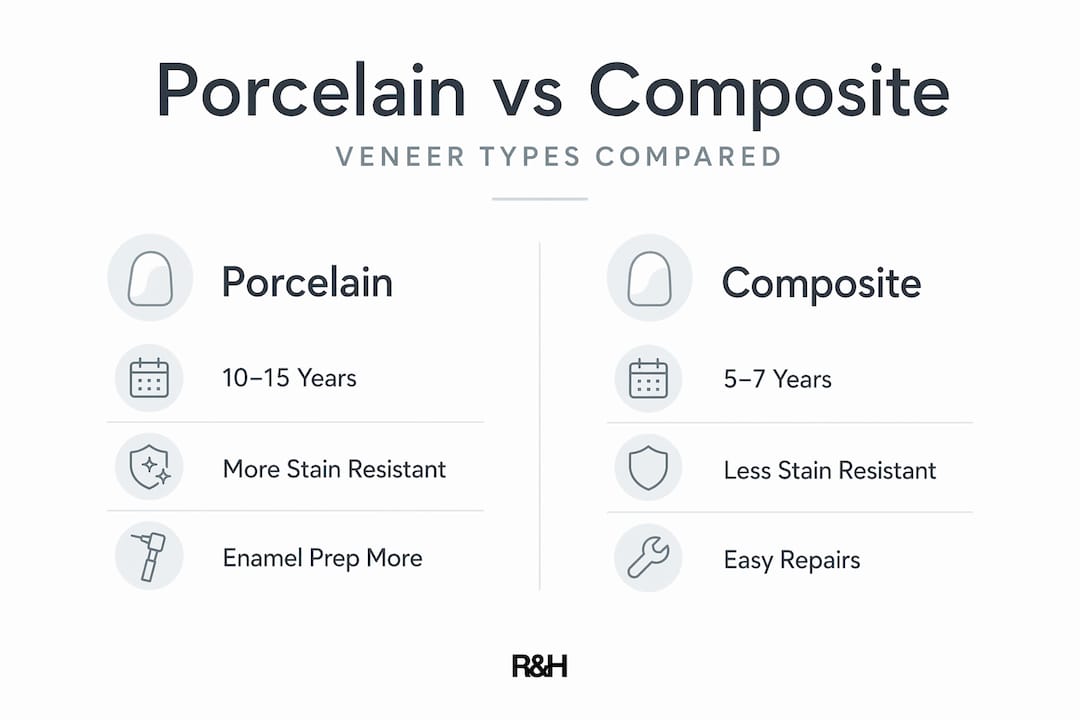
The porcelain vs composite veneers question is the one patients ask most. Porcelain wins on longevity and stain resistance. Composite wins on affordability, repairability, and the fact that a single chip does not require a full replacement. A composite veneer can be touched up at the chair; a cracked porcelain veneer typically needs a new shell from the laboratory.
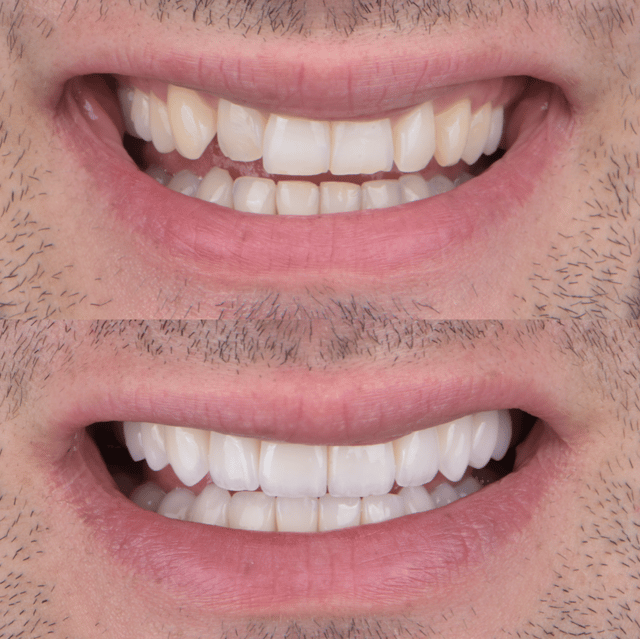
Cost is influenced by the number of teeth treated, the clinic’s technology, the ceramicist’s skill, and the complexity of shade matching. Cost ranges for veneers vary significantly across countries and practice types, so any figure you find online should be treated as a starting point rather than a fixed price.
Pro Tip: When reviewing quotes for porcelain veneers, ask whether the price includes a diagnostic wax-up or digital mock-up. A clinic that skips this step is asking you to commit to a permanent result you have never previewed.
Maintenance expectations differ just as much as cost. Composite veneers require regular polishing and shade monitoring because the resin surface dulls and stains over time, particularly in patients who drink coffee daily or smoke. Porcelain is forgiving in this respect: standard brushing, flossing, and routine hygiene appointments are sufficient to maintain them for over a decade.
Choosing the best dental veneers for your smile
The best dental veneers for your smile are not necessarily the most expensive or the most technically advanced. They are the ones that fit your oral health baseline, your aesthetic goals, and your lifestyle honestly assessed.
Several practical factors shape that decision:
-
Enamel thickness. If your enamel is thin due to erosion, grinding, or previous dental work, enamel bonding surface quality becomes a limiting factor. No-prep veneers may not adhere predictably if there is insufficient enamel available, and traditional porcelain may further compromise what remains.
-
The degree of correction needed. Minor chips, mild discolouration, or small gaps respond well to composite or no-prep veneers. Severe discolouration, significant size discrepancies, or structural concerns typically call for traditional porcelain or a combination of treatments that may include cosmetic dental techniques beyond veneers alone.
-
Commitment level. Porcelain veneers are permanent. Once enamel is removed, the tooth always requires coverage. If you are not yet certain, composite or removable options allow you to trial the aesthetic before committing fully.
-
Daily habits. Bruxism (tooth grinding) places enormous stress on any veneer. Patients who grind at night need a protective night guard regardless of veneer type, but the risk of fracture is particularly relevant for porcelain. Smokers and heavy coffee drinkers will see composite surfaces deteriorate faster than non-staining alternatives.
-
Your consultation. A thorough veneer consultation should include photographs, shade assessment, a digital or physical mock-up, and a candid discussion about what each option can and cannot achieve for your specific teeth. Ask directly: what happens to my tooth if this veneer chips or fails in five years? The answer tells you a great deal about the clinical approach.
Pro Tip: Ask your dentist to show you a digital smile preview before any preparation begins. Seeing the proposed result on your own face in your own proportions is far more informative than looking at someone else’s before-and-after photographs.
A smile makeover consultation should never feel pressured. A genuinely patient-centred clinician will present options, explain trade-offs, and let you decide at your own pace.
Emerging veneer types and new technologies
The question of how many types of veneers exist has grown more complex as materials science and digital dentistry have advanced. Beyond the five core categories, several emerging or specialist options are worth knowing about.
-
Zirconia veneers. Zirconia is one of the strongest dental ceramics available. Zirconia veneers are typically reserved for posterior teeth, bruxists, or patients who need both strength and reasonable aesthetics. They are less translucent than feldspathic porcelain, which makes them less ideal for front teeth seeking a natural-looking result, but their fracture resistance is significantly higher.
-
Palatal veneers. These are applied to the inner (palatal) surfaces of upper front teeth rather than the visible outer face. They are a specialist tool for managing tooth wear from acid erosion or grinding, protecting and rebuilding structure in patients who have lost vertical dimension over time. Few patients will need these, but they represent an important option in complex cases.
-
Temporary veneers during treatment. Temporary dental veneers types include chair-side provisionals made from acrylic or bis-acryl composite. They protect prepared teeth between the preparation and fit appointments, allow patients to preview the shape and colour before final porcelain is bonded, and give the gum tissue time to settle. They are not worn long-term, but they are clinically important and often overlooked in patient education.
-
Digital CAD/CAM workflow veneers. The CAD/CAM veneer workflow depends on the quality of intraoral scanning and milling precision. Practices with high-resolution scanners and calibrated milling units can achieve fit and aesthetics comparable to traditional laboratory work in a fraction of the time. Where digital impressions and milling fall short is in highly demanding shade transitions or multi-tooth cases requiring hand-layered porcelain from a master ceramicist.
Technology continues to improve every aspect of veneer dentistry, from the accuracy of fit to the subtlety of colour characterisation. Patients who have been told in the past that their teeth are unsuitable for veneers may find that the clinical picture has changed.
My perspective on choosing veneers well
In my experience working alongside patients who have researched veneers extensively before their first consultation, the most common mistake is treating the decision as purely financial. Composite is cheaper upfront, full stop. But what that framing misses is the cumulative cost of maintenance, replacement, and the emotional investment in a result that begins to stain or chip within a few years.
I believe porcelain remains the right choice for the majority of patients seeking a long-lasting veneer result. The upfront cost is higher, and the irreversibility is real. But the material does what it promises over a decade or more, provided the preparation is done correctly and the patient wears a night guard if they grind.
That said, composite veneers genuinely earn their place. For a younger patient with a modest budget who wants to address a few imperfections before committing to porcelain, a well-executed composite restoration is a legitimate clinical decision, not a compromise. I have also seen no-prep veneers produce beautifully natural outcomes in patients with good enamel and mild cosmetic concerns. They are not second-best; they are simply specific in what they do well.
Where I would urge real caution is with removable snap-on veneers purchased without any clinical assessment. They do not integrate with your bite. They do not seal against the tooth margin. They are, at best, a cosmetic prop and, at worst, a delay in addressing something that genuinely needs treatment.
The patients who walk away happiest are those who came in with clear questions, honest lifestyle disclosures, and a willingness to let the clinical findings guide the material choice rather than the other way around.
— Hami
Explore veneer options at Rhdentalmarbella

At Rhdentalmarbella, our multi-national team of English-speaking dentists, with backgrounds spanning Finland, New Zealand, Ireland, Portugal, and Spain, brings between 15 and 35 years of experience each to every aesthetic case. We offer transparent veneer pricing with no hidden fees, and every treatment plan is supported by a written guarantee. Our in-house digital laboratory and 3D CBCT technology allow us to plan, design, and in many cases mill your veneers on site, with precision that is matched to your facial proportions and natural colouring. If you are considering dental veneers in Marbella and want an honest clinical conversation about which type suits you, we welcome you to book a no-pressure consultation with our aesthetic team.
FAQ
How many types of dental veneers are there?
There are five main types: porcelain, composite resin, no-prep or minimal-prep, removable snap-on, and CAD/CAM same-day veneers. Specialist options such as zirconia and palatal veneers exist for specific clinical needs.
What is the difference between porcelain and composite veneers?
Porcelain veneers last 10 to 15 years or more and resist staining well but require more enamel removal. Composite veneers are cheaper, repairable at the chair, and last around 5 to 7 years with regular maintenance.
Are no-prep veneers as good as traditional porcelain veneers?
No-prep veneers such as Lumineers are an excellent conservative option for patients with adequate enamel and mild cosmetic concerns. They are not suitable for every case and can appear slightly bulkier on teeth that need more significant correction.
Can I eat normally with dental veneers?
Bonded porcelain and composite veneers allow normal eating once fully set. Removable snap-on veneers are not designed for eating hard or sticky foods and should be removed during meals to avoid damage.
How much do dental veneers cost per tooth?
Costs vary by type and clinic. As a general guide, composite starts lower than porcelain, while no-prep and same-day options sit in a similar range to traditional porcelain. Reviewing veneer cost information directly with your clinic gives the most accurate picture for your specific case.
.png)