
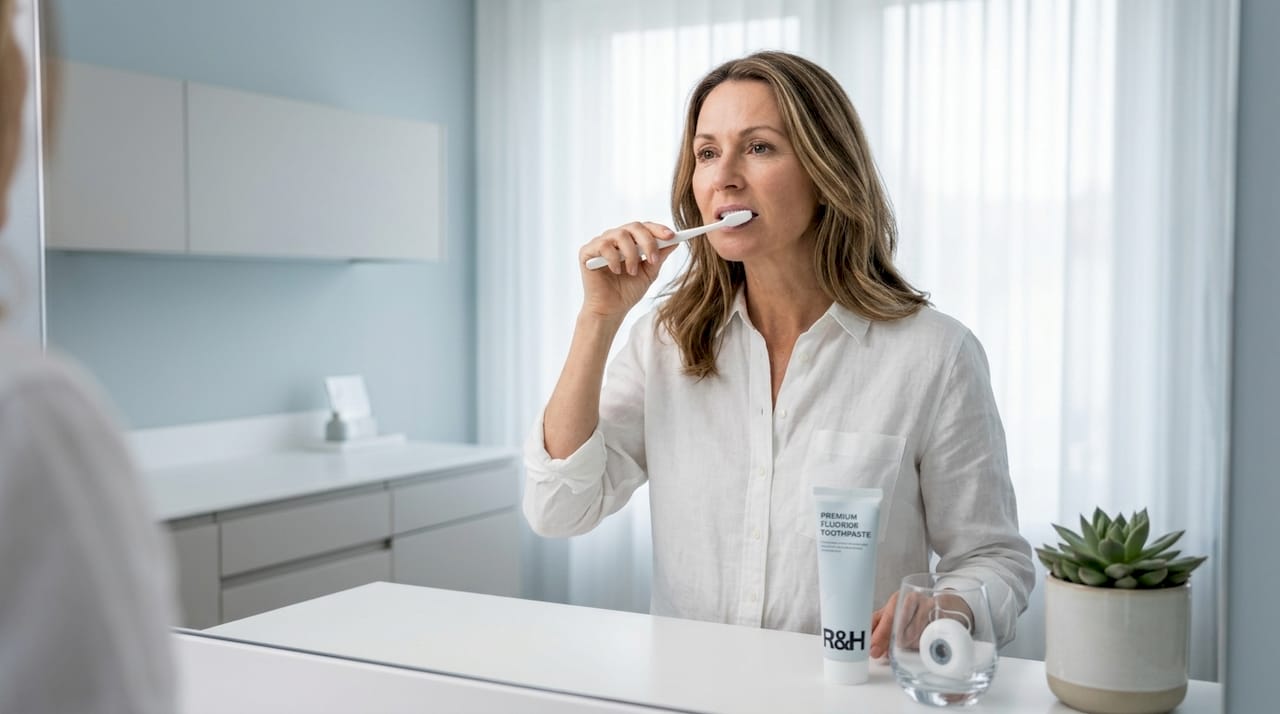
Good oral hygiene, defined clinically as the daily practice of removing plaque through brushing and interdental cleaning, is the single most effective way to prevent tooth decay and gum disease. The dental hygiene tips in this guide are built around that principle: brushing twice daily for two minutes with fluoride toothpaste, combined with daily interdental cleaning, forms the foundation of every healthy mouth. Whether you are an expat settling into life on the Costa del Sol, a parent managing a family’s oral health, or a frequent traveller trying to keep routines intact, these evidence-based steps apply directly to you.
1. Brush twice daily with the right technique
The most effective brushing technique places the toothbrush at a 45-degree angle toward the gumline and uses short, gentle circular strokes across all surfaces. This targets the area where plaque accumulates most aggressively, the junction between tooth and gum, without traumatising the soft tissue.
Divide your mouth into four quadrants: upper right, upper left, lower right, lower left. Spend approximately 30 seconds on each to reach the full two-minute target. This totals roughly 28 minutes of brushing per week, which sounds modest but is sufficient when technique is correct.
Cover the outer surfaces, inner surfaces, and chewing surfaces of every tooth. The inner surfaces of the lower front teeth are the most commonly missed area in adults. Tilt the brush vertically and use short up-and-down strokes there.
- Angle bristles at 45 degrees toward the gumline
- Use short, gentle circular or back-and-forth strokes
- Brush all three surfaces: outer, inner, and chewing
- Spend 30 seconds per quadrant to reach two full minutes
- Rinse thoroughly and spit; do not swallow toothpaste
Pro Tip: Set a two-minute timer on your phone or use an electric toothbrush with a built-in timer. Oral-B and Philips Sonicare both offer models with quadrant alerts, which remove the guesswork entirely.
2. Choose the right toothbrush and toothpaste
Soft or extra-soft bristles are recommended for all adults and children. Medium and hard bristles feel more thorough but cause gum recession and enamel wear over time, particularly in people who already brush with too much pressure.
Electric toothbrushes such as those from Oral-B or Philips Sonicare remove plaque more consistently than manual brushes for most users, largely because they standardise stroke frequency and pressure. That said, Cleveland Clinic notes that the biggest gains come from regularity and gentle technique rather than the type of brush. A manual brush used correctly twice daily outperforms an electric brush used once or with excessive force.
Fluoride toothpaste is non-negotiable for cavity prevention. Look for a fluoride concentration of at least 1,000 ppm for adults and 1,000 ppm for children over three. Toothpastes carrying the British Dental Association (BDA) Accreditation seal or the American Dental Association (ADA) seal have been independently tested for safety and efficacy.
3. Floss or use interdental cleaners every day
Plaque calcifies into tartar within 24 to 72 hours if left undisturbed between teeth. Once tartar forms, no toothbrush or floss can remove it; only a professional scale and polish can. Daily interdental cleaning breaks that cycle before it starts.
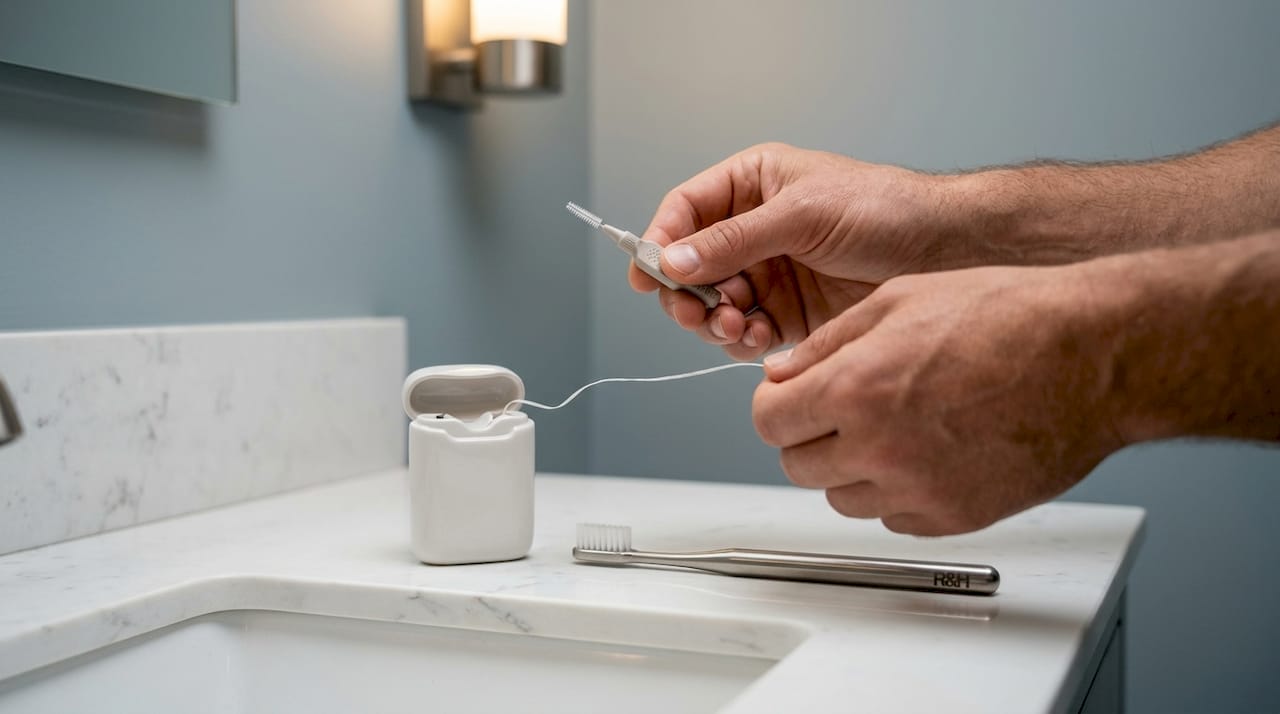
String floss remains the gold standard for tight contacts between teeth. Waxed floss slides more easily through tight spaces; unwaxed floss tends to squeak against clean tooth surfaces, which some people use as a signal that the area is clean. Neither is clinically superior; the best floss is the one you will actually use.
Interdental brushes (brands such as TePe or Curaprox) suit wider gaps, particularly around implants, bridges, and molar contacts. Water flossers such as the Waterpik are effective for people with braces, fixed bridges, or limited dexterity. Floss picks are a practical travel option, though they cover less surface area per pass than string floss.
Pro Tip: Floss before brushing rather than after. This loosens debris and plaque between teeth so that fluoride from your toothpaste can reach those surfaces more effectively.
4. How to floss properly without damaging your gums
Correct flossing technique matters as much as frequency. Slide the floss gently between teeth using a zigzag motion rather than snapping it down into the gum. Snapping causes gum trauma and, over time, contributes to recession.
Curve the floss into a C-shape around each tooth and slide it up and down against the tooth surface, going just below the gumline. Use a fresh section of floss for each gap to avoid redistributing bacteria. For a full mouth, you need approximately 40 to 45 centimetres of floss to have enough clean sections.
People with dental implants should use implant-safe floss or a TePe interdental brush rather than standard string floss, as aggressive flossing around implant abutments can disturb the peri-implant tissue. If you have a fixed bridge, a floss threader or superfloss (such as Oral-B Super Floss) allows you to clean beneath the pontic.
5. Child dental care tips: starting early makes a lasting difference
Begin brushing as soon as the first tooth erupts, typically around six months of age, using a smear of fluoride toothpaste the size of a grain of rice. This early start is protective. Research shows that brushing less than twice daily more than doubles the odds of early childhood caries compared to twice-daily brushing begun by age one.
- Start brushing at first tooth eruption with a rice-sized smear of fluoride toothpaste
- Increase to a pea-sized amount from age three onwards
- Apply fluoride varnish every six months until age five, and more frequently for high-risk children
- Supervise brushing until approximately age ten, when children develop the motor control to brush effectively alone
- Never put a baby to bed with a bottle containing milk, juice, or any sweetened drink; water only after teeth have erupted
- Link brushing to fixed daily moments: after breakfast and before bed, so it becomes automatic rather than negotiated
Pro Tip: Let young children choose their toothbrush (within reason) and a child-friendly fluoride toothpaste flavour. Autonomy over small decisions significantly improves compliance in children aged three to seven.
For families based in Marbella, the family dental care guide from R&H Dental Marbella covers local considerations including fluoride levels in the Costa del Sol water supply.
6. Oral care advice for expats and travellers
Maintaining a consistent oral hygiene routine while travelling or relocating abroad is straightforward with the right kit. A travel dental hygiene kit should contain a soft-bristle toothbrush, fluoride toothpaste, and a daily interdental cleaning tool. Floss picks or TePe interdental brushes are compact and do not require water pressure, making them the most practical travel options.
- Pack a soft-bristle travel toothbrush and a 75 ml fluoride toothpaste (compliant with airline liquid rules)
- Use floss picks or small interdental brushes instead of a water flosser when travelling light
- Maintain twice-daily brushing regardless of time zone changes or disrupted routines
- Check local water fluoride levels when relocating; Spain’s tap water is generally fluoridated but levels vary by region
- Seek dental care promptly if you notice pain, swelling, or sensitivity while abroad; delaying treatment abroad often leads to more complex and costly procedures
Expats in Marbella often find that accessing English-speaking dental care is a significant concern. R&H Dental Marbella’s team includes dentists from Finland, New Zealand, Ireland, Portugal, and Spain, all of whom consult in English, which removes the language barrier that can otherwise delay necessary care. For context on what to expect from local dental services, the guide to dental treatments for expat families is a useful starting point.
7. The importance of mouthwash in your daily routine
Mouthwash is a supplement to brushing and flossing, not a replacement. Fluoride mouthwashes such as Colgate Fluorigard or Listerine Total Care add an additional layer of fluoride protection, particularly useful for people with a history of cavities or those undergoing orthodontic treatment.
Use mouthwash at a separate time from brushing, ideally after lunch, to extend fluoride contact time throughout the day. Using it immediately after brushing rinses away the concentrated fluoride left by toothpaste, which reduces its protective effect.
Chlorhexidine mouthwashes (available under brands such as Corsodyl) are clinically effective against gum disease but are not intended for long-term daily use. They cause tooth staining and alter taste perception with prolonged use. Reserve them for short courses as directed by your dentist.
8. Comparing toothpastes, toothbrushes, and floss: a practical guide
| Product type | Recommended option | Key consideration |
|---|---|---|
| Toothpaste | Fluoride toothpaste, 1,000 ppm minimum | Look for BDA or ADA accreditation seal |
| Toothbrush (manual) | Soft or extra-soft bristles, small head | Replace every three months or after illness |
| Toothbrush (electric) | Oral-B Pro or Philips Sonicare | Built-in timer and pressure sensor are most useful features |
| Floss | Waxed string floss or Oral-B Super Floss | Waxed for tight contacts; superfloss for bridges |
| Interdental brush | TePe or Curaprox, sized to fit each gap | Do not force; should pass through with gentle resistance |
| Water flosser | Waterpik Cordless Advanced | Best for braces, implants, or limited dexterity |
| Mouthwash | Colgate Fluorigard (fluoride) or Corsodyl (short-term) | Use at a different time from brushing |
Price and availability are practical concerns for expats. Most of these products are available in Spanish pharmacies (farmacias) and larger supermarkets such as Mercadona and El Corte Inglés. TePe interdental brushes and Waterpik devices are widely stocked in Marbella.
Key takeaways
Consistent twice-daily brushing with fluoride toothpaste and daily interdental cleaning are the two practices that prevent the majority of tooth decay and gum disease in adults and children alike.
| Point | Details |
|---|---|
| Brush twice daily, two minutes each time | Use a 45-degree angle, soft bristles, and short circular strokes covering all tooth surfaces. |
| Floss or use interdental cleaners daily | Plaque hardens into tartar within 24 to 72 hours; daily cleaning breaks that cycle before it starts. |
| Start children early | Begin brushing at first tooth eruption and apply fluoride varnish every six months until age five. |
| Choose products by function, not price | Soft bristles, fluoride toothpaste, and the right interdental tool for your anatomy matter more than brand. |
| Maintain routines when travelling | A compact kit with floss picks and fluoride toothpaste keeps plaque control consistent on the go. |
What we have learned from years of treating expat patients
The most common pattern we see at R&H Dental Marbella is not neglect. It is misplaced effort. Patients arrive having brushed diligently twice a day for years, yet present with gum recession, sensitivity, and early decay between their teeth. The cause is almost always the same: brushing too hard with a medium-bristle brush, and skipping interdental cleaning entirely.
There is a widespread belief that firmer pressure and harder bristles mean cleaner teeth. The opposite is true. Overbrushing causes gum irritation and enamel wear that cannot be reversed without clinical intervention. Gentle technique with soft bristles removes plaque just as effectively, without the mechanical damage.
We also see patients who have invested in expensive electric toothbrushes but have never been shown how to floss. The toothbrush, however sophisticated, cannot reach the contact points between teeth. Toothbrushes cannot clean between teeth where plaque becomes tartar. That is not a minor gap in coverage; it is where gum disease typically begins.
Our honest advice is this: prioritise technique and consistency over gadgets. A soft manual toothbrush used correctly twice a day, combined with daily flossing or interdental brushing, will outperform an expensive electric brush used once a day with no interdental cleaning. Regular professional check-ups, ideally every six months, allow us to catch what daily routines miss and to personalise your hygiene advice based on your specific anatomy, restorations, and risk profile.
— R&H Dentists
Personalised dental hygiene care at R&H Dental Marbella
Good daily habits form the foundation, but professional guidance makes them precise. At R&H Dental Marbella, our English-speaking team of dentists with 15 to 35 years of experience each provides personalised oral hygiene assessments alongside every check-up. We use 3D CBCT imaging and in-house diagnostic technology to identify issues that are invisible to the naked eye, from early interproximal decay to early-stage bone changes around implants.
For families, our children’s dentistry service includes fluoride varnish applications, fissure sealants, and age-appropriate hygiene coaching for children and parents together. Pricing is transparent and published clearly, with no hidden fees. If you would like a professional hygiene review or simply want to know whether your current routine is working, book a consultation with our team. No pressure, just clear clinical advice in plain English.
FAQ
How long should you brush your teeth each time?
Brush for two minutes, twice daily. Divide your mouth into four quadrants and spend 30 seconds on each, covering outer, inner, and chewing surfaces.
Is flossing really necessary if you brush properly?
Yes. Toothbrushes cannot reach the contact points between teeth where plaque accumulates and hardens into tartar within 24 to 72 hours. Daily flossing or interdental brushing is the only way to clean those surfaces at home.
When should children start using fluoride toothpaste?
From the eruption of the first tooth, using a rice-sized smear of fluoride toothpaste. Fluoride varnish should be applied by a dentist every six months until age five to reduce early childhood caries risk.
Does mouthwash replace brushing or flossing?
No. Mouthwash is a supplement, not a substitute. Fluoride mouthwash used at a separate time from brushing adds protective benefit, but it does not remove plaque mechanically the way brushing and flossing do.
How often should you replace your toothbrush?
Every three months, or sooner if the bristles are visibly splayed. Frayed bristles lose their ability to clean effectively and may indicate you are brushing with too much pressure.