

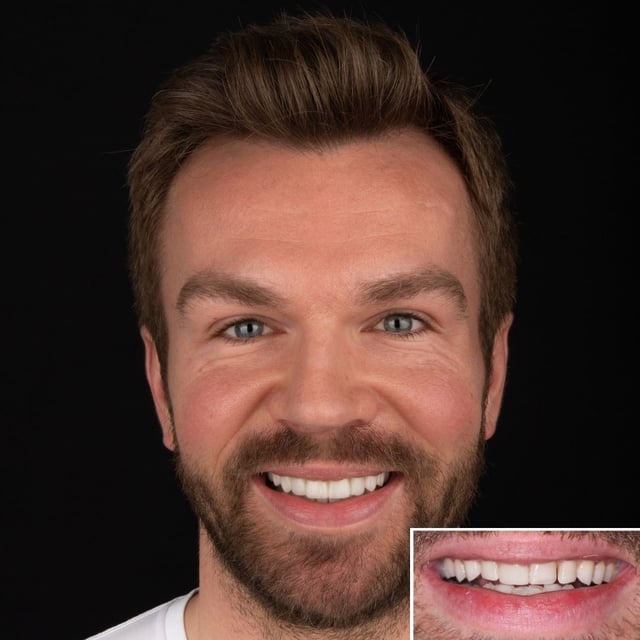
Dental veneers are not fake teeth. That misconception puts people off one of the most effective, minimally invasive cosmetic dental treatments available today. A veneer is a precision-crafted shell, bonded to the front surface of your natural tooth, that corrects colour, shape, and alignment without removing the whole tooth structure. Whether you are dealing with stubborn staining, chipped edges, or gaps that no amount of whitening will fix, veneers offer a reliable, evidence-backed solution. This guide breaks down exactly what veneers are, how they are applied, which materials work best, and what you need to know to get lasting results from your treatment.
Table of Contents
- What are dental veneers?
- How dental veneers are applied: Step-by-step process
- Different types of dental veneers and preparation designs
- Expert insights: Longevity, survival, and common pitfalls
- The truth about dental veneers: What most guides miss
- Premium dental veneer solutions in Marbella
- Frequently asked questions
Key Takeaways
| Point | Details |
|---|---|
| Veneers are ultra-thin | Dental veneers are thin coverings that enhance both the look and strength of natural teeth. |
| Several types available | Porcelain and composite resin veneers offer different advantages for durability, appearance, and procedure length. |
| Preparation design matters | The geometry of veneer preparation directly impacts longevity and resistance to fractures. |
| Expert care ensures success | Professional planning, minimal prep techniques, and proper bonding maximise the veneers’ lifespan and minimise complications. |
| Marbella clinics offer premium solutions | Top clinics in Marbella deliver personalised, high-quality veneer treatments backed by guarantees and expert cosmetic dentists. |
What are dental veneers?
At their most basic, dental veneers are thin layers) of material, typically composite resin or porcelain, placed over the front surface of teeth to improve aesthetics and protect the surface. Think of them as a tailored cover for your tooth, one that looks completely natural, feels comfortable, and serves a real functional purpose beyond appearance.
The thickness of a veneer is part of what makes the treatment so appealing. A standard porcelain veneer is roughly 0.5 to 0.7 millimetres thick, which is about the same as a contact lens. That thinness means the amount of natural tooth structure removed during preparation is kept to an absolute minimum, particularly with modern no-prep and minimal-prep techniques. The result is a treatment that transforms your smile without gutting your tooth.
Porcelain veneers are the gold standard for most cosmetic cases. They mimic the light-reflecting properties of natural enamel exceptionally well, resist staining from coffee, wine, and tea, and can last well over a decade with proper care. Composite resin veneers, on the other hand, are applied directly to the tooth in a single visit, making them faster and more affordable, though they are generally less durable and more prone to discolouration over time.
Who should consider veneers? The treatment is particularly well-suited to people who want to address:
- Persistent discolouration that does not respond to professional whitening
- Chipped, cracked, or worn tooth edges
- Minor misalignment or uneven spacing between teeth
- Teeth that appear too small or irregularly shaped
- Surface imperfections caused by conditions such as fluorosis or enamel hypoplasia
“Veneers are not a one-size-fits-all solution. The right candidate has healthy gum tissue, sufficient enamel, and realistic expectations about what the treatment can achieve.”
It is worth noting that veneers are cosmetic in nature, not orthodontic. They can create the appearance of straighter teeth but they do not move teeth. For patients with significant bite issues or severe crowding, orthodontic treatment may need to come first. If you are weighing up your options, exploring smile makeover options that combine multiple treatments can help you understand the full picture before committing.
How dental veneers are applied: Step-by-step process
Understanding the process removes a great deal of anxiety around veneer treatment. It is more structured and methodical than most people expect, and each stage has a clear purpose.
- Initial consultation and treatment planning. Your dentist assesses your teeth, gum health, and bite. Digital photographs, X-rays, and sometimes digital smile design software are used to map out the final result before any preparation begins.
- Tooth preparation. For traditional veneers, a thin layer of enamel is removed from the front surface of the tooth. Enamel removal is typically 0.3 to 0.5mm), with impressions taken afterwards and the veneer fabricated in a dental laboratory. No-prep veneers require minimal or no reduction at all.
- Impressions and temporary veneers. Once the tooth is prepared, impressions are taken and sent to the laboratory. Temporary veneers are placed to protect the prepared teeth and give you a preview of the final look.
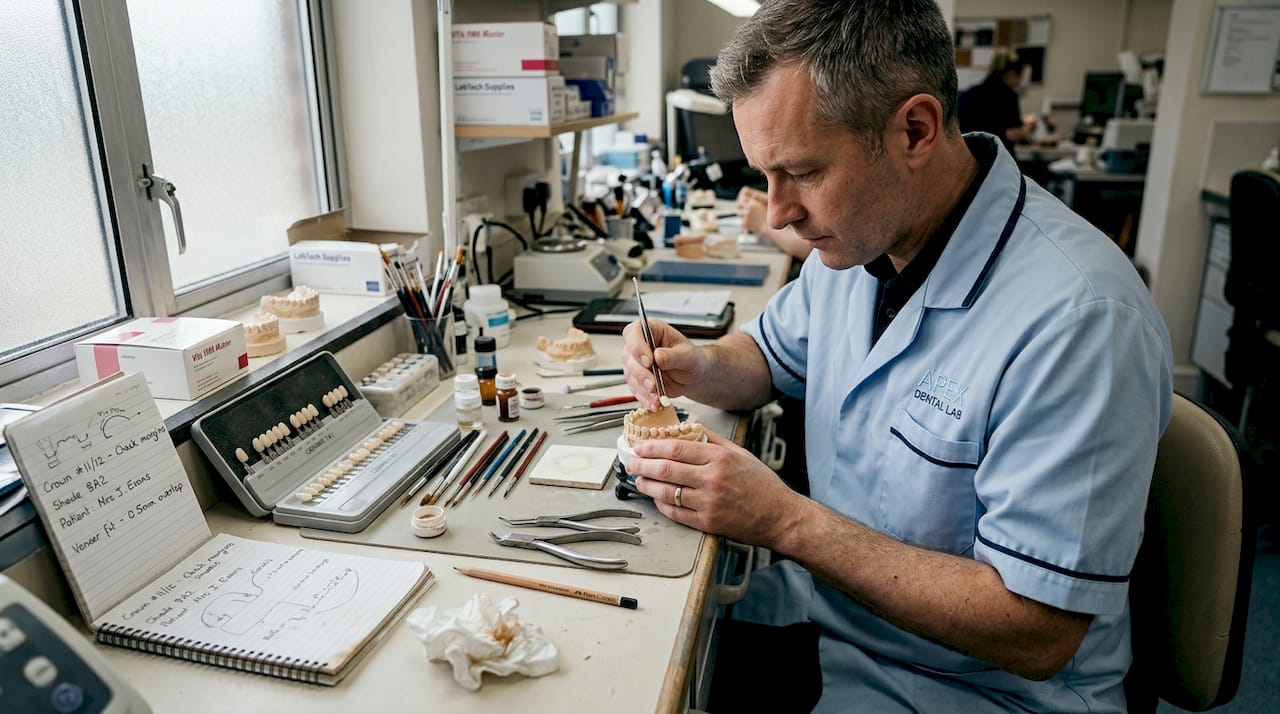
- Laboratory fabrication. A skilled dental technician crafts the porcelain veneers to precise specifications, matching the shade, shape, and translucency agreed during planning. This stage typically takes one to two weeks.
- Fitting and bonding. The temporary veneers are removed, the tooth surface is cleaned and etched, and the permanent veneer is bonded using a light-cured dental cement. The dentist checks your bite carefully before finalising the bond.
- Final adjustments. Minor polishing and occlusal checks ensure everything sits correctly and feels natural.
| Technique | Enamel removal | Lab required | Reversibility | Best suited for |
|---|---|---|---|---|
| Traditional prep | 0.3 to 0.5mm | Yes | No | Significant colour or shape changes |
| Minimal prep | Less than 0.3mm | Yes | Partial | Mild corrections, sensitive patients |
| No-prep | None | Sometimes | Yes | Minor cosmetic adjustments |
| Direct composite | None or minimal | No | Yes | Quick corrections, budget-conscious patients |
Pro Tip: Ask your dentist to show you a digital mock-up or wax-up of the planned result before any enamel is removed. This step costs nothing extra at a well-equipped clinic and can save you from surprises at the fitting stage.
One aspect that is often underestimated is how much the veneers longevity depends on the quality of the bonding stage. A perfectly crafted veneer bonded poorly will fail early. Equally, reviewing a clinic’s veneers portfolio before treatment gives you a realistic sense of the outcomes they consistently achieve.
Different types of dental veneers and preparation designs
The choice of material and preparation design is not just a technical detail. It directly affects how your veneers look, how long they last, and how your natural teeth are affected over time.
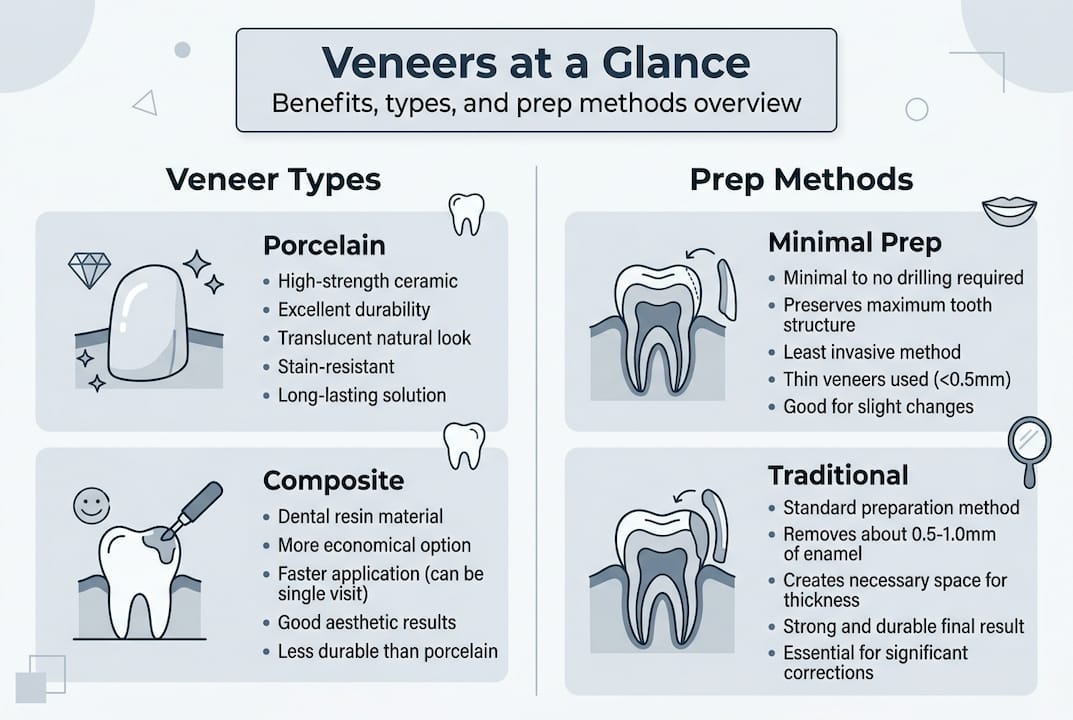
Porcelain veneers offer superior aesthetics and durability. Porcelain is biocompatible, meaning it sits comfortably against gum tissue without causing irritation. It also has a natural translucency that makes it almost indistinguishable from real enamel. The trade-off is cost and the need for laboratory fabrication, which adds time to the process.
Composite resin veneers are applied chair-side in a single appointment. A skilled dentist sculpts the resin directly onto the tooth and polishes it to a natural finish. The procedure is faster and less expensive, but composite is more porous than porcelain, which means it stains more readily and may need replacing sooner. Exploring composite bonding as an option gives you a clearer sense of when this approach makes more sense than porcelain.
Beyond material choice, the preparation design has a significant impact on structural outcomes. Research into direct nano-hybrid composite veneers found that bevel preparation provides superior fracture strength compared to other designs, measuring 475N versus 287N for window preparation. The four main preparation designs are:
- Window preparation: Stays within the enamel, does not extend to the incisal edge. Lower fracture resistance but very conservative.
- Feather preparation: A very thin, tapered margin at the gumline. Minimal enamel removal, suitable for mild cases.
- Bevel preparation: A chamfered edge that increases the bonding surface area and significantly improves fracture strength.
- Incisal overlap: Extends over the biting edge of the tooth. Offers the greatest structural support but requires more enamel removal.
| Preparation design | Fracture strength | Enamel removal | Ideal use case |
|---|---|---|---|
| Window | Lower (approx. 287N) | Minimal | Conservative, mild corrections |
| Feather | Moderate | Very minimal | Thin teeth, subtle changes |
| Bevel | High (approx. 475N) | Moderate | Composite veneers, durability focus |
| Incisal overlap | Highest | More significant | Worn or chipped incisal edges |
“The preparation design should be chosen based on the individual tooth’s existing structure, the material being used, and the functional demands placed on that tooth. There is no universally correct answer.”
For patients considering porcelain veneers in Marbella, the preparation design is always discussed during the planning stage. A good cosmetic dentist will not simply default to one technique. They will assess your bite, your enamel thickness, and your aesthetic goals before recommending the most appropriate approach for each individual tooth.
Expert insights: Longevity, survival, and common pitfalls
Veneers can last a very long time. They can also fail within a few years. The difference almost always comes down to the quality of planning, preparation, and aftercare, rather than the material itself.
Research on veneer survival rates confirms that minimal prep designs improve survival, and that expert attention to proper occlusion and bonding protocols is critical to avoiding failures such as debonding. In practical terms, this means the way your teeth come together when you bite matters enormously. If your bite is not properly balanced after veneer placement, you will place uneven stress on the veneers every time you chew, and they will eventually crack or detach.
The most common reasons veneers fail include:
- Debonding: The veneer separates from the tooth, usually due to inadequate surface preparation or moisture contamination during bonding.
- Fracture: The veneer cracks, often because of excessive bite forces, grinding (bruxism), or an unsuitable preparation design.
- Marginal discolouration: Staining appears at the edge of the veneer where it meets the tooth, typically caused by microleakage at the bond margin.
- Gum recession: If the gum line recedes over time, the edge of the veneer may become visible, affecting aesthetics.
- Sensitivity: Some patients experience increased tooth sensitivity after preparation, particularly if enamel removal was more aggressive than necessary.
Pro Tip: If you grind your teeth at night, tell your dentist before veneer treatment begins. A custom night guard worn after placement can significantly extend the life of your veneers by protecting them from the forces of bruxism.
Maximising longevity is not complicated, but it does require consistent habits. Avoid biting hard objects such as ice, pen lids, or fingernails. Use a soft-bristled toothbrush and non-abrasive toothpaste. Attend regular check-ups so your dentist can monitor the margins and catch any early signs of wear or debonding. Staying up to date with veneer care insights from your clinic keeps you informed as materials and techniques evolve.
Choosing a clinic with a clear guarantee policy in Marbella is also a practical safeguard. It signals that the clinic stands behind the quality of their work and will address any issues that arise within a defined period, which matters enormously when you are making a significant investment in your smile.
The truth about dental veneers: What most guides miss
Most articles about veneers focus on the procedure itself. What they rarely address is the relationship between patient expectations and clinical reality. Veneers are not an instant transformation that requires no thought beyond choosing a shade. The most successful veneer cases we see are the ones where the patient came in with a clear understanding of their own goals, asked the right questions, and chose a clinic based on demonstrated expertise rather than the lowest price.
The idea that veneers are purely cosmetic also undersells them. When a veneer is placed correctly, it adds a layer of protection to a tooth that may have been weakened by wear or minor damage. That is a functional benefit, not just an aesthetic one.
What truly makes veneers for a lifetime a realistic outcome is the combination of premium materials, a dentist who understands occlusion deeply, and a patient who commits to proper maintenance. Shortcuts at any of those three points compromise the result. Premium care is not a luxury in this context. It is the variable that determines whether your veneers look exceptional at year ten or need replacing at year three.
Premium dental veneer solutions in Marbella
If this guide has helped you see veneers differently, the next step is finding a team you can trust to deliver them properly.

At RH Dental Marbella, our cosmetic dentists combine advanced digital planning, premium materials, and meticulous bonding technique to deliver porcelain veneers in Marbella that are built to last. Whether you are considering a single veneer or a full smile makeover in Marbella, we take the time to plan every case individually. Our transparent pricing in Marbella means you know exactly what you are committing to before treatment begins, with no hidden costs and a clear guarantee policy to back up our work. Book a consultation and see what a properly planned veneer treatment can do for your smile.
Frequently asked questions
Are dental veneers permanent?
Dental veneers are considered irreversible once enamel has been removed, but they are not permanent in the sense that they last forever. Most veneers last 10 to 15 years) depending on the material used and how well you care for them.
Do dental veneers damage natural teeth?
When placed by an experienced dentist, veneers cause minimal impact to natural teeth. Enamel removal of 0.3 to 0.5mm) is standard for traditional veneers, and no-prep options exist for patients where even that level of reduction is not appropriate.
Which is better: porcelain or composite veneers?
Porcelain veneers are more durable, stain-resistant, and longer-lasting, while composite veneers are faster to place and more affordable. Research shows that bevel preparation in composites can significantly improve fracture strength, but the right choice ultimately depends on your budget, timeline, and clinical needs.
What are the risks of dental veneers?
The main risks include debonding, fracture, and tooth sensitivity, but these are substantially reduced when proper occlusion and bonding protocols are followed by a skilled clinician. Choosing an experienced cosmetic dentist is the single most effective way to minimise risk.
Recommended
- Veneers for a Lifetime: R&H Dental Marbella’s Unwavering Focus on Longevity and Quality
- Dental Veneers Marbella | Porcelain Veneers Specialist | R&H Dental
- R&H Dental | Insights
- Dental Crowns & Bridges Marbella | Tooth Restoration | R&H Dental