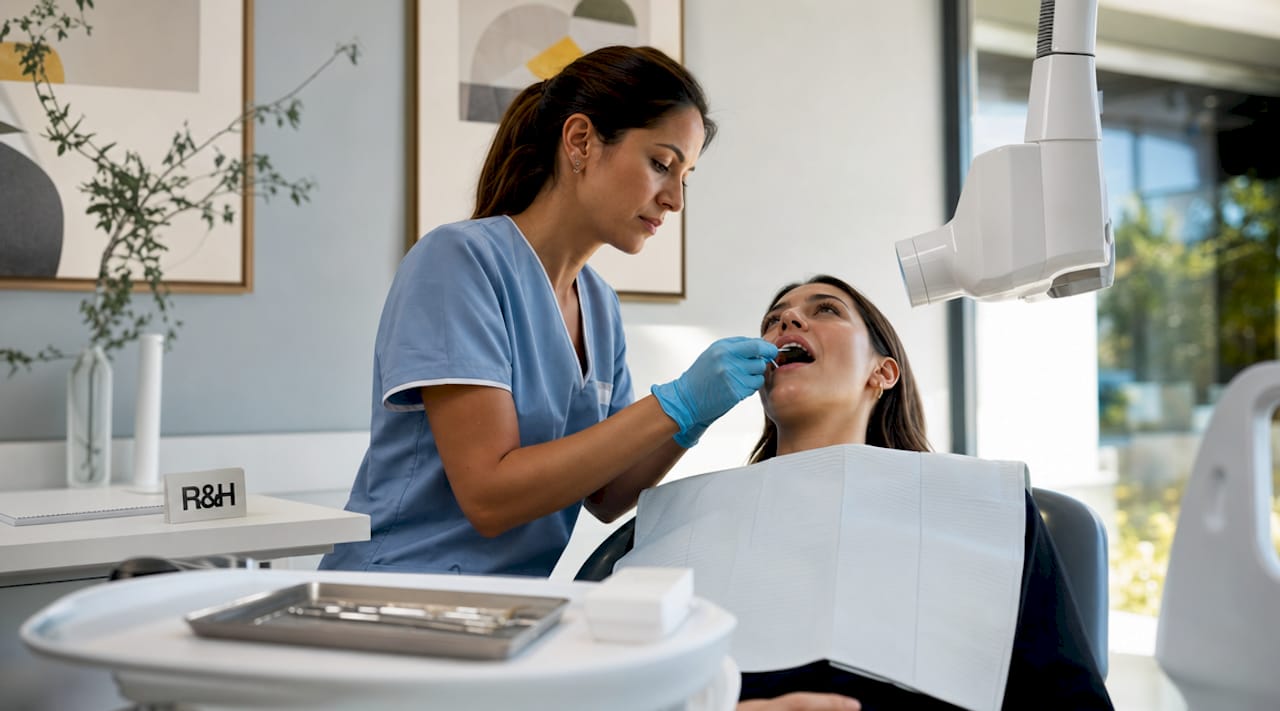

A first dental visit is defined as a structured assessment and planning appointment designed to establish your oral health baseline and create a personalised care path. It is not a treatment session, and nothing will be done to your teeth without your full understanding and consent. For expats and new residents in Marbella, knowing exactly what to expect transforms an unfamiliar experience into a confident, informed decision. This guide walks you through every stage of the process, from preparation to follow-up, drawing on the approach used by experienced clinicians at R&H Dental Marbella.
How to prepare for your first dental visit
Preparation is the single factor most patients overlook, yet it directly shapes the quality of care you receive. A prepared patient with a clear medication list and documented concerns allows the dental team to direct diagnostics accurately and personalise the appointment from the first minute. Arriving without this information means the clinician must gather it during the appointment itself, reducing the time available for examination and discussion.
Bring the following to your appointment:
- Photo identification and proof of address or insurance if applicable
- A full medication list, including supplements and over-the-counter drugs, since several medications affect gum health, saliva production, and bleeding
- Previous dental records or X-rays if you have them. Recent X-ray images from another dentist can reduce the need for new imaging and limit unnecessary radiation exposure
- A written list of concerns or symptoms, such as sensitivity, pain, cosmetic goals, or questions about orthodontics
- Details of any relevant medical conditions, including heart conditions, diabetes, or pregnancy, which all influence treatment planning
Timing matters too. Book a morning appointment when you are least likely to feel rushed. If you experience dental anxiety, mention it when booking rather than on the day. Dental teams at clinics like R&H Dental Marbella are experienced in adapting their pace and communication style for anxious patients, but they can only do so effectively when they know in advance.
Pro Tip: Write down your three most pressing dental concerns the night before your appointment. Patients who arrive with specific questions receive more targeted advice and leave with a clearer understanding of their options.

What happens during a first dental appointment: a step-by-step overview
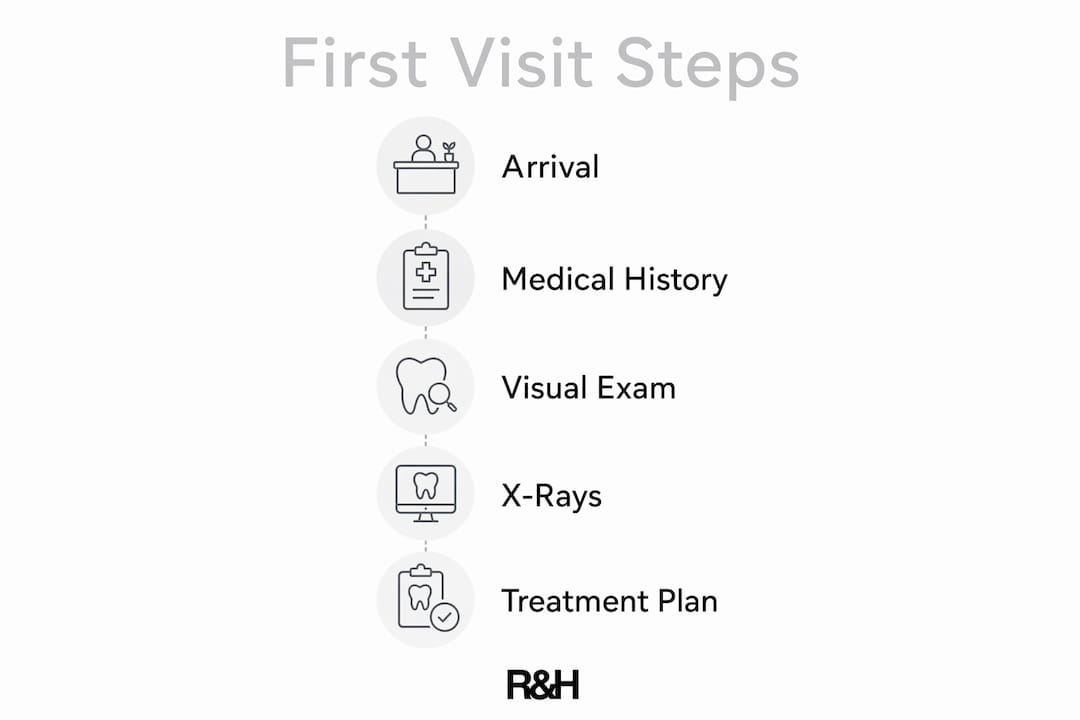
A standard new patient consultation follows a nine-step structure, and the full appointment typically lasts between 45 and 75 minutes depending on imaging needs and the complexity of your oral health history. Understanding each step removes the uncertainty that causes most pre-appointment anxiety.
- Check-in and paperwork. You complete a new patient form covering medical history, current medications, and any known allergies. This takes roughly ten minutes and is the foundation for everything that follows.
- Medical and dental history review. The clinician reviews your form and asks follow-up questions. Conditions such as diabetes, osteoporosis, or heart disease have direct implications for dental treatment and anaesthesia choices.
- Oral examination. The dentist examines every tooth, the soft tissues of the mouth, the tongue, and the jaw joints. They are checking for decay, wear, cracks, and any signs of oral cancer.
- Periodontal charting. A probe is used to measure the depth of the pockets between your gums and teeth. Numbers above 3mm indicate gum disease at varying stages. This is one of the most clinically significant steps and is often skipped at lower-quality practices.
- Digital X-rays and imaging. X-rays reveal decay between teeth, bone levels, and root conditions that are invisible to the naked eye. At R&H Dental Marbella, 3D CBCT scanning is available when a more detailed view is clinically indicated, such as for implant planning or complex extractions.
- Professional cleaning or scaling. If a hygiene appointment is scheduled alongside the consultation, the clinician removes tartar and polishes the teeth. This step may be booked separately depending on the practice.
- Cosmetic goals discussion. You have the opportunity to raise aesthetic concerns, from tooth colour and alignment to missing teeth. This is where treatment options such as veneers, orthodontics, or implants are introduced at a high level.
- Personalised treatment planning. The dentist presents findings and outlines a prioritised care plan. Urgent issues are separated from monitoring items and elective treatments.
- Insurance, pricing, and next steps. Costs are explained, payment options are outlined, and follow-up appointments are scheduled before you leave.
The table below summarises the diagnostic tools commonly used during the visit and what each one reveals:
| Diagnostic tool | What it detects |
|---|---|
| Visual examination | Decay, soft tissue changes, wear patterns |
| Periodontal probe | Gum pocket depth, bone loss indicators |
| Digital X-rays | Interproximal decay, root issues, bone levels |
| 3D CBCT scan | Bone volume, nerve pathways, implant suitability |
| Intraoral camera | Close-up images of cracks, margins, and restorations |
Common patient concerns and how the dental team addresses them
Anxiety before a first dental appointment is normal, and it does not make you unusual. Voicing anxieties early allows the dental team to adjust their pace and communication style, which is the most effective way to keep patients comfortable and in control throughout the visit.
Here is what patients most commonly worry about, and how a well-run practice responds:
- Pain during examination. A standard oral examination and periodontal charting involve mild pressure and occasional sensitivity, particularly around inflamed gums. Local anaesthetic is not typically required for examination, but numbing gel can be applied to sensitive areas on request.
- Pressure to commit to treatment. A first visit is a planning session, not a sales appointment. You will receive a clear explanation of findings and options, but no treatment proceeds without your explicit agreement.
- Embarrassment about the condition of your teeth. Clinicians examine mouths every day. Presenting with years of unaddressed dental work is far more common than patients expect, and a good dentist responds with a practical plan, not judgement.
- Language barriers. For expats in Marbella, this is a genuine concern. R&H Dental Marbella employs English-speaking dentists from Finland, New Zealand, Ireland, Portugal, and Spain, each with 15 to 35 years of clinical experience, so the entire consultation takes place in clear, fluent English.
“The first dental exam is like a leap of faith for many patients. The rapport built during that initial consultation is more important for long-term oral health than any single clinical procedure.” Source: Cosmetic Surgery Insider
Pro Tip: Agree a simple stop signal with your dentist before the examination begins, such as raising your left hand. Knowing you can pause at any moment significantly reduces anxiety during the appointment.
What happens after your first visit: follow-up care and scheduling
The first appointment produces a clear picture of your oral health and a prioritised treatment plan. What comes next depends on what was found, but the structure is consistent across most patients.
Patients with a healthy oral baseline are typically recommended for routine preventive cleanings every six months. This interval is not arbitrary. It reflects the average rate at which tartar accumulates and early decay becomes detectable. Patients with active gum disease, a history of frequent cavities, or systemic conditions such as diabetes may be placed on a three or four-month recall schedule instead.
Treatment priorities are usually divided into three categories:
- Urgent care, such as active infection, pain, or a broken tooth requiring immediate attention
- Scheduled treatment, such as fillings, crowns, or periodontal therapy that should be addressed within weeks or months
- Monitoring, such as small lesions or early wear that will be reviewed at the next appointment
Cost transparency is a significant factor for expats managing dental care abroad. Reputable clinics provide an itemised written treatment plan with costs before any work begins. R&H Dental Marbella publishes its pricing structure openly and offers a written guarantee on completed treatments, which removes the uncertainty that often prevents patients from committing to care.
The comparison below shows the difference between a reactive and a preventive approach to follow-up care:
| Approach | Typical outcome |
|---|---|
| Reactive: attend only when in pain | Higher treatment complexity and cost over time |
| Preventive: attend every 6 months | Early detection, simpler interventions, lower long-term cost |
| Personalised recall: 3 to 4 months for high-risk patients | Active disease managed before it progresses |
Staying engaged with your dental team after the first visit is straightforward. Keep your follow-up appointments, complete the dental care checklist your clinician provides, and contact the practice promptly if new symptoms arise between appointments.
Key takeaways
A first dental visit is a structured assessment that establishes your oral health baseline, produces a personalised treatment plan, and sets the foundation for long-term preventive care.
| Point | Details |
|---|---|
| Preparation shapes the appointment | Bring your medication list, previous X-rays, and a written list of concerns to maximise clinical accuracy. |
| The visit follows a nine-step process | From check-in to treatment planning, each step serves a diagnostic or communicative purpose. |
| No treatment without consent | The first visit is a planning session; nothing proceeds without your full understanding and agreement. |
| Follow-up intervals are personalised | Six months is standard for healthy patients; higher-risk patients benefit from three to four-month recalls. |
| Language and transparency matter | For expats, choosing a clinic with fluent English-speaking clinicians and published pricing removes two of the most common barriers to care. |
What we have learnt from years of welcoming new patients
After seeing thousands of new patients at R&H Dental Marbella, the pattern is consistent. The patients who get the most from their first visit are not the ones with the healthiest teeth. They are the ones who arrive prepared, ask questions, and treat the appointment as a conversation rather than a procedure.
The most common mistake we see is patients who delay their first visit because they assume the dentist will find something serious and immediately recommend expensive treatment. That assumption is understandable, but it is the opposite of how a well-run clinic operates. The first visit is designed as a collaborative session, not a treatment ambush. Our role is to give you accurate information and options, not to pressure you into decisions.
We also notice that patients who disclose their anxieties early leave far more satisfied than those who stay silent. A simple conversation at the start of the appointment changes everything: the pace, the explanations, the level of detail we offer. Dental anxiety is not a weakness. It is information, and we use it to provide better care.
For expats in Marbella specifically, the additional layer of navigating dental care in a foreign country adds real stress. Knowing that your clinician speaks fluent English, that pricing is published before treatment begins, and that a written guarantee backs the work removes the uncertainty that makes dental care feel like a risk. That clarity is what we aim to provide from the very first appointment.
— R&H Dentists
Your first appointment at R&H Dental Marbella
R&H Dental Marbella is a large, fully equipped clinic on the Costa del Sol, staffed by English-speaking dentists from Finland, New Zealand, Ireland, Portugal, and Spain, each with between 15 and 35 years of clinical experience. New patients benefit from advanced diagnostic technology, including 3D CBCT scanning and an in-house digital laboratory, which means your assessment is thorough and your treatment plan is built on precise data.
Pricing is published transparently on the website, and every completed treatment is backed by a written guarantee. If you are ready to take the first step, explore the transparent pricing page or take a virtual tour of the clinic before booking your consultation. There is no obligation, and no pressure. Just clear information and experienced clinicians ready to help.
FAQ
How long does a first dental appointment take?
A first dental appointment typically lasts between 45 and 75 minutes, depending on whether X-rays are taken and the complexity of your dental history.
Will I need treatment at my first visit?
No treatment is carried out at the first visit without your consent. The appointment is a planning and assessment session, and any recommended treatment is explained fully before you decide whether to proceed.
What should I bring to my first dental appointment?
Bring a photo ID, a full list of current medications, any previous dental X-rays, and a written note of your concerns or symptoms. This information allows the clinician to personalise your care from the outset.
How often should I return after my first visit?
Most patients with healthy gums and teeth are recommended to return every six months for a preventive check and clean. Patients with active gum disease or a higher cavity risk may be placed on a three to four-month recall schedule.
Can I ask about cosmetic treatments at my first visit?
Yes. Cosmetic goals, including teeth whitening, veneers, orthodontics, and smile design, are a standard part of the first consultation. You can explore real treatment outcomes before committing to any plan.
.png)