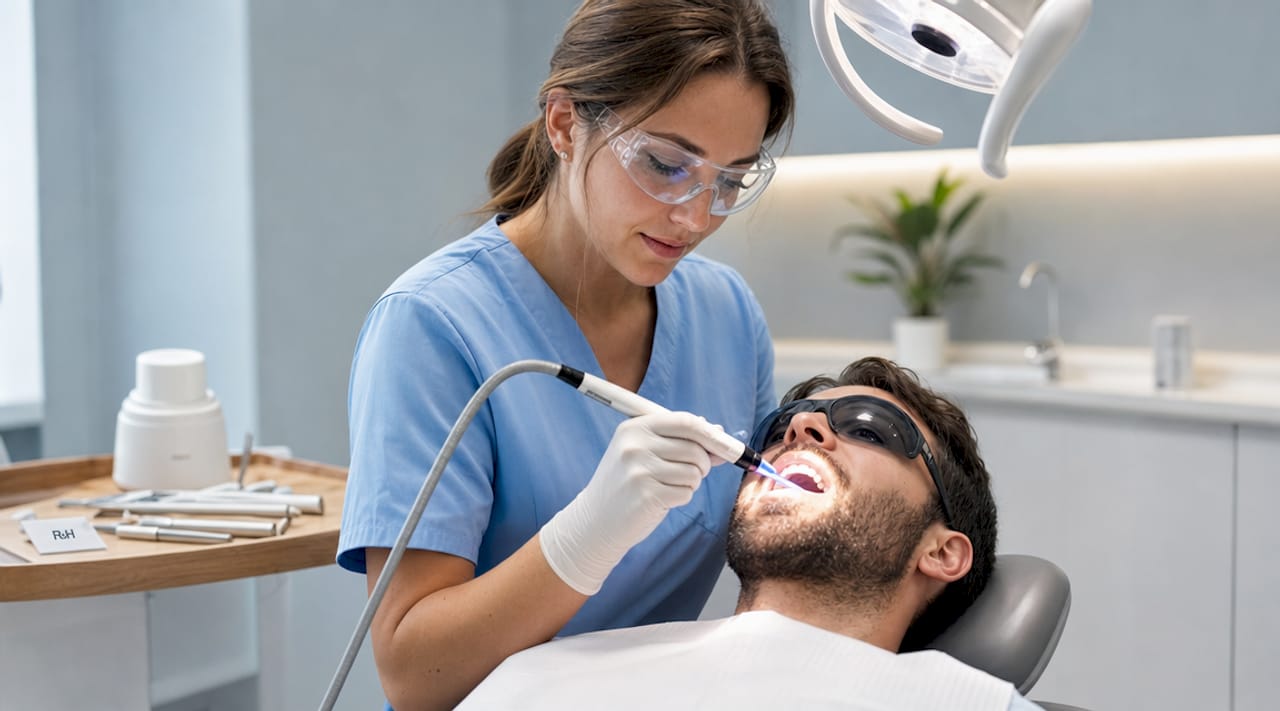
Laser dentistry is defined as the clinical application of focused light energy to perform dental procedures with greater precision, less tissue disruption, and improved patient comfort compared to conventional mechanical methods. The role of laser dentistry spans multiple specialties, from caries removal and root canal treatment to periodontal therapy and soft-tissue surgery. Common systems in clinical use include Er:YAG, Er,Cr:YSGG, diode, and Nd:YAG lasers, each matched to specific tissues and treatment goals. Understanding how these tools work, where they excel, and where their limitations lie helps you make genuinely informed decisions about your dental care.
How do different dental lasers work, and why does wavelength matter?
Every dental laser works by delivering a specific wavelength of light that is absorbed by a target chromophore in the tissue. Wavelength-specific tissue targeting is the fundamental principle that separates effective laser treatment from potentially harmful misapplication. Soft tissues absorb melanin and haemoglobin, making diode and Nd:YAG lasers well suited to gingival procedures. Enamel and bone interact primarily with water and hydroxyapatite, which is why erbium lasers are the preferred choice for hard-tissue work.
The practical implications are significant. An erbium laser used on soft tissue, or a diode laser applied to enamel, will not produce the intended clinical result and may cause thermal injury. Energy settings, pulse duration, and the delivery method (fibre optic tip, handpiece, or scanning mode) all influence how deeply the laser penetrates and how much heat is generated in surrounding tissue.
Key laser types and their primary applications:
- Er:YAG and Er,Cr:YSGG — hard-tissue procedures including caries removal, cavity preparation, and bone surgery
- Diode lasers (810–980 nm) — soft-tissue incision, gingival contouring, and biostimulation
- Nd:YAG — deep soft-tissue coagulation and periodontal pocket decontamination
- Low-level lasers (photobiomodulation wavelengths) — pain reduction, wound healing acceleration, and anti-inflammatory effects
Pro Tip: When researching laser treatments, ask your dentist which specific laser system they use and why it is appropriate for your diagnosis. The answer tells you a great deal about their level of training and clinical reasoning.
What are the main clinical applications of laser dentistry?
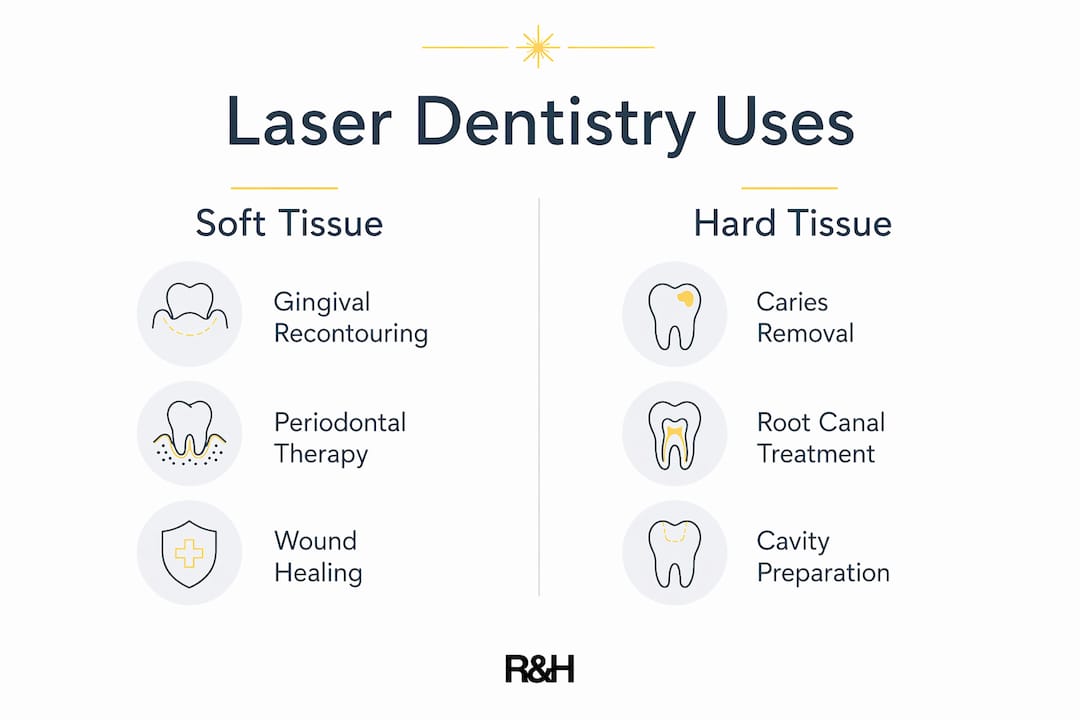
Lasers serve as important adjuncts across caries removal, endodontics, periodontology, prosthodontics, and orthodontics. Each application draws on a different laser type and protocol, which is why no single device covers every clinical need.
Caries removal and cavity preparation
Erbium lasers remove decayed tooth structure by vaporising water within the carious tissue, leaving healthy enamel largely intact. This selective ablation means less healthy tooth structure is sacrificed compared to a conventional drill. The absence of vibration and the reduced need for local anaesthesia are particularly meaningful for children and anxious adults.
Endodontics and root canal treatment
Laser-activated irrigation protocols, specifically PIPS (Photon-Initiated Photoacoustic Streaming) and SWEEPS (Shock Wave Enhanced Emission Photoacoustic Streaming), improve irrigant penetration into lateral canals and dentinal tubules. A clinical study of 132 patients demonstrated superior periapical healing and lesion size reduction at one year when laser activation was used alongside conventional root canal cleaning. Laser activation is an adjunct to core cleaning, not a replacement for it.
Periodontal therapy
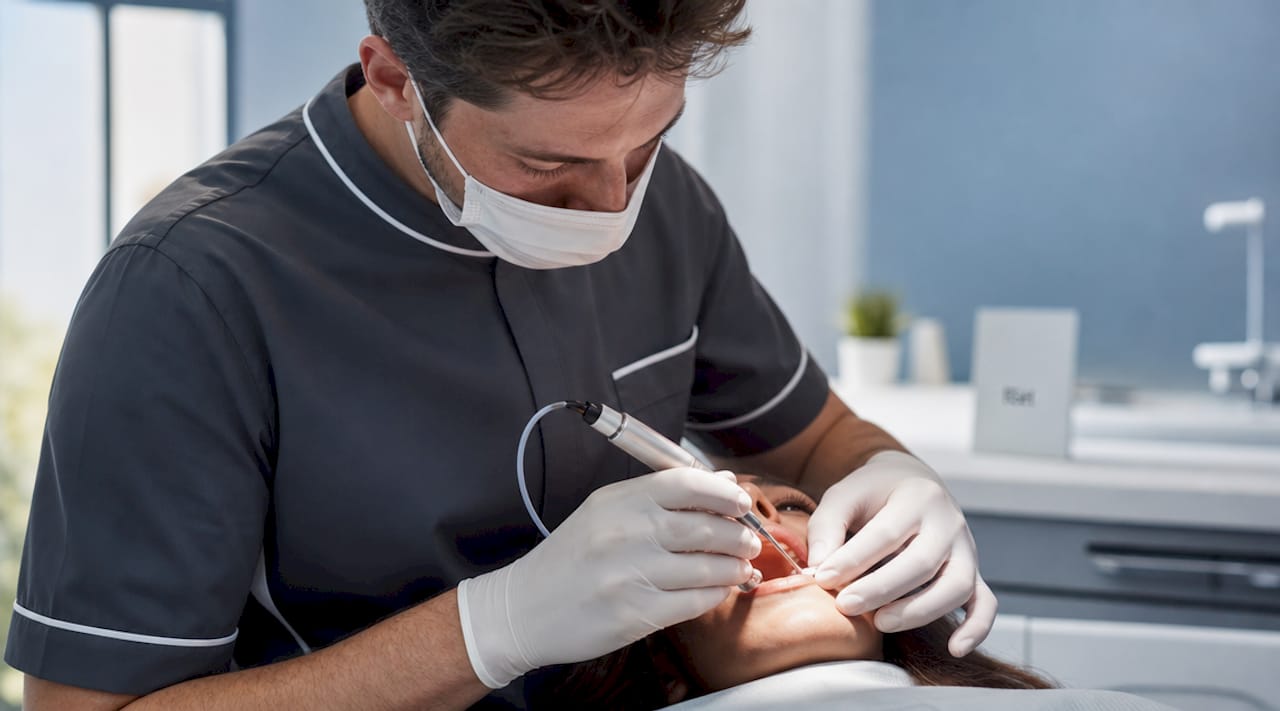
Laser-assisted periodontal treatments offer antibacterial effects, tissue ablation, wound healing support, and reduced inflammation. The Laser-Assisted New Attachment Procedure (LANAP) uses an Nd:YAG laser to selectively remove diseased tissue from periodontal pockets while preserving healthy attachment, promoting vasodilation and tissue regeneration without conventional surgery. For patients managing gum disease in Marbella, laser periodontal treatment represents a less invasive alternative worth discussing with a specialist.
Orthodontics and prosthodontics
In orthodontics, diode lasers perform gingival recontouring before bracket placement and assist with soft-tissue management during treatment. Laser debonding of ceramic brackets reduces the risk of enamel fracture compared to mechanical removal. In prosthodontics, lasers assist with tissue management before impressions and crown placements, producing cleaner margins and less post-operative discomfort.
| Specialty | Laser type | Primary benefit |
|---|---|---|
| Caries removal | Er:YAG, Er,Cr:YSGG | Less healthy tissue loss, reduced anaesthesia need |
| Endodontics | Er:YAG with PIPS/SWEEPS | Superior canal cleaning and healing outcomes |
| Periodontology | Nd:YAG, diode | Bacterial reduction, tissue regeneration, less surgery |
| Orthodontics | Diode | Soft-tissue management, safer debonding |
| Photobiomodulation | Low-level lasers | Pain reduction, accelerated healing |
How does laser dentistry benefit patients compared to traditional methods?
The patient-facing advantages of laser dental treatments are well documented and extend beyond simple comfort. Erbium lasers reduce intraoperative pain and the need for local anaesthesia in paediatric caries removal compared to rotary instruments, with restoration quality remaining comparable. For adults, the same principle applies: less vibration, less noise, and often less injection.
Photobiomodulation with low-level lasers reduces postoperative pain and inflammation, with clinical trials showing 30 to 55 per cent pain reduction and improved vascularisation at specific dosing parameters. This matters most after periodontal surgery, implant placement, or any procedure where swelling and discomfort typically follow.
The benefits patients most consistently report include:
- Reduced anxiety — the absence of drill vibration and high-pitched noise lowers procedural stress, particularly for patients with dental phobia
- Less bleeding — laser energy coagulates blood vessels as it works, making soft-tissue procedures cleaner and faster to heal
- Preserved healthy tissue — precise ablation removes only what needs to go, protecting surrounding enamel, bone, and gingiva
- Faster recovery — reduced trauma to tissue translates directly into shorter healing periods and less post-operative discomfort
- Fewer complications — the antibacterial effect of laser energy reduces infection risk in periodontal and endodontic procedures
One honest caveat: laser procedures can take longer than their conventional equivalents, particularly caries removal with erbium lasers. The trade-off in comfort and tissue preservation is generally worthwhile, but it is worth factoring into your appointment planning.
What are the limitations and safety considerations of laser dentistry?
Laser dentistry is not universally superior to conventional methods, and understanding its limitations helps you set realistic expectations. Proper laser selection and safe use require highly trained practitioners who understand laser physics, tissue optics, and safety protocols. Misapplication of the wrong wavelength or incorrect power settings can cause thermal damage to pulp, bone, or adjacent soft tissue.
Diode lasers are widely used for soft-tissue procedures and biostimulation, but their ease of use can create a false sense of simplicity. Thermal risks remain real if the device is used without proper cooling, adequate training, or appropriate clinical indication.
Before agreeing to any laser treatment, consider asking your clinician the following:
- Which specific laser system will be used, and what wavelength does it operate at?
- What formal training or certification do you hold in laser dentistry?
- Is laser treatment the most appropriate option for my specific diagnosis, or would a conventional approach be equally effective?
- What are the realistic outcomes and recovery timeline for this procedure?
- Are there any contraindications in my medical history that affect laser suitability?
Laser equipment carries higher capital costs than conventional instruments, and not every clinic invests in multiple systems. A clinic offering only one laser type may not be able to offer the optimal tool for every indication. Higher equipment costs can also translate into higher treatment fees, so transparent pricing matters.
Pro Tip: Certification from a recognised body such as the World Federation of Laser Dentistry (WFLD) or the Academy of Laser Dentistry (ALD) is a meaningful indicator of a clinician’s commitment to safe, evidence-based laser practice.
How is laser dentistry integrated at R&H Dental Marbella?
R&H Dental Marbella incorporates advanced dental technology, including laser systems, across its clinical specialties. The clinic’s team of English-speaking dentists, with 15 to 35 years of experience each and backgrounds spanning Finland, New Zealand, Ireland, Portugal, and Spain, brings a depth of clinical exposure that informs appropriate laser selection and protocol design.
Key aspects of laser care at R&H Dental Marbella include:
- Multi-specialty integration — lasers are used across periodontal therapy, endodontics, soft-tissue surgery, and photobiomodulation, matched to the correct indication rather than applied as a default
- Diagnostic support — 3D CBCT imaging and in-house digital planning tools inform treatment decisions before any laser procedure begins, reducing uncertainty and improving precision
- Transparent pricing — treatment fees are presented clearly before treatment commences, with no hidden costs for technology use
- Written guarantee — clinical outcomes are backed by a written guarantee, reflecting the team’s confidence in their standards and materials
- Patient-centred consultation — laser options are discussed in the context of your full clinical picture, not as an upsell
Key takeaways
Laser dentistry delivers its greatest value when the correct wavelength is matched to the target tissue by a trained clinician, making operator expertise as important as the technology itself.
| Point | Details |
|---|---|
| Wavelength determines outcome | Each laser type targets specific chromophores; mismatched wavelengths risk thermal damage and poor results. |
| Multiple specialties benefit | Erbium, diode, Nd:YAG, and low-level lasers each serve distinct roles across caries, endodontics, and periodontics. |
| Patient comfort is evidence-based | Studies confirm reduced pain, less anaesthesia need, and 30 to 55 per cent lower postoperative pain with correct laser use. |
| Training is non-negotiable | Certification and hands-on experience determine whether laser dentistry is safe and effective in practice. |
| Limitations are real | Longer procedure times, higher costs, and equipment variation mean lasers are not always the optimal choice for every case. |
Why laser dentistry has changed how we think about patient care
Over the course of a long career in dentistry, few developments have shifted the patient experience as meaningfully as the integration of laser technology into everyday clinical practice. The change is not simply about having a new instrument. It is about what becomes possible when you can work with greater precision and cause less collateral disruption to healthy tissue.
What we observe consistently at R&H Dental Marbella is that patients who have experienced laser-assisted periodontal treatment or laser-activated endodontics often describe the recovery as noticeably different from what they expected based on prior dental experiences. Less swelling, less discomfort, and a faster return to normal life. That is not marketing language. It reflects what the clinical evidence supports.
The honest caveat we always share is this: the laser is only as good as the clinician using it. Laser periodontal outcomes, in particular, vary significantly with operator skill and protocol parameters. A poorly trained operator with an expensive laser will produce worse results than a skilled clinician with conventional instruments. So when you are evaluating whether laser dentistry is right for you, ask about the person behind the device, not just the device itself.
The future direction is encouraging. Research into photobiomodulation dosing, laser-assisted implant site preparation, and antibacterial protocols continues to expand what is clinically achievable. For patients willing to ask the right questions and seek out properly trained providers, laser dentistry offers a genuinely better experience for a growing range of treatments.
— R&H Dentists
Experience expert laser dental care at R&H Dental Marbella
R&H Dental Marbella brings together an experienced international team and advanced clinical technology to deliver laser-assisted treatments across periodontics, endodontics, and soft-tissue care. Every treatment plan is built around your specific diagnosis, with clear pricing and a written guarantee from the outset.
If you are considering laser dentistry for gum disease, root canal treatment, or any other dental need, a consultation with our English-speaking specialists gives you a clear, honest picture of whether laser treatment is the right choice for your situation. There is no obligation, no pressure, and no jargon. Just straightforward clinical guidance from a team that has been delivering high-quality dental care in Marbella for many years.
FAQ
What is the role of laser dentistry in modern practice?
Laser dentistry uses focused light energy to perform procedures across multiple specialties, including caries removal, periodontal therapy, and endodontics, with greater precision and less tissue disruption than conventional methods.
Are laser dental treatments painful?
Laser treatments are generally less painful than conventional alternatives. Studies show erbium lasers reduce intraoperative pain and anaesthesia requirements, particularly in children, and photobiomodulation reduces postoperative discomfort by 30 to 55 per cent.
Is laser dentistry safe?
Laser dentistry is safe when performed by a trained clinician using the correct wavelength and settings for the target tissue. Misapplication carries thermal damage risks, which is why certified training and proper protocol selection are non-negotiable.
How do I know if laser treatment is right for my dental problem?
The suitability of laser treatment depends on your specific diagnosis, the tissue involved, and the available laser systems at your clinic. A consultation with a trained clinician, such as those at R&H Dental Marbella, will clarify whether a laser approach offers a genuine advantage for your case.
Does laser dentistry cost more than traditional dentistry?
Laser equipment carries higher capital costs, which can result in higher treatment fees. R&H Dental Marbella provides transparent pricing before any treatment begins, so you can make an informed decision without unexpected costs.
.png)