
Dental bonding is one of the most versatile and underestimated procedures in cosmetic dentistry, yet many patients confuse it with veneers, fillings, or more invasive treatments. At its core, dental bonding involves applying a tooth-coloured composite resin to change the shape, size, or colour of a tooth. It can address chips, close small gaps, mask discolouration, and refine awkward contours, often in a single appointment. This guide covers the procedure step by step, the genuine benefits, the realistic limitations, and how composite bonding compares to other cosmetic options so you can make a well-informed decision.
Table of Contents
- Key takeaways
- What dental bonding actually is
- The dental bonding procedure, step by step
- Benefits of dental bonding worth knowing
- Longevity, maintenance, and realistic limitations
- Dental bonding vs other cosmetic options
- Our clinical perspective on bonding
- Composite bonding at R&H Dental Marbella
- FAQ
Key takeaways
| Point | Details |
|---|---|
| Minimally invasive fix | Bonding rarely requires enamel removal, making it one of the most conservative cosmetic options available. |
| Single-visit treatment | Most cases are completed in 30 to 60 minutes per tooth, with no laboratory wait time. |
| Lifespan of 3 to 10 years | Composite resin is a maintenance restoration and will need refreshing depending on diet and habits. |
| More affordable than veneers | Bonding costs considerably less per tooth, making it a practical starting point for smile improvement. |
| Best for minor corrections | Ideal for chips, gaps, and discolouration; larger aesthetic goals may call for porcelain alternatives. |
What dental bonding actually is
The formal clinical term for the procedure is composite resin bonding, though most patients and practitioners use “dental bonding” interchangeably. Composite resin is a malleable, tooth-coloured material made from a mixture of fine glass or ceramic particles embedded in a plastic matrix. When applied by a skilled clinician, it mimics the translucency, texture, and light-reflecting properties of natural enamel with impressive accuracy.
Bonding materials have evolved considerably since the 1960s, when early resins were prone to discolouration and fracture. Modern composite materials are far more durable, colour-stable, and polishable, allowing results that are difficult to distinguish from natural tooth structure under normal viewing conditions.
Common uses for composite bonding include:
- Chipped or fractured teeth where a small section of enamel has been lost
- Gaps between teeth (known as diastemas) that are cosmetically bothersome but structurally sound
- Discolouration or staining that does not respond to whitening treatments
- Teeth that appear too short or unevenly shaped
- Minor alignment irregularities where orthodontics is not the patient’s preference
- Exposed root surfaces where recession has left the tooth looking longer or more sensitive
The key distinction from porcelain options is that composite resin is applied directly to the tooth in a single visit and shaped by hand. Porcelain veneers, by contrast, are manufactured in a laboratory from ceramic and require irreversible enamel preparation. Bonding sits comfortably at the conservative end of the cosmetic spectrum.
The dental bonding procedure, step by step
Understanding exactly what happens during treatment removes much of the uncertainty patients naturally feel. The typical bonding process follows a well-established sequence that rarely deviates significantly from clinic to clinic.
-
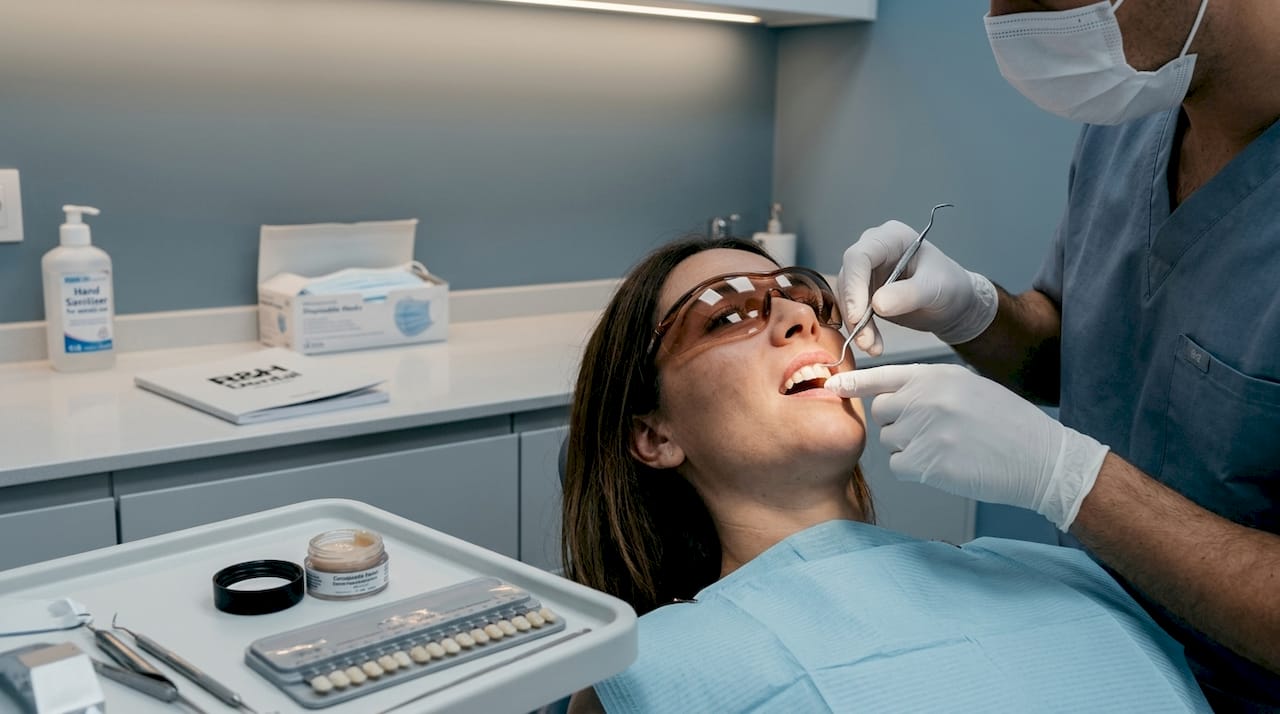
Shade selection. The dentist uses a shade guide to match the composite resin precisely to your surrounding teeth. This step is more nuanced than it appears. Tooth colour varies not just in hue but in translucency and saturation, and an experienced eye makes the difference between a result that blends seamlessly and one that looks placed.
-
Surface preparation. The tooth surface is lightly roughened with a gentle abrasive or conditioning agent. This micro-etching creates a textured surface the resin can physically grip. In most bonding cases, no local anaesthetic is needed because the enamel preparation is minimal or absent entirely.
-
Conditioning liquid application. A bonding agent, a thin liquid primer, is applied to the prepared surface. This chemical adhesive creates a molecular bond between the natural tooth structure and the composite resin placed on top.
-
Resin application and sculpting. The composite material, which has the consistency of soft putty, is applied in layers. The clinician sculpts each layer by hand, building up the desired shape. This stage requires both technical precision and an aesthetic sensibility, as the shape must harmonise with the patient’s facial proportions and bite.
-
Curing with a light. Each layer is hardened using a high-intensity blue-spectrum curing light. This triggers a photochemical reaction within the resin, bonding the particles into a solid mass within seconds.
-
Finishing and polishing. Once the final shape is achieved, the bonded tooth is refined with fine-grit finishing burs and polishing discs until the surface is smooth and glossy. A well-polished composite is noticeably more stain-resistant and far more natural in appearance.
Bonding is usually completed in one visit, taking approximately 30 to 60 minutes per tooth. Multiple teeth can often be treated in the same appointment. There is no laboratory stage and no temporary restoration to wear in the interim.
Pro Tip: Ask your dentist to show you a photograph of the shade selection against your actual teeth before they begin. Under clinic lighting, composite shades can look slightly different than under natural daylight, and a quick check prevents unwanted surprises.
Benefits of dental bonding worth knowing
The appeal of composite bonding goes beyond convenience. For the right patient, it represents a genuinely smart cosmetic decision rather than a compromise.
The benefits of dental bonding extend across several important categories:
- Reversibility. Because bonding does not require significant enamel removal, it is the only major cosmetic option that leaves future treatment choices open. If you later want veneers or orthodontic treatment, no structural damage has been done.
- Speed. A chipped front tooth can be restored to a natural appearance within a single lunch break. No impressions, no laboratory, no second appointment.
- Cost. Bonding is one of the more accessible cosmetic procedures. Costs typically range from roughly £200 to £800 per tooth depending on complexity and location, which is considerably less than porcelain veneers.
- Comfort. Most patients require no anaesthetic and report no discomfort during the procedure.
- Versatility. The same material that repairs a chip can also close a gap, lengthen a short tooth, or cover a stubborn stain. Few cosmetic treatments cover such a broad range of concerns in a single visit.
- Natural appearance. In skilled hands, composite resin replicates enamel convincingly. When the shade is matched thoughtfully and the surface is polished properly, the result should be indistinguishable in conversation.
That said, bonding is not universally suitable. Patients with extensive decay, heavy bite forces, or teeth grinding (bruxism) may place too much stress on the resin. Oral health problems like decay must be addressed before bonding proceeds, or the results will be short-lived regardless of the quality of the work.
Pro Tip: If you are considering bonding to close a gap or reshape teeth, ask your clinician to do a “mock-up” with temporary material first. Seeing the proportional change before committing costs nothing and confirms whether the result will suit your face.
Longevity, maintenance, and realistic limitations
Composite bonding is a maintenance restoration by its very nature. The bonding material typically lasts between three and ten years before touch-ups or replacement are needed. That is a wide range, and what sits at either end of it largely depends on the patient.
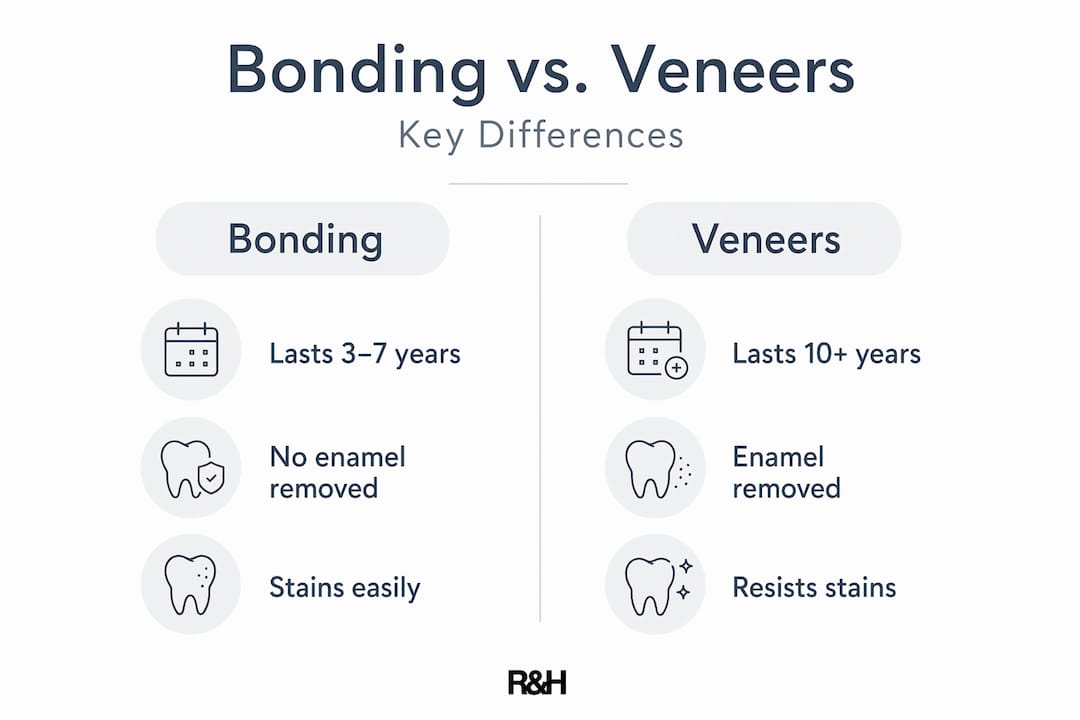
Diet and habits exert a significant influence. Coffee, tea, red wine, and tobacco all stain composite resin more readily than natural enamel or porcelain. Bonding is not as stain-resistant as porcelain veneers, and patients who consume staining substances regularly will notice gradual discolouration over two to three years. This does not mean bonding is a poor choice. It means patients need accurate expectations from the outset.
Nail biting, chewing hard foods repeatedly on bonded teeth, and clenching or grinding will accelerate wear. Polishing during routine hygiene appointments can refresh the surface gloss and remove surface staining before it becomes embedded.
The following table compares bonding directly against porcelain veneers across the factors that matter most to cosmetic patients:
| Factor | Composite bonding | Porcelain veneers |
|---|---|---|
| Enamel removal required | Minimal to none | Yes, irreversible |
| Number of visits | One | Two to three |
| Average lifespan | 3 to 10 years | 10 to 20 years |
| Stain resistance | Moderate | High |
| Repairability | Easy, chairside | Requires replacement |
| Relative cost | Lower | Higher |
| Reversibility | Yes | No |
The take-away from this table is not that one option is superior. It is that they serve different patients at different stages of their cosmetic journey. For a 28-year-old with a chipped lateral incisor, bonding is the logical starting point. For a 45-year-old planning a full smile transformation, veneers for a lifetime may offer a more enduring investment.
Dental bonding vs other cosmetic options
Knowing when bonding is the right choice requires a brief comparison with the alternatives most patients are also considering.
| Treatment | Best suited for | Invasiveness | Typical lifespan |
|---|---|---|---|
| Composite bonding | Chips, gaps, minor staining | Very low | 3 to 10 years |
| Porcelain veneers | Multiple teeth, significant shape change | Moderate | 10 to 20 years |
| Teeth whitening | Surface and internal staining only | None | 1 to 3 years |
| Orthodontics | Spacing, alignment, bite issues | Low to moderate | Permanent |
Teeth whitening addresses colour but cannot change the shape of a tooth. If a tooth is discoloured and slightly misshapen, whitening alone will not resolve the concern. Bonding can address both in one appointment.
Porcelain veneers offer greater durability and stain resistance, but they require permanent enamel reduction and carry a higher financial commitment. They make excellent sense for patients treating multiple front teeth who want a long-term result with minimal maintenance. For a single chipped tooth or a small gap between two centrals, removing enamel irreversibly would be disproportionate.
Orthodontics addresses spacing and alignment at a structural level that bonding cannot replicate. If gaps are the result of crowding or bite discrepancy, the right answer is alignment, not masking. A thorough consultation will clarify which category your concern falls into. You can explore the broader universe of cosmetic dentistry options to understand where bonding sits within the full treatment spectrum.
Our clinical perspective on bonding
I have recommended composite bonding to hundreds of patients over the years, and the cases that go best are the ones where the patient understands what it can achieve and what it cannot. The misconception I encounter most often is that bonding is somehow a second-best option. It is not. It is the appropriate option for a specific set of concerns, and choosing it over a more aggressive treatment when the situation calls for it is the clinically sound decision.
What patients frequently overlook is the craft involved. Composite resin in the wrong hands looks flat, opaque, or obviously placed. The material is only as good as the person shaping and polishing it. At R&H Dental Marbella, we use in-house digital photography and smile analysis to plan proportions before a single gram of resin touches a tooth. That planning stage is what separates results that look natural from results that look dental.
The other thing I remind patients is that bonding requires a partnership. The quality of the outcome after three years depends on how you care for it. Hygiene appointments, avoiding habitual biting of hard objects, and managing any grinding all matter more than most people realise. Set those expectations clearly at the start, and bonding is a treatment that consistently delivers quiet, confidence-building results.
— R&H Dentists
Composite bonding at R&H Dental Marbella
At R&H Dental Marbella, composite bonding is carried out by clinicians with 15 to 35 years of individual experience, working in a fully equipped clinic with an in-house digital photography studio and laboratory. Every cosmetic case begins with a detailed smile assessment, including shade analysis and proportion planning, so the result is designed around your face rather than placed onto it.

Our pricing is published transparently on our dental prices page so you can plan without surprises, and all treatments come with a written guarantee. Whether you are starting with a single chipped tooth or considering a broader smile makeover in Marbella, we are happy to talk through your options at a no-pressure consultation. Our English-speaking team includes dentists from Finland, New Zealand, Ireland, Portugal, and Spain. Book a consultation and find out whether bonding is the right starting point for your smile.
FAQ
What is dental bonding used for?
Dental bonding is used to repair chips, close gaps, mask staining, and alter the shape or length of teeth using tooth-coloured composite resin. It is a versatile, minimally invasive cosmetic treatment completed in a single visit.
How long does dental bonding last?
Bonding material typically lasts between three and ten years, depending on diet, oral habits, and the care taken during routine hygiene. Regular polishing and avoiding staining foods extends its lifespan noticeably.
Does dental bonding hurt?
For most patients, no anaesthetic is needed and the procedure is entirely comfortable. The tooth surface is lightly conditioned rather than drilled, making bonding one of the least invasive cosmetic treatments available.
Is dental bonding better than veneers?
Neither is categorically better. Bonding is preferable for minor corrections on one or two teeth where preserving enamel matters. Porcelain veneers are the stronger choice for multiple teeth, larger shape changes, or patients who prioritise longevity and stain resistance.
Can dental bonding be removed or reversed?
Because bonding requires minimal or no enamel removal, it is considered reversible. The composite resin can be polished away without damaging the underlying tooth, leaving future treatment options fully intact.
.png)