
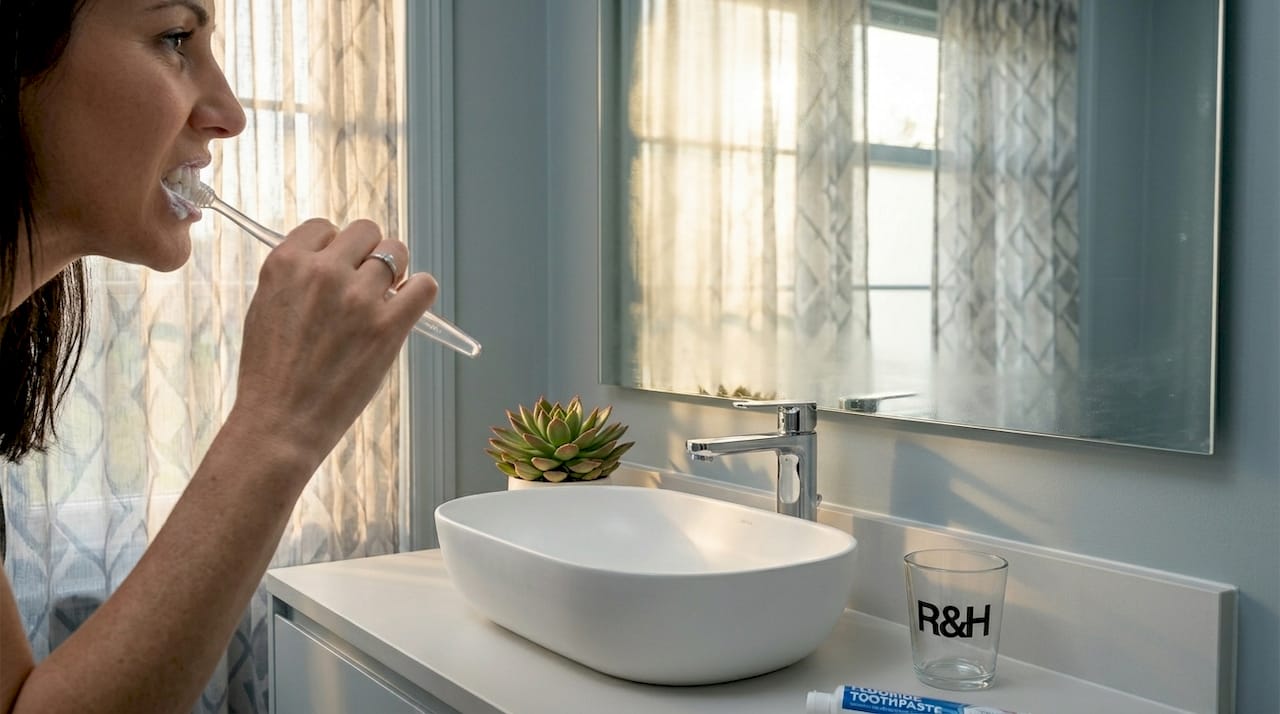
A dental hygiene checklist is a structured set of daily oral care steps proven essential to maintaining healthy teeth and gums and preventing common problems like cavities, gingivitis, and periodontal disease. The Florida Department of Health, Cleveland Clinic, and the American Academy of Pediatrics all confirm that the foundation of good oral health rests on twice-daily brushing with fluoride toothpaste, daily interdental cleaning, and correct fluoride retention technique. What most people miss is that brushing is not purely a cleaning exercise. It is primarily a fluoride delivery routine, and how you finish matters as much as how you start. This guide gives you a practical, family-friendly oral hygiene checklist you can follow at home, with the clinical reasoning behind each step.
1. Brush twice daily for exactly two minutes
The Cleveland Clinic recommends brushing for at least two minutes after breakfast and again before bed, using a soft-bristled brush and a pea-sized amount of fluoride toothpaste. Two minutes is not arbitrary. It is the minimum time needed to work through all tooth surfaces with enough contact to disrupt plaque effectively. Most adults brush for under 45 seconds, which leaves significant plaque undisturbed.
A reliable method is to divide the mouth into four quadrants and spend at least 30 seconds on each. This approach, supported by Cleveland Clinic guidance, prevents the common habit of over-brushing the front teeth while neglecting the back molars. Use gentle circular motions at 45 degrees to the gumline rather than scrubbing back and forth. Forceful horizontal scrubbing wears down enamel and causes gum recession over time.
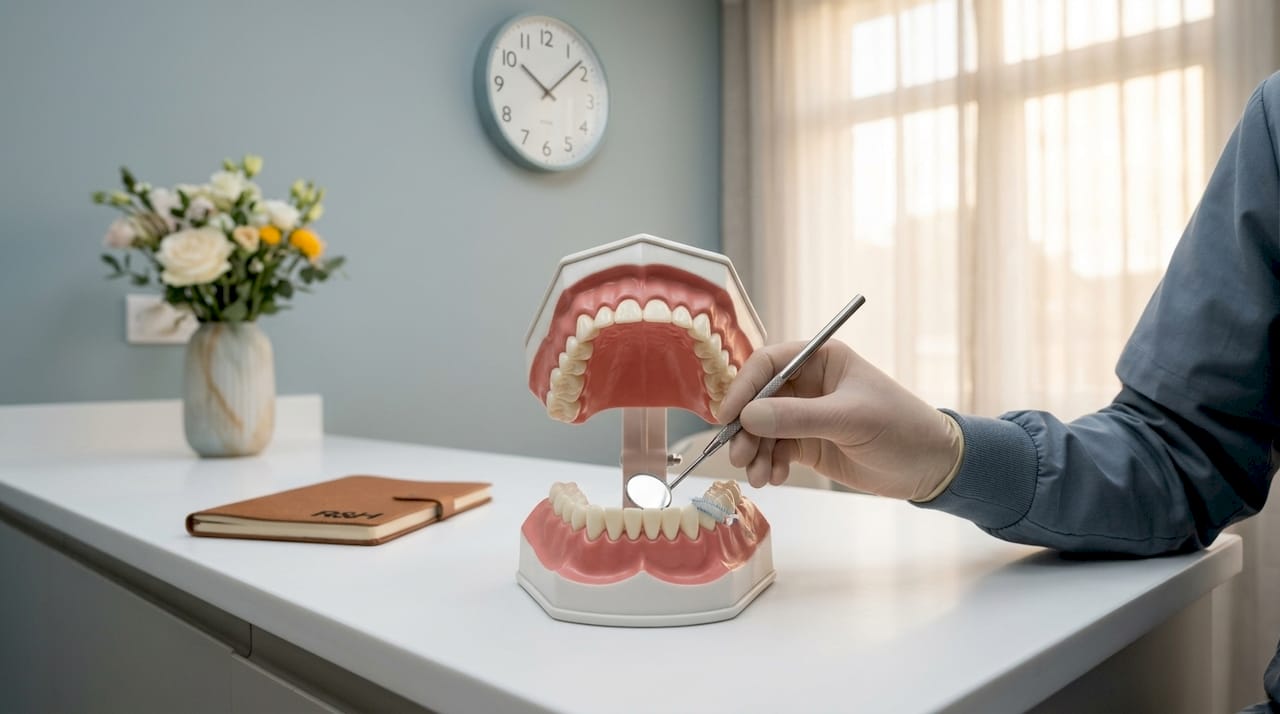
Pro Tip: Set a timer or use an electric toothbrush with a built-in two-minute timer. Oral-B and Philips Sonicare models both include quadrant alerts every 30 seconds, removing the guesswork entirely.
2. Spit, but do not rinse immediately after brushing
This single step is one of the most overlooked in any oral care guide. After brushing, spit out the excess toothpaste but do not rinse your mouth with water. The Florida Department of Health confirms that avoiding immediate rinsing keeps fluoride in contact with tooth enamel for longer, significantly enhancing remineralisation and cavity prevention.
Think of it this way: rinsing immediately after brushing washes away the very ingredient you are relying on for protection. The fluoride film left on your teeth after spitting continues working for up to an hour. This is especially important for the bedtime brush, when saliva flow slows and the fluoride has maximum opportunity to act overnight.
3. Clean between your teeth every day
Brushing alone cleans only three of the five surfaces of each tooth. Daily interdental cleaning with floss or interdental brushes reaches the spaces a toothbrush cannot. The Florida Department of Health stresses flossing once daily between all teeth that touch, using a C-shape technique that hugs each tooth and slides gently beneath the gumline.
For patients with wider gaps, bridges, or orthodontic appliances, interdental brushes such as TePe or GUM brand brushes are often more effective than traditional floss. The key is consistency. Flossing three times a week is far less effective than flossing daily, because plaque in the interdental spaces begins to mineralise into tartar within 24 to 72 hours. Once tartar forms, no amount of home care removes it. Only a professional cleaning can.
Pro Tip: Floss before brushing rather than after. This loosens debris and plaque between teeth so that your fluoride toothpaste can penetrate those spaces more effectively during brushing.
4. Clean your tongue daily
The tongue harbours a dense bacterial biofilm that contributes directly to bad breath and reintroduces bacteria to freshly cleaned teeth. Tongue scraping removes 80 to 90% of the bacteria responsible for halitosis, making it a meaningful addition to any daily dental routine. This is a step that most oral hygiene checklists mention briefly but rarely explain well.
Use a dedicated tongue scraper or the reverse side of your toothbrush. Start at the back of the tongue and draw forward with light pressure. Two to three passes is sufficient. This takes under 30 seconds and produces a noticeable improvement in breath freshness within days.
5. Time your brushing sessions strategically
When you brush matters almost as much as how you brush. Brushing before bed is non-negotiable because overnight, saliva production drops and the mouth becomes more acidic, creating ideal conditions for decay. Brushing after breakfast rather than immediately upon waking is preferable, as it removes food debris and coats teeth with fluoride before the day’s acid exposure begins.
One important caveat: after consuming acidic foods or drinks such as citrus fruit, wine, or fizzy drinks, wait at least 30 minutes before brushing. Acid temporarily softens enamel, and brushing too soon can accelerate wear. Rinsing with plain water immediately after acidic food or drink is a sensible interim step.
6. Adapt the checklist for children
Children’s dental hygiene requires a modified approach at every age. The American Academy of Pediatrics recommends using a tiny smear of fluoride toothpaste as soon as the first tooth erupts, increasing to a pea-sized amount by age three. Supervised brushing should continue until around age ten, when children develop the dexterity to brush adequately on their own.
The AAP also recommends fluoride varnish applications every six months until age five, applied by a dental professional. This significantly reduces early childhood decay even before regular dental visits are fully established. For families in Marbella, R&H Dental Marbella’s paediatric dental services include age-appropriate fluoride treatments and guided brushing instruction for children and parents alike.
7. Personalise your routine based on risk factors
A standard twice-daily brushing and flossing routine serves most healthy adults well. However, certain conditions require a modified oral hygiene checklist. Patients with diabetes, braces, or dry mouth often need more frequent brushing, specialised tools, and shorter intervals between professional cleanings.
Consider the following adjustments based on your personal profile:
- Gum disease or periodontitis: Use an electric toothbrush, interdental brushes, and an antiseptic mouthwash prescribed by your dentist. Professional cleanings every three to four months rather than six.
- Orthodontic appliances: Floss threaders or water flossers such as the Waterpik are necessary to clean around brackets and wires effectively.
- Dry mouth (xerostomia): Increase water intake, use alcohol-free mouthwash, and consider a fluoride gel for overnight use.
- Smokers: Nicotine reduces gum blood flow and masks early inflammation. More frequent professional assessments are clinically indicated.
- Seniors with dentures: Remove and clean dentures nightly with a dedicated denture brush and solution. Never sleep in full dentures, as this promotes fungal growth and bone resorption.
For families managing multiple oral health profiles under one roof, R&H Dental Marbella’s family dental care guide offers practical, age-specific advice tailored to expat families on the Costa del Sol.
8. Avoid these common oral hygiene mistakes
Even patients who follow a daily dental routine often undermine their efforts through a handful of correctable errors. Common mistakes include brushing for under two minutes, rinsing immediately after brushing, and skipping interdental cleaning entirely.
The most damaging mistakes, in clinical order of consequence:
- Brushing only once per day. Overnight plaque accumulation is substantial. A single morning brush leaves the teeth unprotected through the night.
- Scrubbing with a hard-bristled brush. This abrades enamel and causes irreversible gum recession. Soft bristles clean just as effectively with correct technique.
- Rinsing with mouthwash immediately after brushing. Mouthwash used directly after brushing dilutes the fluoride from your toothpaste. Use mouthwash at a separate time, such as after lunch.
- Inconsistent flossing. Flossing occasionally provides minimal benefit. The protective effect requires daily consistency.
- Ignoring bleeding gums. Gums that bleed during brushing or flossing signal early gingivitis, not a reason to brush more gently. Persistent bleeding warrants a professional assessment.
Bleeding gums are not normal, and they are not caused by brushing too hard. They are the body’s signal that bacterial inflammation is present. Addressing this early prevents progression to periodontitis, which is largely irreversible.
9. Schedule professional cleanings at the right interval
Home care removes plaque effectively, but tartar and calculus that accumulate in hard-to-reach areas require professional removal. No toothbrush or floss removes established tartar. Professional cleanings also include an oral cancer screening, periodontal assessment, and personalised advice that home care cannot replicate.
The standard six-month recall suits many patients, but this interval should be personalised by risk. Patients with a history of gum disease, those who smoke, or those managing systemic conditions like diabetes benefit from three to four-month intervals. Conversely, a low-risk patient with excellent home care and no history of decay may be appropriate for an annual visit. Your dentist is best placed to advise on the right frequency for you.
10. Understand the link between oral and systemic health
Good oral hygiene is not purely cosmetic. Periodontal disease elevates the risk of cardiovascular events and complicates diabetes management, with evidence linking chronic oral inflammation to systemic conditions including respiratory infections. This means that the daily dental routine you follow at home has consequences well beyond your smile.
The mechanism is direct: bacteria from infected gum tissue enter the bloodstream and trigger inflammatory responses in blood vessels and organs. Maintaining a consistent oral hygiene checklist reduces this bacterial load and the associated systemic risk. Prevention at home, supported by regular professional care, is the most cost-effective strategy available.
Key takeaways
A complete dental hygiene checklist combines twice-daily fluoride brushing, daily interdental cleaning, tongue care, and personalised professional visits to prevent decay, gum disease, and systemic health complications.
| Point | Details |
|---|---|
| Brush twice, two minutes each time | Use a soft brush and fluoride toothpaste; divide the mouth into four quadrants for thorough coverage. |
| Spit, do not rinse | Retaining fluoride on teeth after brushing maximises remineralisation, especially overnight. |
| Floss or use interdental brushes daily | Plaque between teeth begins hardening within 24 hours; only daily cleaning prevents tartar formation. |
| Personalise by risk and age | Children, patients with gum disease, and those with systemic conditions need modified routines and more frequent professional care. |
| Professional cleanings are non-negotiable | Home care cannot remove tartar; regular dental visits complete what brushing and flossing cannot. |
What we have learned from years of patient care
At R&H Dental Marbella, the most consistent finding across our patient base is this: complexity is the enemy of consistency. Patients who try to maintain elaborate routines with multiple rinses, whitening products, and oil-pulling protocols often abandon the whole thing within weeks. Patients who master the fundamentals, brushing correctly for two minutes, flossing daily, and not rinsing after brushing, achieve measurably better outcomes year after year.
The spit-do-not-rinse rule is the single piece of advice that surprises patients most. Many have been rinsing vigorously after brushing their entire lives, genuinely believing it is part of good hygiene. It is not. It undoes a significant portion of the fluoride benefit they are relying on.
We also see a pattern among expat patients who arrive in Marbella having not seen a dentist for several years. The home routine may have been reasonable, but without professional cleaning, calculus has built up below the gumline and early periodontitis has taken hold silently. The lesson is that home care and professional care are not interchangeable. They are complementary, and neither works as well without the other.
The patients who maintain the best oral health long-term are those who treat their checklist as a non-negotiable daily habit, like washing their face, rather than a task to be optimised or skipped when tired. Small, consistent actions compound into lasting results.
— R&H Dentists
Professional support for your oral health routine in Marbella
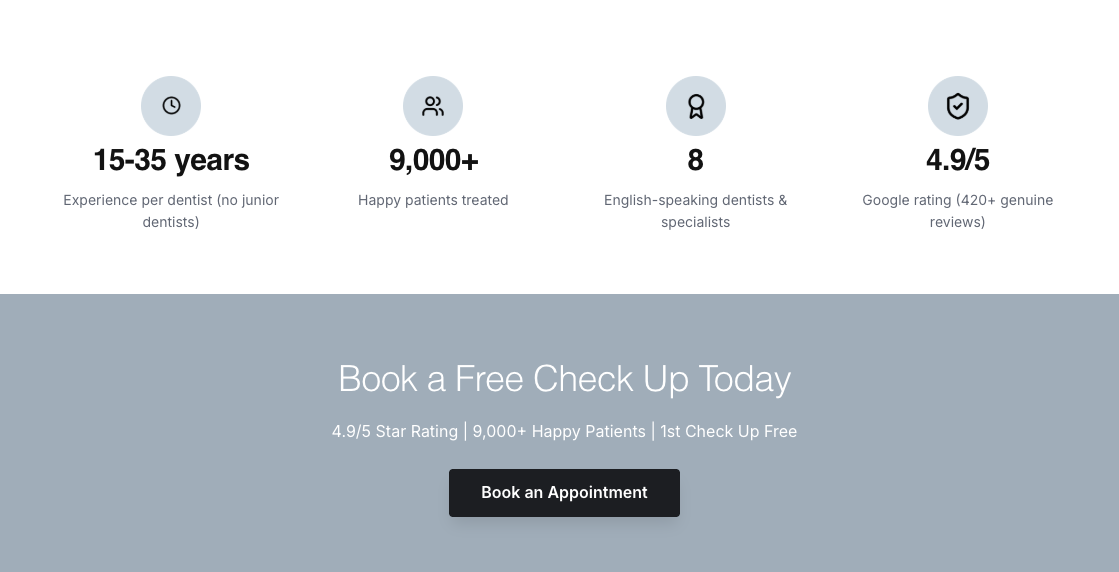
A well-followed oral hygiene checklist at home forms the foundation of good dental health, but it works best when supported by regular professional care. At R&H Dental Marbella, our team of experienced English-speaking dentists from Finland, New Zealand, Ireland, Portugal, and Spain brings 15 to 35 years of clinical experience to every appointment. We offer transparent pricing, written guarantees, and advanced diagnostics including 3D CBCT imaging, so you always know exactly what is happening with your oral health.
Whether you need a routine hygiene appointment, a personalised care plan, or advice on adapting your routine to a specific condition, we are here to help. Book your appointment online today. Your first check-up is free.
FAQ
How often should I brush my teeth?
Brush twice daily, once after breakfast and once before bed, for at least two minutes each time using fluoride toothpaste. The Cleveland Clinic confirms this frequency as the clinical standard for effective plaque removal and cavity prevention.
Should I rinse after brushing my teeth?
No. Spit out excess toothpaste but do not rinse with water immediately after brushing. The Florida Department of Health confirms that retaining fluoride on the tooth surface after brushing significantly improves remineralisation and decay prevention.
When should children start using fluoride toothpaste?
The American Academy of Pediatrics recommends using a tiny smear of fluoride toothpaste as soon as the first tooth appears, increasing to a pea-sized amount by age three. Professional fluoride varnish applications every six months are also advised until age five.
How do I know if I need to see a dentist more than twice a year?
Patients with gum disease, diabetes, orthodontic appliances, or dry mouth typically benefit from professional cleanings every three to four months rather than six. Your dentist will advise the right interval based on your individual risk profile.
Is mouthwash part of a good daily dental routine?
Mouthwash can be a useful addition, but it should not be used immediately after brushing as it dilutes the fluoride from your toothpaste. Use it at a separate time, such as after lunch, for best results.