

A dental crown is defined as a custom-made, tooth-shaped cap that fits entirely over a damaged or weakened tooth, restoring its strength, shape, and function. Clinically, the terms “dental crown” and “tooth cap” are synonymous restorations, though “crown” is the standard term used by dental professionals worldwide. Understanding why dental crowns are recommended, and when they are genuinely necessary, helps you make confident, informed decisions about your oral health. This guide covers indications, materials, procedure steps, costs, and long-term care, with clinical evidence to support every key point.
Why dental crowns are recommended over fillings
The decision between a filling and a crown comes down to one central question: how much healthy tooth structure remains. When decay or damage affects more than roughly half of a tooth’s surface, a filling cannot provide adequate structural support. The filling material bonds to the remaining tooth, but if that remaining tooth is insufficient, the restoration will flex under biting pressure and eventually fracture.
Clinical research from TU Dresden confirms that direct restorations survive.html) free of re-intervention in 68% of cases at five years and just over 50% at ten years. Larger restorations shorten that window considerably, which is precisely why crowns are indicated once structural loss becomes significant. A crown encircles the entire tooth, distributing biting forces evenly rather than concentrating stress at the restoration margins.
There are several specific clinical scenarios where a crown is the appropriate choice rather than a filling:
- Extensive decay affecting more than 50% of the tooth’s width or depth
- Cracked teeth where a filling cannot hold the crack together under load
- Root canal treated teeth, which lose moisture and become brittle over time
- Heavily worn teeth from bruxism or acid erosion
- Broken cusps where insufficient tooth remains to anchor a filling reliably
- Cosmetic correction of severely discoloured or misshapen teeth
Root canal treated teeth deserve particular attention. Endodontically treated teeth restored with crowns show 92 to 96% survival rates, compared to dramatically higher failure rates when fillings are used alone. This is one of the strongest evidence-based arguments for crowns in restorative dentistry.
Pro Tip: If your dentist has placed three or more fillings in the same tooth over the years, ask directly whether a crown would now offer better long-term value. Repeated re-treatment is often more costly than a single well-placed crown.
What types of dental crowns are available?
Crown material selection affects durability, appearance, preparation requirements, and long-term complication risk. The main options available at premium clinics are porcelain-fused-to-metal, full ceramic, zirconia, and full metal. Each has a distinct clinical profile.
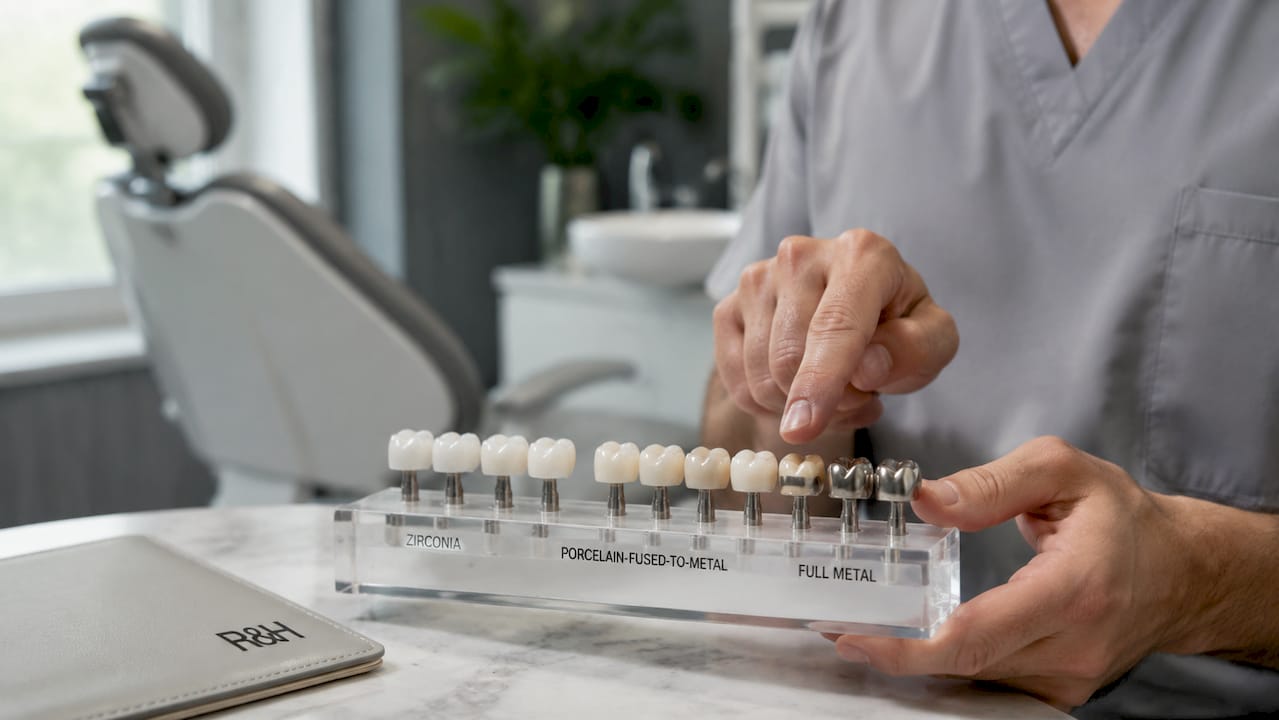
Zirconia crowns have grown significantly in popularity, accounting for approximately 32% of crown choices in some dental networks. Their appeal lies in a combination of high strength, natural translucency, biocompatibility, and the ability to prepare the tooth less aggressively than older crown systems. For patients with metal sensitivities or those prioritising aesthetics, zirconia is frequently the first recommendation. You can read more about how material choice influences long-term outcomes in our overview of esthetic dentistry techniques.
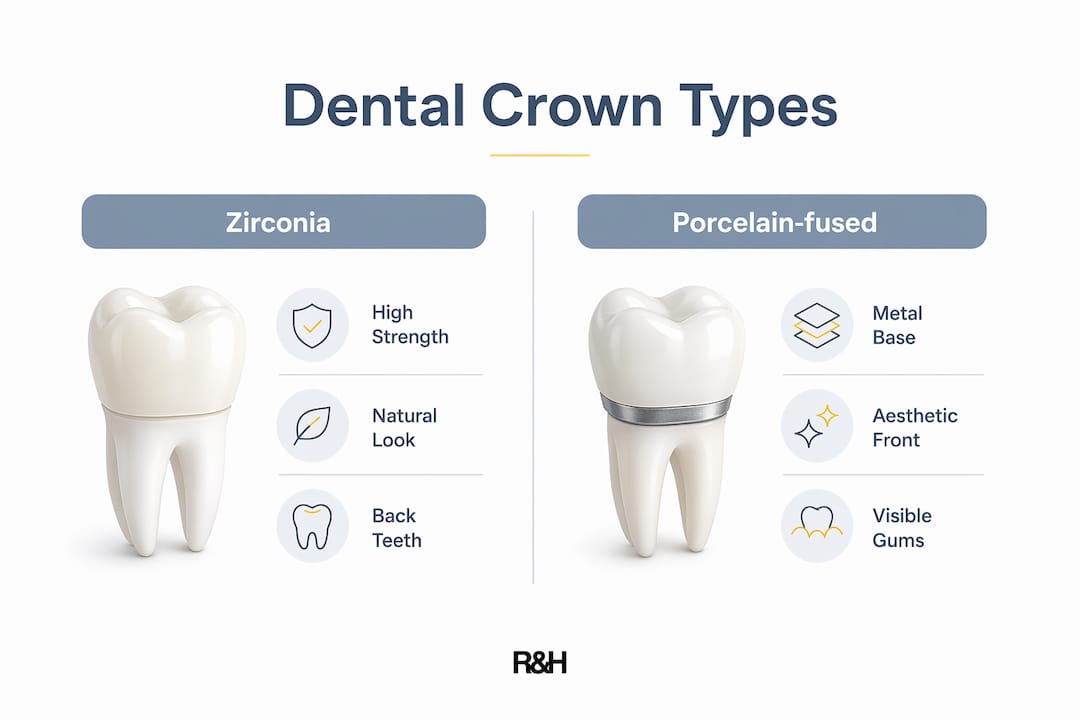
| Crown type | Key advantage | Best suited for |
|---|---|---|
| Full zirconia | Exceptional strength and biocompatibility | Posterior teeth, bruxism patients |
| Porcelain-fused-to-metal | Proven longevity with good aesthetics | General restorations, budget-conscious patients |
| Full ceramic (e-max) | Highest aesthetic translucency | Front teeth, visible smile zone |
| Full metal (gold alloy) | Most durable under heavy load | Posterior teeth where aesthetics are secondary |
Porcelain-fused-to-metal crowns have a long track record, but the metal substructure can create a grey line at the gum margin over time, particularly as gums recede with age. Full ceramic options such as lithium disilicate (e-max) offer the most lifelike appearance and are the preferred choice for front teeth in aesthetic cases. Full metal crowns are rarely chosen for visible teeth but remain clinically excellent for back molars in patients who grind heavily.
Pro Tip: Ask your dentist to show you shade guides and, where possible, digital mock-ups before committing to a material. At R&H Dental Marbella, the in-house digital lab and photography studio allow patients to preview results before any tooth preparation begins.
How is the dental crown procedure performed?
Understanding the process removes uncertainty and helps you plan your schedule. A standard crown treatment at a quality clinic involves two main appointments, though in-house digital labs can sometimes reduce this to a single extended visit.
- Consultation and assessment. Your dentist examines the tooth, takes X-rays, and in many cases uses a 3D CBCT scan to assess root health and bone structure. This step determines whether a post and core build-up is needed before crown placement.
- Tooth preparation. The tooth is shaped under local anaesthetic to create space for the crown. The amount removed depends on the material chosen; zirconia typically requires less reduction than porcelain-fused-to-metal.
- Impressions or digital scanning. Traditional putty impressions or, increasingly, intraoral digital scans capture the prepared tooth and surrounding bite. Digital scans are faster, more comfortable, and more precise.
- Temporary crown fitting. A temporary crown protects the prepared tooth while the permanent restoration is fabricated. This temporary phase typically spans one to two weeks.
- Crown fabrication. The permanent crown is made in a dental laboratory. Clinics with an in-house digital lab, such as R&H Dental Marbella, can oversee quality directly and often reduce turnaround time.
- Final fitting and cementation. The crown is tried in, adjusted for bite and contacts, and permanently cemented. Minor sensitivity for a few days afterwards is normal and resolves quickly.
The total treatment time from first appointment to final cementation is typically two to three weeks. Root canal treated teeth requiring a post and core may add one additional appointment before crown preparation begins.
What do dental crowns cost and how should you budget?
Crown costs vary considerably depending on material, tooth location, laboratory fees, and the complexity of preparation required. Crown costs typically range from around £800 to £2,500 or more at premium clinics, with zirconia and full ceramic options sitting at the higher end of that range. At R&H Dental Marbella, pricing is published transparently, and itemised quotes are provided before any treatment begins.
Several factors influence the final figure:
- Material choice. Zirconia and e-max ceramic cost more than porcelain-fused-to-metal due to fabrication complexity.
- Tooth location. Front teeth in the visible smile zone often require more time and skill to achieve natural aesthetics.
- Post and core build-up. If the tooth has had a root canal and requires internal reinforcement, this is an additional procedure with its own fee.
- Temporary crown. Some clinics include this in the overall price; others list it separately.
- Guarantee policy. A written guarantee on crown work adds genuine value and should be factored into any cost comparison.
For expats living in Marbella, dental crown costs in Spain are generally more competitive than equivalent treatment in the UK, Ireland, or Scandinavia, without any compromise in materials or technology. Requesting a fully itemised treatment estimate before committing is the single most effective way to avoid financial surprises. You can review R&H Dental Marbella’s transparent pricing directly on their website before booking a consultation.
How to care for your dental crown long-term
Crowns typically last between 5 and 15 years with good care, and some well-maintained crowns remain functional for up to 30 years. The two most common reasons for crown failure are decay at the margin where the crown meets the tooth, and chipping of the crown material. Both are largely preventable.
Daily maintenance for crowned teeth follows the same principles as general oral hygiene, with a few specific considerations:
- Brush twice daily with a fluoride toothpaste, paying particular attention to the gum margin around the crown.
- Floss daily, using a gentle C-shaped motion around the crown base to remove plaque without dislodging the restoration.
- Avoid biting hard objects such as ice, pen lids, or hard sweets, which can chip ceramic and zirconia materials.
- Wear a night guard if you grind your teeth. Bruxism is one of the leading causes of premature crown wear and fracture.
- Attend regular check-ups every six months so your dentist can monitor the crown margins and identify early signs of decay or wear.
Signs that a crown may need attention include sensitivity to temperature that does not resolve, pain on biting, visible cracks, or a crown that feels loose. None of these should be ignored, as early intervention is always simpler and less costly than waiting.
Pro Tip: Interdental brushes are often more effective than floss alone around crown margins, particularly for back teeth. Ask your hygienist to demonstrate the correct technique at your next appointment.
Key takeaways
Dental crowns are the clinically indicated restoration when tooth damage is too extensive for a filling to provide reliable, long-term structural support.
| Point | Details |
|---|---|
| Crowns versus fillings | Choose a crown when structural loss exceeds roughly 50% or after root canal treatment. |
| Material selection matters | Zirconia and full ceramic offer strength and aesthetics; discuss options with your dentist before preparation. |
| Two-visit process | Most crown treatments require two appointments spanning two to three weeks, including a temporary phase. |
| Budget transparently | Request an itemised quote covering material, preparation, temporary crown, and any post and core work. |
| Longevity through maintenance | Daily flossing, a night guard if needed, and six-monthly check-ups are the most reliable ways to extend crown life. |
Our perspective on choosing the right crown
From our clinical experience at R&H Dental Marbella, the most common mistake patients make is treating a crown as a simple cap rather than as part of a complete restoration strategy. The choice of post design, core material, and crown type all interact to determine long-term survival. Clinical evidence shows that crowned teeth with fibre posts had the lowest long-term complication rate compared to metallic post systems, which carry a higher risk of root fracture. These are decisions that happen before the crown is even made, and they matter enormously.
We also see patients who delayed treatment because they were uncertain about costs or the process. Transparency is the antidote to that hesitation. When patients arrive at a consultation knowing what questions to ask, such as which material suits their bite, whether a post is needed, and what the written guarantee covers, the entire experience becomes more collaborative and less anxious. That is the kind of informed, confident patient we most enjoy working with.
— R&H Dentists
Expert dental crown treatment at R&H Dental Marbella
R&H Dental Marbella offers dental crowns and bridges designed and fabricated using 3D CBCT scanning and an in-house digital laboratory, ensuring precision at every stage from diagnosis to final cementation. The clinic’s team of English-speaking dentists, each with 15 to 35 years of clinical experience and backgrounds spanning Finland, New Zealand, Ireland, Portugal, and Spain, brings a breadth of expertise that is genuinely rare in a single practice.
Every crown treatment comes with a written guarantee policy, and pricing is published openly so you can plan with confidence before your first appointment. If you are considering a crown and would like a clear, honest assessment of your options, contact R&H Dental Marbella to arrange a consultation at a time that suits you.
FAQ
What is a dental crown and when is it needed?
A dental crown is a custom-made cap that covers a damaged or weakened tooth entirely, restoring its strength and appearance. It is typically recommended when decay, fracture, or root canal treatment has left insufficient tooth structure for a filling to function reliably.
How long do dental crowns last?
With good oral hygiene and regular check-ups, crowns last between 5 and 15 years on average, and some remain intact for up to 30 years. Decay at the crown margin and chipping are the most common reasons for earlier replacement.
What is the difference between dental crowns and fillings?
Fillings restore a portion of a tooth, while crowns cover the entire tooth surface above the gum line. Crowns are indicated when structural loss is too extensive for a filling to provide adequate support, particularly after root canal treatment or significant fracture.
Which crown material is best?
The best material depends on the tooth’s location and the patient’s bite. Zirconia suits posterior teeth and patients who grind, while full ceramic options such as e-max are preferred for front teeth where natural translucency is the priority.
Are dental crowns more expensive than fillings?
Crowns carry a higher upfront cost than fillings, but for teeth with significant damage they typically offer better long-term value by reducing the risk of fracture and repeat treatment. Requesting an itemised quote from your dentist helps you compare the full cost of each option accurately.