

Dental anxiety is defined as a state of apprehension, fear, or distress associated with dental visits, and it is one of the most common barriers to consistent oral healthcare in adults. Knowing how to manage dental anxiety effectively means combining evidence-based psychological techniques, clear communication with your dental team, and practical preparation before each appointment. Methods such as cognitive behavioural therapy (CBT), controlled breathing, stop signals, and tools like the Dental FearLess app are all part of a modern, patient-centred approach. This guide draws on current clinical research to give you concrete, workable strategies you can use right away.
How to manage dental anxiety: what it is and why it matters
Dental anxiety is a clinical risk factor, not a character flaw. Clinicians now document it alongside physical oral health findings because untreated anxiety leads directly to appointment avoidance, which accelerates decay, gum disease, and the need for more complex treatment.
The scale of the problem is significant. Over 72% of adults report some level of dental fear, with nearly 50% experiencing moderate anxiety and 25% severe. That means one in four adults is actively avoiding care that could prevent serious health consequences.
“Dental anxiety sits on a spectrum. At one end, patients feel mild unease before an appointment. At the other, they experience full dental phobia, a recognised clinical condition that can prevent any dental attendance for years.”
The clinical term for the most severe form is odontophobia. Understanding where you sit on this spectrum matters because it shapes which strategies will help most. Mild anxiety responds well to simple relaxation and communication techniques. Severe phobia often requires structured psychological intervention such as CBT alongside dental treatment.
Reframing anxiety as part of routine dental assessment is the first step toward breaking the avoidance cycle. When dental teams identify and document anxiety early, they can tailor every appointment to reduce triggers rather than inadvertently reinforce them. Reviewing common dental procedures in advance can also reduce the fear of the unknown before you even sit in the chair.
What are the most effective psychological approaches?
CBT is the gold standard for long-term dental phobia reduction. CBT outperforms inhalation sedation for sustained fear and avoidance reduction, meaning its benefits last well beyond the treatment period rather than simply masking anxiety during a single appointment.
CBT for dental anxiety typically follows four stages:
- Psychoeducation — understanding the physiological basis of fear responses and why they occur in a dental context.
- Fear hierarchies — ranking anxiety-provoking situations from least to most threatening, then working through them gradually.
- Cognitive restructuring — identifying and challenging unhelpful thought patterns, such as catastrophising about pain.
- Gradual exposure — progressively experiencing dental situations in a controlled way until the fear response reduces.
Alongside CBT, several relaxation techniques complement the process effectively:
- Diaphragmatic breathing — slow, deep breaths through the nose for four counts, hold for two, exhale for six. This activates the parasympathetic nervous system and reduces the physical symptoms of anxiety.
- Progressive muscle relaxation — systematically tensing and releasing muscle groups, starting from the feet upward, to release physical tension before and during appointments.
- Mindfulness — focusing attention on the present moment without judgement, which interrupts the cycle of anticipatory worry.
Non-pharmacological in-practice techniques include tell-show-do (where the dentist explains and demonstrates each step before proceeding), agreed stop signals, and distraction methods such as music through headphones or, in some clinics, virtual reality headsets. These are not gimmicks. They give you a genuine sense of control, which is the core of what anxiety management achieves.
Digital tools now extend CBT into your daily life. Apps designed for dental anxiety allow patients to work through fear hierarchies and relaxation exercises between appointments, making the process more consistent and discreet.

Pro Tip: If formal CBT feels like a large commitment, start with a single session with a psychologist trained in health anxiety. Even one structured session can provide a framework that makes every subsequent dental visit more manageable.
How should you prepare for a dental appointment?
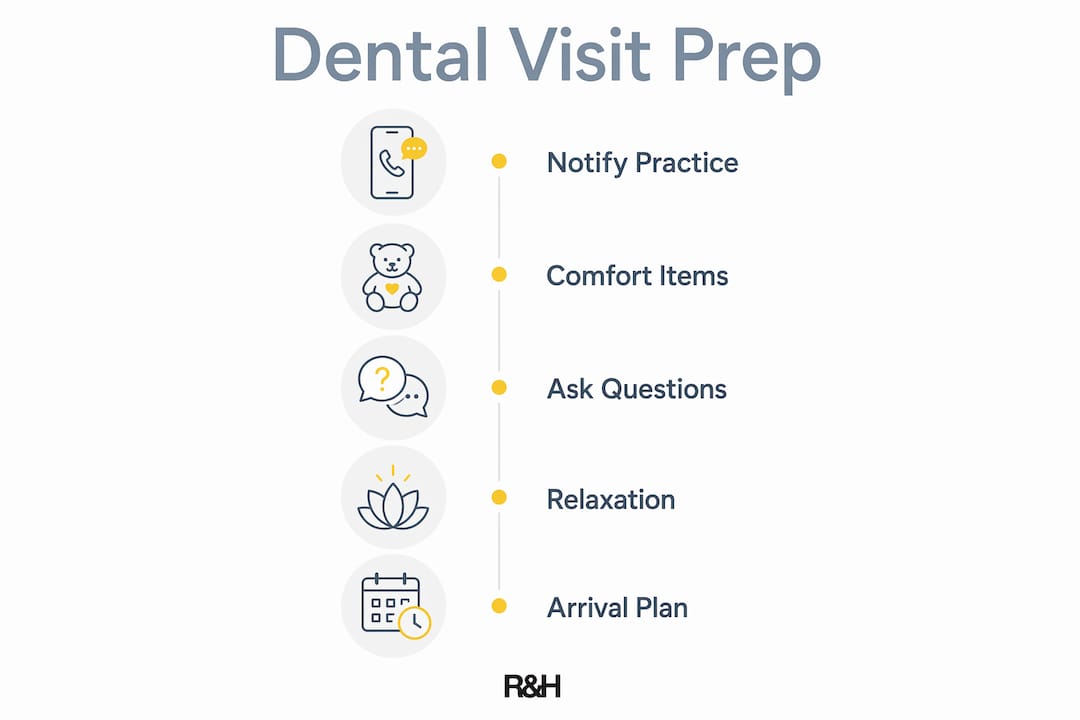
Preparation before an appointment is where most patients have the most immediate control. The steps below are drawn from current clinical guidance and are practical from the moment you decide to book.
- Tell the practice about your anxiety when you book. A good dental team will note it, flag it for the clinician, and adapt the appointment accordingly. Asking this question upfront also tells you a great deal about whether the practice is right for you.
- Request a consultation-only first visit. First appointments should ideally be non-treatment sessions that allow you to meet the team, see the environment, and ask questions without any clinical pressure. This is one of the most effective desensitisation steps available.
- Establish a stop signal before treatment begins. Raising a hand is the most common signal. Dentists must respond immediately to that signal, not pause briefly and continue. A dentist who respects the signal consistently builds trust far faster than one who uses reassuring words alone.
- Write a Letter to the Dentist. Writing down your specific triggers and handing the note to staff before your appointment removes the need to articulate fears verbally in a stressful moment. Include what has gone wrong in past appointments, what sounds or sensations bother you most, and what has helped before.
- Time your appointment strategically. First appointments of the morning reduce waiting time and mean you have less time to build anticipatory anxiety during the day.
- Bring a comfort item or distraction. Headphones with a familiar playlist or podcast, a stress ball, or even a familiar scent on a handkerchief can provide a sensory anchor during treatment.
The language your dental team uses also matters significantly. Shifting from “Are you afraid?” to “How anxious do you feel?” removes stigma and opens a more honest conversation. If your current dentist does not ask this question, it is worth raising it yourself.
| Preparation Step | Purpose | When to Use |
|---|---|---|
| Notify practice of anxiety | Allows team to adapt appointment | At time of booking |
| Consultation-only first visit | Builds familiarity without treatment pressure | Before first treatment session |
| Stop signal agreement | Restores sense of control during procedures | Start of every appointment |
| Letter to the Dentist | Communicates triggers without verbal stress | Handed to staff on arrival |
| Strategic appointment timing | Reduces anticipatory waiting anxiety | Morning slots preferred |
Pro Tip: Ask the receptionist whether the clinic has experience with anxious patients before you book. A practice that handles this question warmly and specifically is already demonstrating the patient-centred culture you need.
Does sedation help with dental anxiety?
Sedation dentistry covers three main options: oral sedation (tablets taken before the appointment), inhalation sedation using nitrous oxide (commonly called relative analgesia), and intravenous sedation for deeper relaxation. Each has a clear clinical role, but their limitations are equally important to understand.
Sedation manages acute procedure-related anxiety but does not treat the underlying phobia. A patient who relies solely on sedation for every appointment may find their fear unchanged or even reinforced over time, because they never develop the coping skills to manage the experience consciously.
| Sedation Type | Benefit | Limitation |
|---|---|---|
| Oral sedation | Easy to administer, reduces pre-appointment anxiety | Variable absorption, residual drowsiness |
| Inhalation (nitrous oxide) | Fast-acting, quickly reversible, mild effect | Does not address phobia, requires cooperation |
| Intravenous (IV) sedation | Deep relaxation for complex procedures | Requires monitoring, does not resolve fear long-term |
Best practice combines sedation with behavioural strategies. Sedation can make an appointment tolerable while CBT or gradual exposure work in parallel to reduce the underlying fear. Used this way, sedation becomes a bridge rather than a permanent solution. External resources such as sedation options explained can help you understand what to expect before discussing options with your dentist.
Alternative approaches including clinical hypnosis and acupuncture have some supporting evidence, though the research base is less robust than for CBT. They are worth discussing with your dental team if pharmacological sedation is not appropriate for you.
Pro Tip: Always ask your dentist to explain the sedation monitoring protocol before agreeing to IV sedation. Understanding exactly what safety measures are in place reduces the anxiety that sedation itself can sometimes provoke.
What are the most common setbacks and how do you overcome them?
Progress with dental anxiety is rarely linear. Most patients experience at least one setback, and understanding the common patterns makes them easier to navigate.
- Difficulty articulating fears in the moment. The written letter approach described above solves this directly. You do not need to explain yourself verbally under pressure.
- Cancelling appointments when anxiety spikes. Each cancellation reinforces the avoidance cycle. If you feel the urge to cancel, consider calling the practice to reschedule rather than simply not attending. Keeping some form of contact maintains the relationship and the momentum.
- Expecting immediate results. Anxiety management is a skill that develops over multiple appointments. A single difficult session does not mean the approach has failed.
- Not using the stop signal. Many patients agree to a signal but feel reluctant to use it during treatment. Practise saying “I will use this” out loud before the appointment. Rehearsing the action mentally makes it easier to follow through.
- Choosing the wrong practice. Not every dental clinic is equipped or inclined to manage anxious patients well. If a practice dismisses your concerns or rushes through appointments, finding a different team is a legitimate and sensible decision.
When anxiety is severe enough to prevent attendance entirely, referral to a psychologist trained in health anxiety or CBT is appropriate. Specialist anxious patient clinics exist in the UK and across Europe, and your GP can facilitate a referral. Self-compassion throughout this process matters as much as technique. Anxiety is not a failure of willpower.
Pro Tip: Keep a brief written record after each appointment: what went well, what triggered discomfort, and what you would ask for differently next time. This builds self-awareness and gives your dental team precise information to improve each subsequent visit.
Key takeaways
Managing dental anxiety requires consistent use of evidence-based behavioural strategies, clear communication with your dental team, and the understanding that progress builds gradually over time.
| Point | Details |
|---|---|
| CBT is the gold standard | Cognitive behavioural therapy produces sustained fear reduction that sedation alone cannot achieve. |
| Preparation reduces anticipatory anxiety | Writing triggers down, booking consultation-only visits, and agreeing stop signals all reduce in-appointment stress. |
| Sedation is a complement, not a cure | Sedation manages acute symptoms but must be paired with behavioural strategies for lasting improvement. |
| Communication language matters | Asking “how anxious do you feel?” rather than “are you afraid?” opens more honest and useful dialogue. |
| Setbacks are normal | Cancellations and difficult appointments are part of the process; consistency and self-compassion are what drive progress. |
What we have learned from treating anxious patients at r&h dental marbella
Dental anxiety is the most underestimated barrier to good oral health that we see in practice. Patients arrive having avoided care for years, sometimes decades, and the first conversation is rarely about teeth. It is about trust.
What we have found works consistently is unhurried time. Anxious patients need longer appointments, not because the clinical work takes longer, but because the first ten minutes of any session should be spent checking in, confirming the stop signal, and allowing the patient to feel genuinely heard. Rushing this step costs far more time in the long run.
We have also found that transparency about costs removes a significant layer of anxiety for expat patients in particular. Financial uncertainty compounds clinical fear. When patients can review clear, itemised pricing before they arrive, one major source of stress is already resolved. Our multilingual team, with dentists from Finland, New Zealand, Ireland, Portugal, and Spain, means patients are never navigating a language barrier on top of their anxiety.
The most important shift we advocate is treating anxiety identification as a standard part of every initial assessment, not an afterthought. When it is documented and revisited at each appointment, the whole team responds accordingly, and patients feel that consistency. That consistency, more than any single technique, is what builds the trust that makes treatment possible.
— R&H Dentists
Managing dental anxiety with the right team behind you
Knowing the strategies is one part of the process. Finding a dental team that applies them consistently is the other.
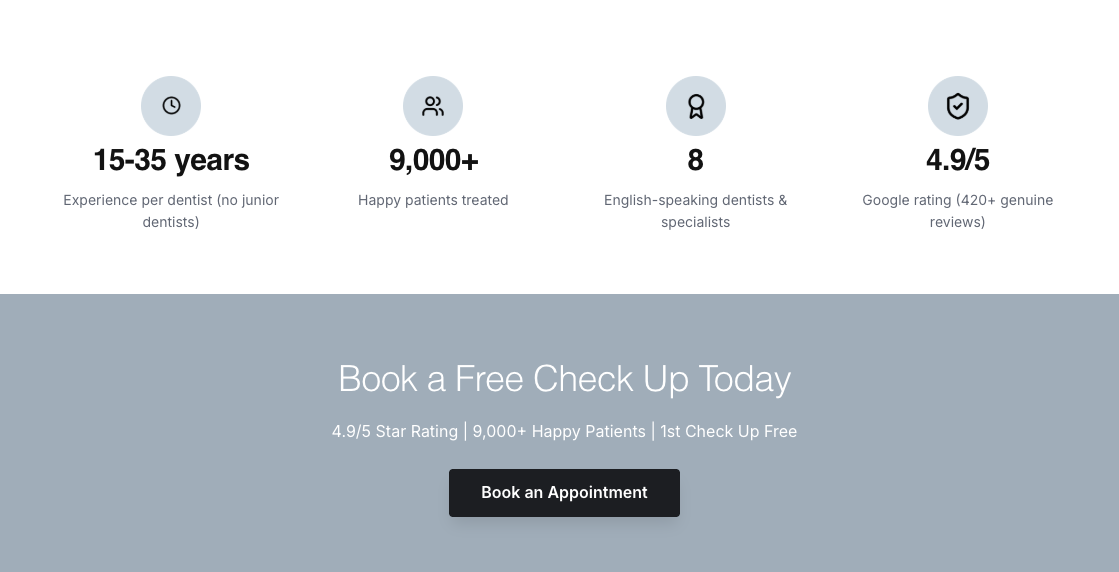
R&H Dental Marbella works with anxious patients every day. Our experienced English-speaking dentists, each with 15–35 years of clinical experience, are trained to adapt appointments, communicate clearly, and move at a pace that suits you. We offer consultation-only first visits, flexible scheduling, and a clinic environment designed to reduce sensory discomfort. Our advanced diagnostic technology means we can plan treatment thoroughly before anything begins, so there are no surprises. If you are ready to take the first step, contact R&H Dental Marbella to arrange a relaxed, no-pressure consultation where your concerns come first.
FAQ
What is the difference between dental anxiety and dental phobia?
Dental anxiety refers to general apprehension about dental visits, while dental phobia (odontophobia) is a recognised clinical condition that causes severe distress and complete avoidance of dental care. Phobia typically requires structured psychological intervention such as CBT alongside dental treatment.
Does CBT actually work for dental fear?
CBT produces sustained reductions in dental fear and avoidance that outperform sedation alone over the long term. It works by changing the thought patterns and behavioural responses that maintain the fear cycle.
How do i tell my dentist about my anxiety without feeling embarrassed?
Writing a brief note describing your triggers and handing it to staff on arrival is a clinically recommended approach. Patients who write down their fears before appointments report less stress during treatment than those who try to explain verbally in the moment.
Is sedation a good long-term solution for dental anxiety?
Sedation is effective for managing acute anxiety during complex procedures, but it does not resolve the underlying fear. Long-term reliance on sedation without behavioural support can reinforce avoidance patterns rather than reduce them.
When should i seek specialist help for dental anxiety?
Seek specialist support when anxiety prevents you from attending any dental appointments, when it causes significant distress in daily life, or when standard coping strategies have not produced improvement after several attempts. A GP referral to a psychologist trained in health anxiety or CBT is the appropriate next step.