



Teeth fillings marbella
Composite Fillings in Marbella
Invisible, mercury-free restorations that preserve your natural tooth structure
Our composite fillings are designed to restore teeth discreetly and conservatively. The material bonds directly to the tooth, allowing us to repair decay or fractures while keeping the result natural-looking and structurally sound.
Benefits of Composite Fillings in Marbella
When to Choose a Composite Filling vs CEREC Inlay
For small to medium cavities, a composite filling is usually the ideal solution — quick, effective, and affordable. For larger cavities (where more than about 40% of the tooth surface is involved), a CEREC ceramic inlay may be a better long-term option. Inlays are stronger, last longer, and distribute chewing forces more evenly. Your R&H dentist will recommend the most appropriate restoration for your specific situation.
Watch & Learn More
The Composite Filling Process
A precise 4-step procedure for durable, invisible restorations.
Diagnosis & Treatment Planning
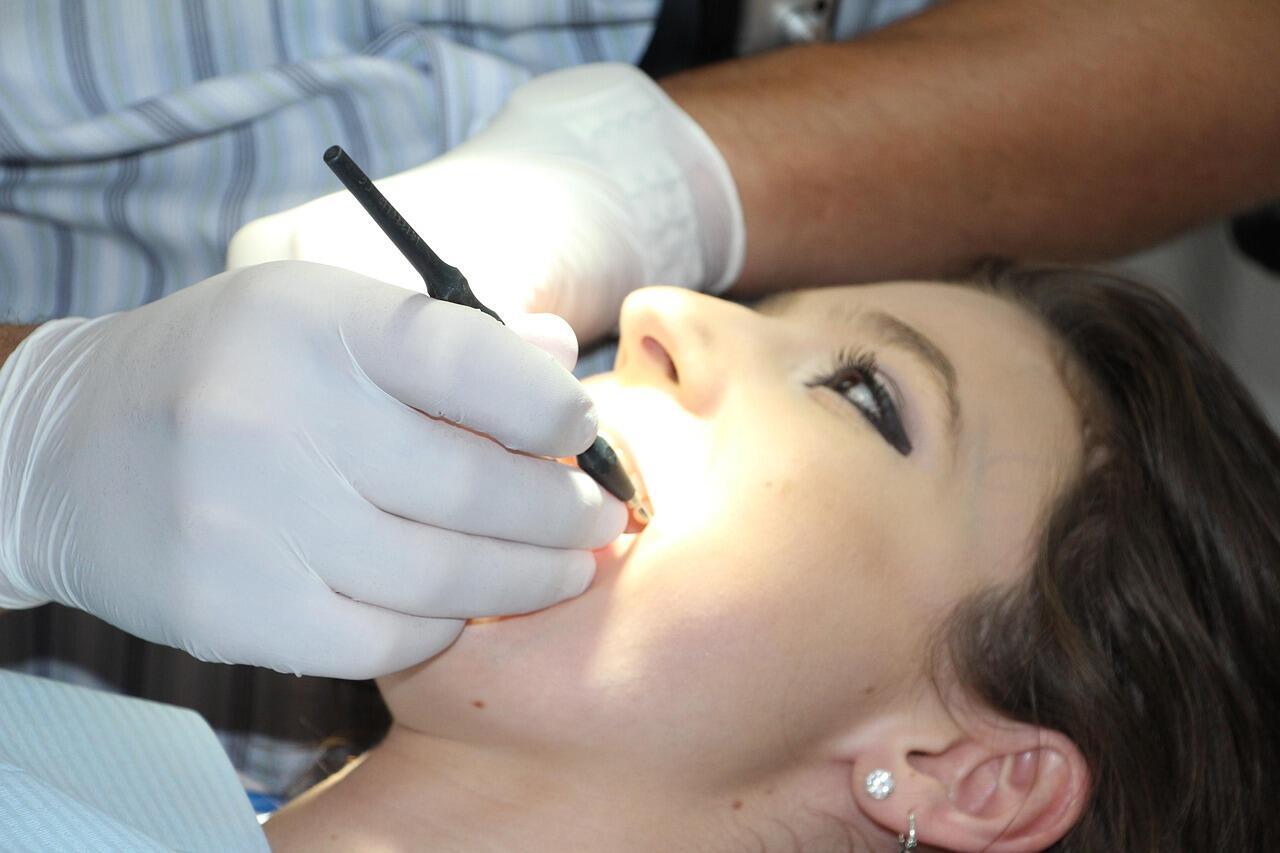
We assess the extent of decay using clinical examination and X-rays, then discuss the best restoration approach for your tooth
Early detection is key
Cavities (dental caries) begin as small areas of demineralisation on the tooth surface and progress inward over time. When caught early, cavities can be treated with a small, conservative filling that preserves maximum tooth structure. This is why regular check ups are so important — a cavity caught at an early stage requires a far simpler and more affordable treatment than one that has reached the nerve.
Why we use composite (white) fillings
At R&H Dental, we exclusively use tooth-coloured composite resin fillings. Unlike silver amalgam fillings, composite fillings bond directly to the tooth structure, preserving more of your natural tooth. They are mercury-free, aesthetically invisible, and provide excellent durability. We also routinely replace old amalgam fillings with modern composite restorations when patients request this.
Gentle Numbing & Preparation
The area is completely numbed and all decay is carefully removed, preserving as much healthy tooth structure as possible
Pain-free treatment
We apply a topical numbing gel before administering local anaesthesia, and use a slow, gentle injection technique to minimise discomfort. You won't feel anything during the procedure. For anxious patients, we can discuss additional comfort options. The tooth is then isolated to keep the area dry, which is essential for a strong bond between the composite and the tooth.
Minimally invasive decay removal
Using precise instruments (and sometimes air abrasion for very small cavities), we remove all decayed tooth material while preserving as much healthy structure as possible. We check with caries-detecting dye to ensure all decay has been removed. The cavity is then cleaned and shaped to optimally receive the filling material.
Bonding & Layering
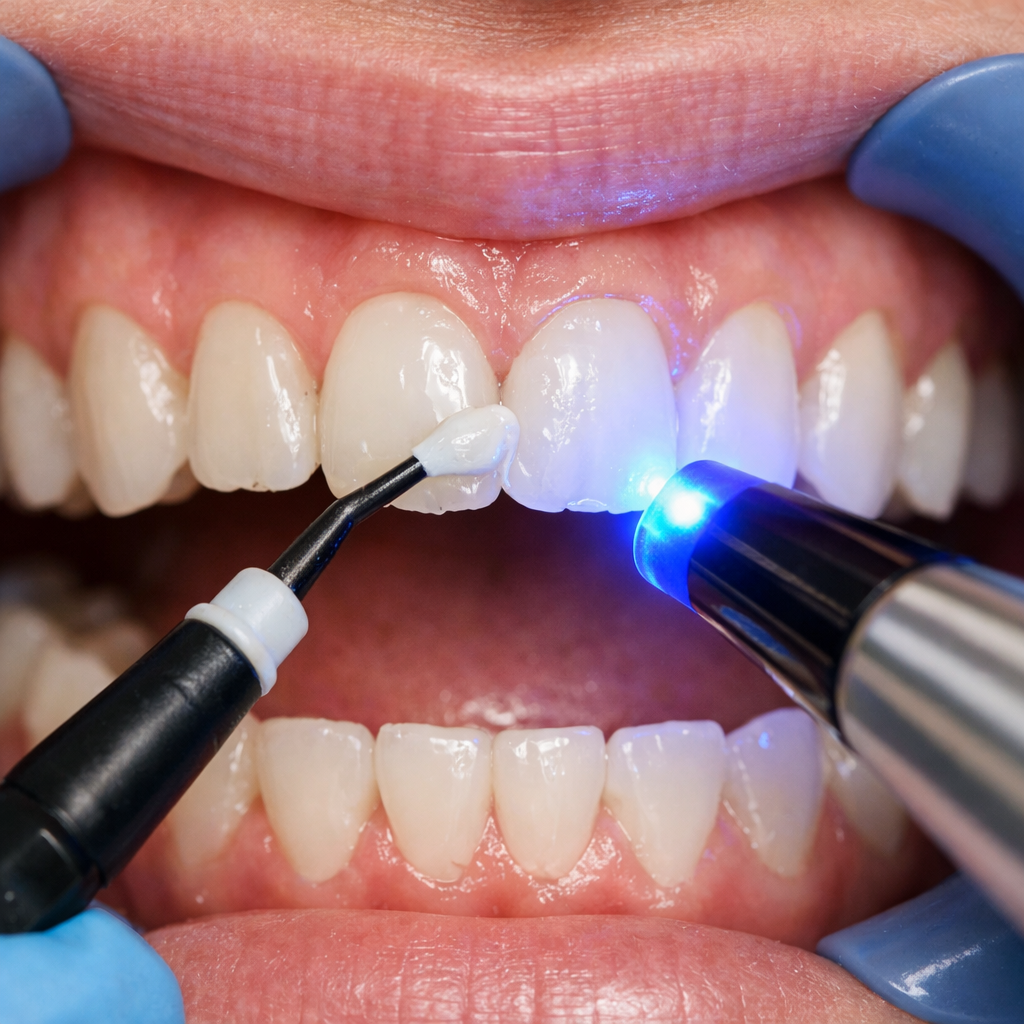
The composite resin is applied in layers, each one shaped and cured with light to build a strong, natural-looking restoration
Adhesive bonding
The tooth surface is etched with a mild acid and a bonding agent is applied — this creates a microscopic roughened surface that allows the composite to bond intimately with the tooth. This adhesive technique is what makes composite fillings superior to amalgam for tooth conservation — because the material bonds to the tooth, less healthy structure needs to be removed to create retention.
Layered placement
The composite resin is placed in thin layers (the incremental technique), with each layer cured (hardened) by a high-intensity LED light for 20–40 seconds. This layering approach minimises shrinkage stress, reduces the risk of post-operative sensitivity, and allows us to build up the natural contours and cusps of the tooth. We select shades that match your tooth precisely, and can even layer different opacities for front teeth where aesthetics are paramount.
Shaping & Polishing
The filling is carefully shaped to restore natural tooth anatomy, and polished to a smooth, stain-resistant finish
Anatomical shaping
After the composite is fully cured, we shape it to reproduce the natural grooves, ridges, and contours of the original tooth. Your bite is carefully checked using articulating paper to ensure the filling meets correctly with the opposing teeth. An incorrect bite can cause discomfort, premature wear, or even cracking, so this step is essential.
Multi-stage polishing
The filling is polished through a series of progressively finer polishing discs and cups until it achieves a smooth, glossy finish that closely matches the lustre of natural enamel. A well-polished surface is important not only for aesthetics but also for hygiene — smooth surfaces resist plaque accumulation and staining far better than rough ones.
English-Speaking Dentists
From Finland, Denmark, NZ, Ireland, Portugal & Spain — 15-35 years experience
Transparent Pricing
Published prices, no hidden fees — what we quote is what you pay
Written Guarantee
All treatments backed by our published guarantee policy
1st Check Up Free
Book your first visit at no charge — no obligations
Accurate, Honest Diagnosis
No unnecessary treatments — only what you truly need
Trusted by 8,900+ Expats
Your neighbors have chosen us — 4.9★ from 415+ reviews
Transparent Pricing
No hidden fees, no surprises. Financing available up to 60 months.
Prices depend on the size and location of the filling. A detailed quotation is provided after examination.
Marbella Composite Fillings FAQ's
Common questions about tooth-coloured fillings in Marbella
Composite fillings are white, tooth-coloured restorations used to repair teeth affected by decay, wear, or small fractures. They are bonded directly to the tooth and designed to blend in naturally, which is why patients often search for composite fillings Marbella rather than older silver fillings.
We do not use silver amalgam fillings. We prefer white composite restorations because they are mercury-free, more aesthetic, and allow us to restore the tooth in a way that looks much more natural.
Yes. Composite fillings are a well-established and widely used restorative material. We also make a point of using high-quality, thoroughly tested materials rather than cheap generic alternatives, because material quality matters for long-term performance.
Yes, in many cases they can. Composite materials are suitable for both front and back teeth, although if the cavity is especially large or the biting forces are very high, we may recommend a ceramic inlay or a crown instead for greater long-term strength.
Yes. Small chips and broken edges can often be repaired beautifully with the same composite materials used for fillings, restoring both the appearance and the function of the tooth in a very conservative way
The page guidance puts the lifespan at roughly 5–7 years, although good fillings can last longer with the right bite, careful placement, and regular maintenance. Longevity depends on the size of the filling, where it is in the mouth, and how heavily that tooth is loaded.
Most fillings are straightforward and very manageable. If the cavity is deeper, we numb the area with local anaesthetic so the treatment is comfortable, and once the filling is complete most patients are able to get on with their day normally.
Our fillings page lists the usual duration as around 30–90 minutes. Smaller, simpler fillings are quicker, while larger or more awkward ones naturally take longer if they are to be done carefully and properly.
Fillings are charged according to the number of tooth surfaces affected, usually from 1 to 5, as well as the complexity, depth, and ease of access. The published average range is 109€–189€.
With a conventional composite filling, the material is built up by hand and shrinks slightly as it sets under the blue light. In larger restorations that shrinkage can increase the chance of micro-gaps, sensitivity, staining, and future failure, which is why for bigger cavities we may recommend a ceramic inlay that is stronger and can last significantly longer.
Yes. Our composite fillings are primarily from 3M, which is one of the leading names in restorative materials. We choose high-quality materials because we want the restorations to perform well over time rather than simply taking the cheapest option.
They can hold their colour well, but they are not as stain-resistant as ceramic. Over time, especially in patients who smoke or drink a lot of coffee or red wine, composite can pick up staining more easily than a ceramic inlay or porcelain restoration.
Yes, in many cases they can. If an old filling is leaking, cracked, stained, or no longer protecting the tooth well, we can often replace it with a new white filling, although the right option depends on how much healthy tooth structure is still left.
Yes. Our written guarantee places fillings in the 2-year category, provided the maintenance conditions are followed properly. As always, that means attending regular check-ups and cleanings at our clinic and treating any newly diagnosed problems promptly.
Our fillings page lists pricing from 109€, with the typical range published as 109€–189€ depending on the number of surfaces, depth, access, and complexity. That gives a realistic guide for patients looking into white fillings in Marbella while still allowing the final figure to reflect the real clinical situation.
Book a Marbella Filling Appointment
Healthy teeth without toxic elements
R&H Dental uses your personal data to manage your appointment request and contact you about it. Data controller: RD&HE Enterprises S.L.
15-35 years
Experience per dentist (no junior dentists)

9,000+
Happy patients treated
9
English-speaking dentists & specialists

4.9/5
Google rating (415+ genuine reviews)
Need a Filling? We Make It Easy.
4.9/5 Star Rating | 9,000+ Happy Patients | Gentle, Pain-Free Care