


endodontics marbella
Root Canal Treatment in Marbella
Save your natural tooth with modern, comfortable root canal therapy
A root canal is often the best way to save a painful or infected tooth rather than remove it. At R&H Dental we focus on thorough cleaning, comfortable treatment, and proper restoration afterwards so the tooth can continue serving you well.
Benefits of a Root Canal in Marbella
Saving a natural tooth is usually the most conservative and biologically sensible option.
What is Root Canal Treatment in Marbella?
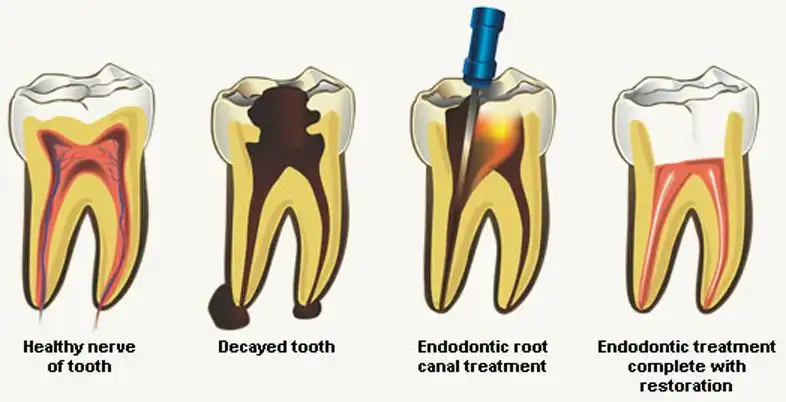
Root canal treatment (endodontic therapy) is a procedure that saves a tooth when the nerve (pulp) inside it becomes infected or inflamed. The dentist removes the damaged pulp tissue, cleans and disinfects the root canals, then fills and seals them to prevent reinfection. The tooth is then restored with a crown to protect it and restore full function. Despite its reputation, modern root canal treatment is typically no more uncomfortable than having a filling.
The pulp can become infected due to deep decay, a crack or chip in the tooth, repeated dental procedures, or trauma. Without treatment, the infection can spread to the surrounding bone, forming an abscess — which can be extremely painful and potentially dangerous. Root canal treatment eliminates the infection, relieves pain, and saves the natural tooth.
Root Canal in Marbella vs Extraction: Why Save the Tooth?
Whenever possible, saving your natural tooth is the best option. A root-canal-treated tooth, properly restored with a crown, can last a lifetime. Extraction, on the other hand, creates a gap that can cause neighbouring teeth to shift, alter your bite, and lead to bone loss. While dental implants are an excellent replacement option, they're more invasive and expensive than root canal treatment. At R&H Dental, we always prioritise saving your natural teeth when clinically appropriate.
The Marbella Root Canal Process
A precise 4-step procedure to eliminate infection and save your tooth.
Diagnosis & Assessment

Thorough clinical examination and X-rays to confirm the diagnosis and assess the complexity of the root canal system
When is a root canal needed?
Root canal treatment (endodontics) is needed when the pulp — the soft tissue inside your tooth containing nerves and blood vessels — becomes infected or inflamed. This can happen due to deep decay, repeated dental procedures, cracks, or trauma. Common symptoms include persistent toothache, prolonged sensitivity to hot or cold, darkening of the tooth, swelling, or a recurring pimple on the gum. Sometimes, however, a tooth needing root canal treatment shows no symptoms at all, which is why regular X-rays are important.
Advanced imaging
We use digital periapical X-rays and, when needed, 3D CBCT scans to evaluate the root canal system in detail. This advanced imaging reveals the number and shape of the root canals (which can vary significantly between teeth), the extent of any infection, and the proximity of important anatomical structures. This detailed planning is essential for achieving the best possible outcome.
Anaesthesia & Access
The tooth is completely numbed before creating a small access opening to reach the pulp chamber
Ensuring your comfort
We understand that root canal treatment has an undeserved reputation for being painful. In reality, modern root canal treatment should be no more uncomfortable than getting a filling. We use effective local anaesthesia to ensure you feel nothing during the procedure. For anxious patients, we can also offer sedation options. The tooth is isolated with a rubber dam to keep it dry, protect your airway, and provide a clean working environment.
Creating access
A small opening is made in the crown of the tooth to access the pulp chamber. This is done carefully to preserve as much tooth structure as possible while providing the visibility and access needed to thoroughly clean the canal system.
Cleaning & Shaping
The infected pulp tissue is removed and the canals are meticulously cleaned, disinfected and shaped using rotary instruments
Rotary endodontics
We use advanced nickel-titanium rotary instruments to clean and shape the root canals. These flexible instruments follow the natural curvature of the canals, removing infected tissue and debris while creating the ideal shape for filling. Electronic apex locators precisely measure the length of each canal, ensuring we clean to the very tip without over-extending.
Thorough disinfection
The canals are irrigated extensively with antimicrobial solutions (sodium hypochlorite and EDTA) to dissolve remaining tissue, kill bacteria, and remove debris from the complex canal anatomy. This irrigation phase is crucial — the canal system often has tiny branches and irregularities that instruments alone cannot reach. Ultrasonic activation of the irrigants helps them penetrate into these areas for a more thorough disinfection.
Filling & Restoration
The cleaned canals are sealed with biocompatible material and the tooth is restored with a crown for long-term protection
Canal filling
Once the canals are thoroughly cleaned and shaped, they are filled with a biocompatible material called gutta-percha, sealed with a special cement to create an impervious barrier against future bacterial infiltration. The access opening is then sealed with a strong core filling material.
Crown protection
In most cases, a tooth that has undergone root canal treatment will need a dental crown for long-term protection. Without a crown, the remaining tooth structure is at risk of fracturing under biting forces. We'll discuss the best type of crown for your specific tooth — whether eMax porcelain for front teeth or zirconia for back teeth — and the timeline for getting it placed.
English-Speaking Dentists
From Finland, Denmark, NZ, Ireland, Portugal & Spain — 15-35 years experience
Transparent Pricing
Published prices, no hidden fees — what we quote is what you pay
Written Guarantee
All treatments backed by our published guarantee policy
1st Check Up Free
Book your first visit at no charge — no obligations
Accurate, Honest Diagnosis
No unnecessary treatments — only what you truly need
Trusted by 9,000+ Expats
Your neighbors have chosen us — 4.9★ from 415+ reviews
Transparent Pricing
No hidden fees, no surprises. Financing available up to 60 months.
Prices depend on the tooth position and number of canals. A crown is usually recommended after root canal treatment and is quoted separately. Financing available up to 60 months.
Marbella Root Canal FAQ's
Common questions about root canal treatment in Marbella
A root canal treatment, also called endodontics, is a procedure used to save a tooth whose pulp, meaning the nerve and blood vessels inside, has become infected or inflamed. We remove the infected tissue, disinfect the inside of the root canals, and then seal them so the tooth can be kept rather than extracted. For patients looking into a root canal Marbella treatment, the goal is usually to stop pain and preserve the natural tooth.
Common signs include persistent or severe toothache, pain on biting, lingering sensitivity to hot or cold, darkening of a tooth, swelling or tenderness in the nearby gum, and a recurring pimple on the gum.
Modern root canal treatment should not be more uncomfortable than getting a filling. We numb the area fully before starting, and most patients are pleasantly surprised by how manageable it feels, especially compared with the pain that brought them in. Mild soreness afterwards usually settles within a few days with normal pain relief.
The page lists root canal treatment as taking a minimum of 1–2 visits. A straightforward front tooth may sometimes be completed in one appointment, while molars, retreatments, calcified canals, or more complicated anatomy may need two visits so the disinfection can be done properly.
Complicated cases can be more technically demanding because of narrow, curved, blocked, or previously treated canals. For those cases, having a specialist endodontist Marbella patients can be referred to within the same clinic helps improve the chances of a successful and properly managed outcome.
We use advanced rotary endodontic technology in most cases for more consistent and effective cleaning and shaping of the canals. We also have full-facial 3D X-ray technology that can be especially helpful in diagnosing and planning more difficult root canal situations.
Because disinfection is everything. The page explains that the disinfectants used inside the canals need proper contact time with the infected tissues to work effectively, so rushing the procedure would directly compromise the long-term outcome. That is why we take the time needed to clean thoroughly rather than trying to make the appointment artificially fast.
In many cases, yes, especially on premolars and molars that take heavy biting forces. After root canal treatment the tooth no longer has a blood supply and can become more brittle over time, so a crown is often recommended to protect it from fracture and restore full function.
In almost all cases, saving your natural tooth is preferable if it can be done predictably. Keeping the tooth helps maintain normal chewing, supports the surrounding bone, prevents neighbouring teeth from drifting, and avoids the greater cost and complexity of replacing the tooth with an implant or bridge.
With good treatment, proper restoration, and regular maintenance, a root canal treated tooth can last for many years and in some cases for life. The long-term success depends not only on the root canal itself, but also on protecting the tooth properly afterwards, often with a crown.
Yes, a small percentage of cases can fail because of complex anatomy, persistent infection, or new decay. If that happens, retreatment is often possible by removing the old filling material, re-cleaning the canals, and sealing them again, and in selected cases a minor surgical procedure such as an apicectomy may be recommended.
Until the permanent restoration is in place, it is best to avoid chewing heavily on the treated tooth. After that, you simply care for it like any other tooth: brush, floss, and keep up regular check-ups every 6 months so we can monitor the area properly.
Our transparent pricing lists root canal treatment from 348€, retreatment from 400€, and a crown after root canal from 500€. The page also breaks the treatment down into 189€–319€ for the first disinfection stage and 159€–229€ for the canal filling stage, with higher costs possible for more complex cases.
Yes. Root canals sit in the 2-year category of our written guarantee, provided the maintenance conditions are followed properly. It is also important to know that root canal retreatments are specifically excluded from guarantee cover, so the exact situation should always be explained clearly before treatment starts.
If a root canal fails and retreatment is not possible or not successful, the next step may be apicectomy or extraction depending on the case. Our guarantee policy also explains that when a root canal cannot be retreated successfully, the amount already paid for that root canal can normally be credited towards the next treatment, such as an extraction, implant, and crown.
Book a Root Canal Marbella Consultation
15-35 years
Experience per dentist (no junior dentists)

9,000+
Happy patients treated
8
English-speaking dentists & specialists

4.9/5
Google rating (415+ genuine reviews)
Toothache? Don't Wait.
4.9/5 Star Rating | 9,000+ Happy Patients | Same-Day Emergency Appointments Available