

TL;DR:
- Ethical before and after photos show real patient results under standardized conditions.
- Marbella clinics often specialize in veneers, implants, orthodontics, and bonding with dramatic visible improvements.
- Evaluating gallery diversity and transparency helps ensure trustworthy, natural-looking dental transformation expectations.
Scroll through any dental clinic’s social media and you will encounter a wall of gleaming smiles, each captioned with a dramatic “transformation.” It is natural to feel sceptical. Yet for expats and international visitors in Marbella who are genuinely considering cosmetic or restorative dental care, these images are far more than marketing gloss. When they are produced and presented with integrity, before and after photographs are one of the most practical research tools available, offering a transparent window into what real clinical outcomes actually look like and helping you set realistic, well-informed expectations before you ever sit in the chair.
Table of Contents
- What does ‘dental before and after’ really mean?
- Key dental treatments with dramatic before and after impacts
- How to evaluate dental before and after images
- Common questions and misconceptions about dental transformations
- Why experience beats perfection in dental before and afters
- Ready to see your own dental transformation?
- Frequently asked questions
Key Takeaways
| Point | Details |
|---|---|
| Look beyond marketing | Focus on authentic, detailed before and after images to assess real clinic quality. |
| Key treatments explained | Veneers, implants, bonding, and orthodontics offer the most striking before and after results. |
| Evaluation checklist | Use a step-by-step checklist to verify if images truly reflect a clinic’s capabilities. |
| Trust genuine stories | Seek out clinics with a variety of real patient journeys, not just ‘perfect’ results. |
What does ‘dental before and after’ really mean?
To help you interpret these visuals, let us start by breaking down what dental before and after images actually mean and how they are created.
At their most basic level, before and after photos document a real patient’s journey from the starting condition of their teeth through to the completed treatment outcome. They are not illustrations or simulations. When produced ethically, they are clinical photographs taken under standardised conditions: consistent lighting, identical camera angles, the same focal length, and comparable facial positioning. This standardisation is deliberate. It allows a fair comparison that reflects the actual clinical change rather than a flattering camera trick.
What do these images typically highlight? Depending on the treatment involved, you might observe changes in:
- Tooth colour and overall brightness
- Alignment and spacing, particularly with orthodontic cases
- Shape and proportion, especially after veneers or bonding
- Missing tooth restoration following implant placement
- Gum line symmetry, which frames the entire smile
For expats and international visitors, before and after images perform an especially valuable function. You may not yet have an established relationship with a local dentist, and you may be evaluating multiple clinics based largely on digital research. Being able to view smile makeover results from real patients treated at a specific clinic gives you a concrete reference point that no written testimonial can fully replace.
Trustworthy before and after comparisons follow ethical standards: patient consent is documented, photos are unedited beyond basic colour calibration, and the timeframe of the result is clearly stated. A six-month post-treatment photo tells a different story from one taken immediately after a whitening session.
“A genuinely useful before and after photo tells you not just what the teeth look like now, but what they looked like before and why that change was achievable with this particular patient’s anatomy.”
Be alert to misleading examples. Over-whitened “after” images, cases where the background or lighting has clearly shifted, or galleries that show only one category of result should all prompt questions. Honest clinics are proud of their range, not just their most dramatic cases.
Key dental treatments with dramatic before and after impacts
Now that you understand what before and after images represent, let us look at the treatments where these comparisons are most compelling.
Marbella attracts a discerning international patient base. People come here having already researched their options extensively, and they typically arrive with a clear vision of what they want to achieve. Across all the enquiries seen locally, a handful of treatments consistently produce the most visible and emotionally meaningful transformations.
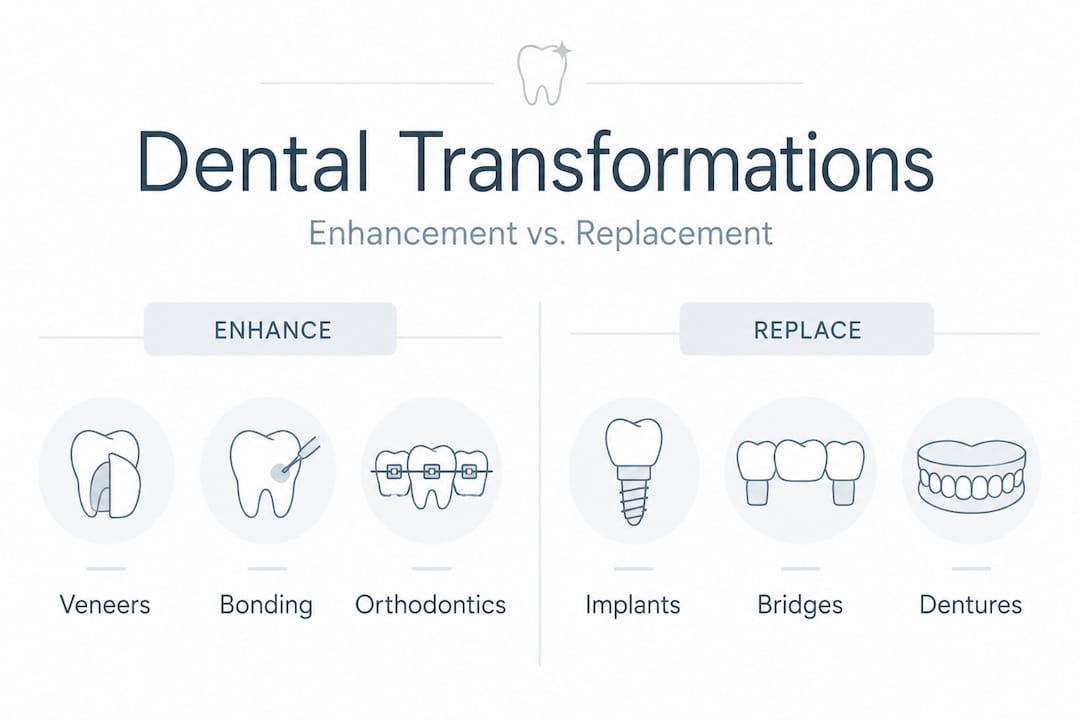
Porcelain veneers are perhaps the most requested. A veneer is a thin shell of porcelain bonded to the front surface of a tooth, reshaping its colour, size, and form in a single step. The change can be extraordinary without looking artificial when designed by an experienced clinician. The key is facial harmony: a skilled approach to dental veneers transformations follows the patient’s natural smile line rather than imposing a cookie-cutter template.
Dental implants address a different category of need. Where veneers enhance what exists, implants replace what is missing. The before photos in these cases often show visible gaps, sunken facial structure, or poorly fitting dentures. The after images reveal restored volume, natural-looking crowns, and renewed confidence. Reviewing real dental implant results from documented cases helps prospective patients understand that the goal is not just aesthetic but also functional, supporting jaw health and bite integrity over the long term.
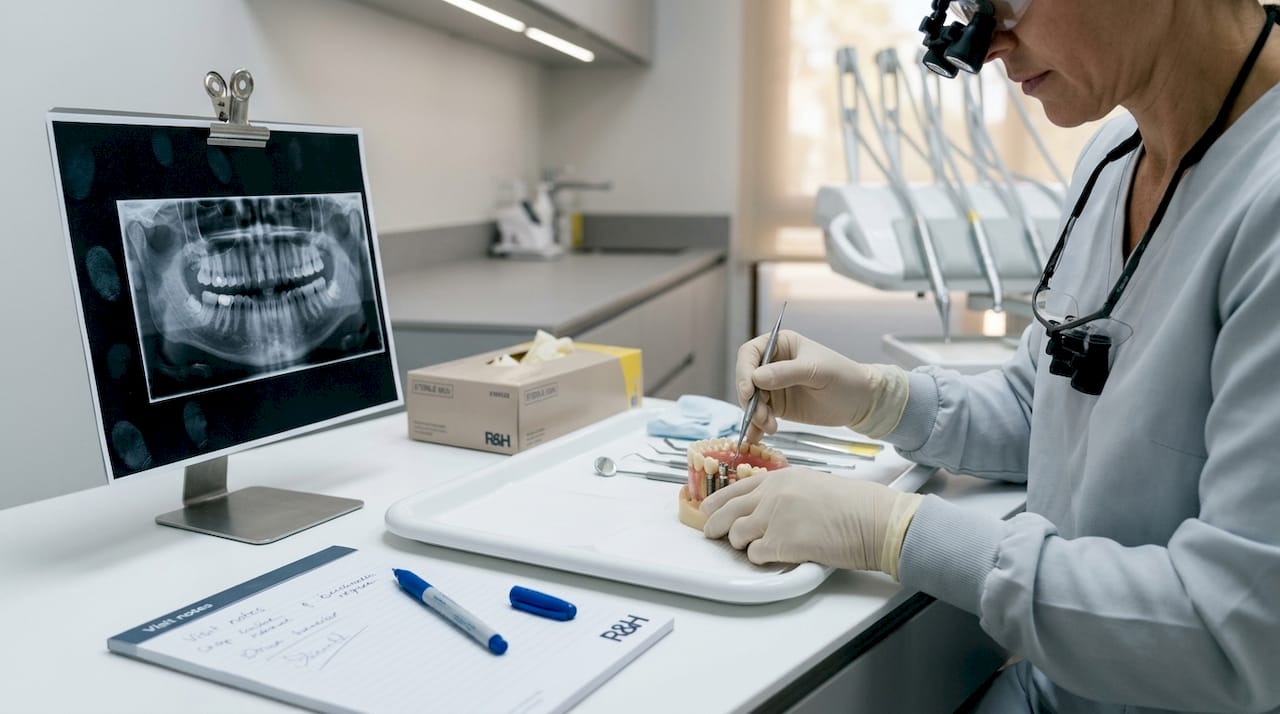
Composite bonding is a popular choice for patients who want a meaningful improvement without the irreversibility of veneers. A tooth-coloured composite resin material is sculpted directly onto the tooth surface, correcting chips, gaps, and minor misalignment in a single appointment. The composite bonding examples that carry the most value are those documenting subtle, natural-looking changes rather than wholesale redesigns.
Orthodontics, including clear aligner systems, produces some of the most dramatic long-term before and after comparisons. Cases spanning twelve to twenty-four months show not just straightened teeth but often a more balanced facial profile.
| Treatment | Primary visual change | Typical timeframe | Reversibility |
|---|---|---|---|
| Porcelain veneers | Colour, shape, proportion | 2 to 3 appointments | Low |
| Dental implants | Missing tooth restoration | 3 to 6 months | Low |
| Composite bonding | Chips, gaps, minor shape | 1 appointment | Moderate |
| Clear aligners | Alignment and spacing | 12 to 24 months | High |
| Teeth whitening | Colour and brightness | 1 to 2 sessions | High |
Research into cosmetic dentistry in Marbella consistently shows that patients who review before and after galleries prior to consultation arrive with more realistic expectations and higher satisfaction rates following treatment. One key finding from patient experience studies suggests that over 85% of cosmetic dental patients cite seeing real case photos as the single most important factor in their decision to proceed with a chosen clinic.
Pro Tip: When reviewing a clinic’s gallery, look specifically for cases that resemble your own starting point. An immaculate result on a patient with mild staining tells you very little if your primary concern is missing teeth or significant misalignment.
How to evaluate dental before and after images
Armed with an understanding of the main treatments, it is time to learn how to assess the credibility and quality of before and after evidence when you research your clinic.
Not all galleries are equal. The following numbered checklist gives you a systematic way to evaluate what you find online or during an in-person consultation.
- Check lighting consistency. Both images should use the same or very similar lighting conditions. Whitening “after” images achieved purely through brighter lighting are a common manipulation.
- Verify angle and distance. The camera position and distance from the patient should be identical in both photos. A slightly wider angle on the “after” image makes teeth appear broader and more symmetrical.
- Look for timeframe disclosure. A trustworthy clinic notes when the “after” photo was taken: immediately post-treatment, at three months, or at one year. Immediate results and settled results can differ meaningfully.
- Assess variety across cases. A credible gallery shows a range of patient types, ages, starting conditions, and treatment scopes. Uniform perfection across every case is a red flag.
- Confirm patient diversity. Real patients have different skin tones, facial structures, and gum characteristics. A gallery that looks remarkably homogeneous may indicate selective or artificially assembled cases.
- Request an in-person case review. The strongest clinics invite you to view clinic gallery materials during a consultation, sometimes including physical case files or detailed before and after presentations.
- Ask about guarantee policies. A clinic that stands behind its results with a formal clinic guarantee policy is demonstrating accountability. This is one of the most meaningful assurances of quality you can receive.
Red flags to watch for specifically include: heavy Instagram-style filters applied to teeth; cases where the before image appears staged to look worse than it naturally was; and portfolios that show only one or two treatment types despite claiming to offer a full range of services.
The value of an in-person clinic tour should not be underestimated. Seeing the clinical environment, meeting the team, and reviewing actual patient files in a consultation setting gives you information that no website image can provide. It also tells you a great deal about how the clinic values transparency as a principle, not just a marketing message.
Common questions and misconceptions about dental transformations
Even with this knowledge, it is natural to have lingering doubts or misconceptions about real-world outcomes. Let us address the most common ones directly.
Myth: All before and after images are digitally altered. Some are, in clinics that prioritise marketing over integrity. However, reputable clinics operating at a high standard use unretouched clinical photography. Many also employ Digital Smile Design (DSD) software to plan treatment outcomes in advance, showing you a simulation before work begins. This is entirely different from retroactively editing “after” images.
Myth: Cosmetic dental work always looks artificial. This reflects outdated assumptions, likely influenced by the unnaturally white, opaque veneers common in the 1990s. Modern porcelain materials have translucency, depth, and surface texture that closely mimic natural enamel. When designed with attention to facial harmony, cosmetic results are often invisible to all but the patient themselves.
Myth: These treatments are too painful to consider. Modern anaesthetic protocols, sedation options, and minimally invasive techniques have transformed the patient experience. Most cosmetic procedures involve minimal discomfort, and detailed aftercare guidance ensures the recovery period is manageable.
- Longevity concerns are valid but manageable with proper care: veneers typically last ten to fifteen years, implants can last a lifetime with good oral hygiene.
- Reversibility varies by treatment, and honest clinics explain this clearly before any commitment is made.
- Cost concerns are understandable, but transparent pricing structures allow you to plan accurately rather than face unexpected expenses.
“The most common thing international patients tell us they wish they had known sooner is simply that the results were more natural and more durable than they had expected.”
For expats living in Marbella, or visitors spending extended time on the Costa del Sol, accessing dental transformation insights from a locally established clinic means you benefit from both international standards and a team that understands the specific concerns and preferences of an internationally mobile patient base.
A particularly important reassurance relates to the local standard of care. Marbella has developed a strong reputation as a destination for premium dental services precisely because its leading clinics attract internationally trained clinicians who maintain rigorous quality controls. This is not coincidence. It reflects the demands of the patient population the best clinics serve.
Why experience beats perfection in dental before and afters
Here is a perspective that most dental content will not offer you: the most flawless-looking before and after galleries are often the least informative, and sometimes the least trustworthy.
When every single case in a clinic’s portfolio looks magazine-ready, uniform, and extraordinary, you are likely seeing curation rather than representation. Real clinical practice involves complex cases, patients with unusual anatomy, people who present with significant damage or decay, and outcomes that are excellent within realistic constraints rather than cinematic in their impact. A clinic that only shows its absolute best three cases is telling you less than one that shows you fifty varied, honest examples.
The patient success stories that build the deepest confidence are those that show incremental, documented progress. A case study that walks you through a patient’s concerns, the treatment planning process, the clinical decisions made along the way, and the final settled outcome after several months teaches you something real. It tells you how the clinician thinks, not just what the result looks like.
Experience is what allows a dentist to navigate complexity rather than avoid it. The most experienced clinicians in Marbella regularly take on challenging cases: severe discolouration, extensive bone loss requiring implant preparation, or full-mouth rehabilitations following years of neglect. These cases, when presented honestly, demonstrate capability far more clearly than a collection of whitening results on otherwise healthy teeth.
For patients new to Marbella’s dental landscape, this insight reframes the research process. Stop looking for the most dazzling gallery. Start looking for the most honest one. A clinic that shows you the full range of what real treatment looks like, including the cases that required patience, creative problem-solving, and multiple stages of care, is a clinic that will serve you well when your own situation proves to be anything other than straightforward.
Trust, ultimately, is built through honesty about complexity. Not through the performance of perfection.
Ready to see your own dental transformation?
If you are eager to discover your own “after,” here is how to take the first steps in Marbella. At R&H Dental Marbella, the Marbella before and after gallery reflects real patient journeys across a wide range of treatments and starting conditions. You will find cases that look like yours. The full range of Marbella dental treatments available at the clinic spans veneers, implants, orthodontics, composite bonding, and facial aesthetics, all delivered by English-speaking clinicians with international credentials. Pricing is presented through transparent dental prices so you always know exactly what to expect before committing to any course of treatment. Book a consultation and bring your questions. The before and after process starts with an honest conversation.
Frequently asked questions
Are dental before and after photos genuine at Marbella clinics?
Reputable clinics in Marbella use unedited patient photographs taken under standardised clinical conditions, and you can often request to review real case examples in person during your initial consultation.
Which treatments in Marbella offer the biggest visual change?
Treatments such as porcelain veneers, dental implants, orthodontics, and composite bonding consistently produce the most noticeable and lasting transformations for both cosmetic and restorative concerns.
Can I trust cosmetic dental results to last long term?
With experienced local dentists and formal written guarantees, many cosmetic results in Marbella last a decade or longer, provided patients follow recommended oral hygiene and attend regular maintenance appointments.
What should I look for in a dental clinic’s before and after gallery?
Prioritise diverse, consistently photographed cases that include a range of starting conditions and treatment types, and look for real patient stories rather than only polished, repeated showcase examples.