External laboratory
- Dentist prepares and records
- External technician makes veneers
- Dentist fits and reviews
The design passes between the treating dentist and a separate laboratory team. Good records and communication are essential.

Our on-site full ceramic laboratory · Marbella
An on-site full ceramic laboratory, supported by an additional satellite lab at Dr. Bruno’s home. Together, they give him the space to create, layer, stain and finish his bespoke veneers personally.

Our on-site full ceramic laboratory
R&H Dental has its own on-site full ceramic laboratory, supported by an additional satellite laboratory at Dr. Bruno’s home. Dr. Bruno exclusively operates the home laboratory, extending the ceramic work carried out at the clinic. For his bespoke veneer cases, Dr. Bruno carries out both the clinical work and the laboratory work, including the final finishing, layering and staining.
This connects what he sees with you in the chair to the details he creates in the ceramic. Shade, texture and character remain with the dentist who planned your smile, through to the final fit.
Three ways veneers are made
The difference is responsibility across the stages. These are workflow models, not a ranking of every clinic or a promise of a particular result.
The design passes between the treating dentist and a separate laboratory team. Good records and communication are essential.
The ceramist is nearby, making discussion easier, but the clinical and ceramic work still pass between different people.
One person carries the clinical intent into the layering, staining and final finish, in our on-site ceramic lab or his additional home satellite lab.
The details that make a smile personal
Ceramic layers help build depth and optical character. The technique and material are chosen for the case.
Careful characterisation adjusts colour and individual details so the teeth belong within the planned smile.
Surface texture, contours and polish influence how light moves across each veneer. Fit and bite remain essential clinical checks.
Dr. Bruno’s clinical practice, teaching and ceramic work share the same focus: a smile planned around the individual. Explore Dr. Bruno’s experience and work.
Inside our work
Explore these posts from our laboratory and ceramic work.
Our additional satellite lab at Dr. Bruno’s home
The satellite laboratory at Dr. Bruno’s home complements our on-site full ceramic lab and allows him to continue the detailed ceramic work personally. These two films show the finishing work behind his bespoke cases.
Personal work takes personal time
When the treating dentist also makes the veneers, his time is part of every stage. That limits how many cases Dr. Bruno can take on. We usually have a waiting list; the team confirms current availability before you arrange treatment or travel.
Our service is not priced to be the least expensive in Marbella. The investment reflects the time devoted to clinical planning, ceramic work and finishing. We explain the options and costs before you decide.
Dr. Bruno Pereira
Veneer pricing
| Treatment | Starting price | What to confirm |
|---|---|---|
| Porcelain veneer | From 695€ per tooth | Material, case complexity, preparation and laboratory scope. |
| Dr. Bruno’s bespoke ceramic work | Personalised quotation | The agreed clinical and laboratory stages for your particular case. |
| Preparatory treatment | Quoted if required | Any gum care, whitening, orthodontics or other treatment needed first. |
The published veneer starting price is not a fixed fee for every bespoke case. Read the veneer cost guide and request a complete written quotation.
R&H Dental · Marbella
Your next step
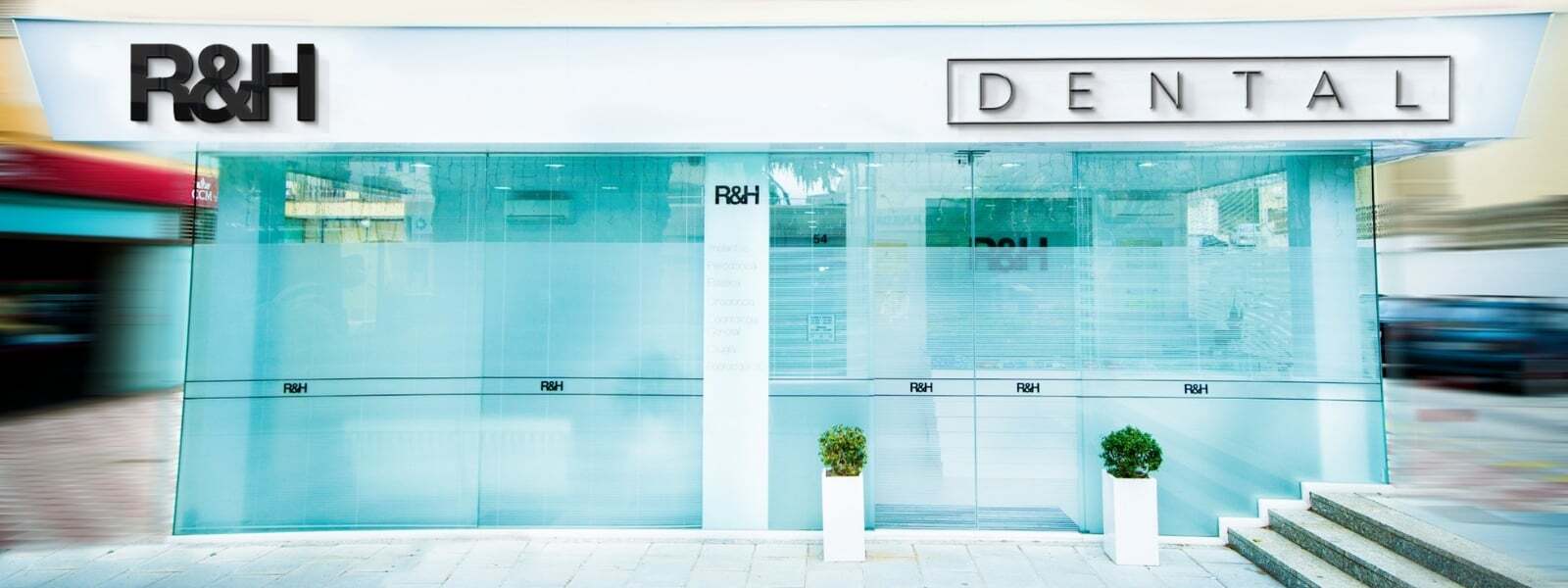
Visit R&H Dental at Avenida Ricardo Soriano 54, Marbella. Tell us what is difficult now, what you would like to change and any travel constraints. We will explain the suitable options and provide a written treatment plan.
Yes. R&H Dental Marbella owns an on-site full ceramic laboratory and has an additional satellite laboratory at Dr. Bruno’s home operated exclusively by Dr. Bruno for his work.
Dr. Bruno carries out both the clinical work and the laboratory work, including final finishing, layering and staining. The same person follows the smile from planning to ceramic finish.
No. It is an additional satellite workspace at Dr. Bruno’s home operated exclusively by Dr. Bruno. The on-site laboratory remains part of the clinic’s facilities.
Not in the supplementary workflow described here. Dr. Bruno personally carries out the work in that space rather than handing those stages to an external technician.
No. An on-site laboratory may be operated by a ceramist who works with the dentist. Location and the identity of the person making the ceramics are different questions.
It compares an external laboratory handoff, an on-site ceramist handoff and Dr. Bruno’s combined clinical and laboratory workflow for his bespoke veneer cases.
No. The description concerns Dr. Bruno’s bespoke veneer work. Ask the team who is responsible for the clinical and laboratory stages of your particular treatment.
Yes. Skilled external laboratories and strong communication can produce excellent work. R&H Dental Marbella’s distinction here is continuity of responsibility in Dr. Bruno’s own bespoke workflow.
The observations made with the patient can inform the ceramic details directly. Fewer handoffs can reduce the need to translate shade, shape and character between different people.
No. Diagnosis, material choice, tooth condition, bite and maintenance all affect outcomes. Personal involvement offers control of the process, not freedom from biological or technical limitations.
A bespoke veneer case at R&H Dental Marbella begins with a consultation about your goals and an examination of the teeth, gums and bite. The laboratory work follows a clinically suitable plan.
No. Whitening, orthodontics, bonding or no treatment may be preferable. The recommendation should account for healthy tooth structure and your long-term needs.
His aesthetic planning considers how the teeth relate to the lips, face and smile. These observations help define proportions rather than choosing a generic tooth shape.
Yes. Bring examples and explain concerns such as teeth looking too white, too large or too uniform. Clear preferences help the discussion become specific.
Ask which planning records, mock-up or trial approach would be useful in your case. A preview helps discussion but is not a guarantee that every detail transfers unchanged.
The amount of preparation depends on the case and material. Ask what needs to be removed and whether a less invasive alternative could meet the same goal.
No. Some cases need preparation to achieve suitable shape and fit. A no-prep label should not replace an assessment of the existing teeth and proposed result.
Yes. Stable gum health is important for restorative planning. Active disease or other problems may need to be addressed before veneers are made.
Veneers must work within tooth contacts and jaw function. Grinding, wear or an unstable bite can influence the plan, material and protective aftercare.
Not necessarily. The number should reflect the smallest treatment scope that meets your goals and blends with the teeth you keep.
Layering porcelain veneers involves building ceramic detail in layers where the selected technique calls for it. This helps shape depth and optical character rather than relying on a single flat colour.
Staining is controlled ceramic characterisation, used to refine colour and details. It is part of the laboratory technique rather than ordinary staining from food or drink.
Finishing refines contours, surface texture and polish. These details affect appearance and feel, alongside the clinical checks for fit and bite.
Yes, for the bespoke cases described here. His laboratory involvement includes final finishing, layering and staining as part of carrying the design through himself.
Texture changes the way light reflects from a tooth. A highly smooth surface and a more textured surface can look different even when the base shade is similar.
Yes. Shape, surface detail and colour can be tailored within the material and treatment plan. The aim is to agree which character fits the person’s smile.
A natural-looking smile need not consist of identical teeth. Proportion and controlled variation are discussed in relation to the face and neighbouring teeth.
No. Shade is a personal choice considered with the face, lips and untreated teeth. Very bright results and subtle changes have different visual effects.
Matching a single visible tooth can be demanding because colour, translucency and texture all matter. Discuss the limitations and the records needed for that case.
No. Artistic characterisation and clinical accuracy serve different purposes. Fit, margins, contacts and bite must still be assessed before treatment is completed.
Our Marbella clinic has its own on-site full ceramic laboratory, while Dr. Bruno’s supplementary space supports his personal ceramic work. The same clinician remains involved in the bespoke finishing described here.
Dr. Bruno operates that laboratory exclusively. The page’s two selected films show his finishing work in his home satellite laboratory.
The page includes the clinic’s selected Instagram posts and two films of Dr. Bruno’s work. Each has a direct Instagram link if the embedded view is unavailable.
Instagram availability, browser privacy settings or sign-in requirements can affect playback. Use the adjacent link to open the original post directly.
They illustrate Dr. Bruno’s work, not a prediction of your result. Your own material, design and sequence are agreed after assessment.
No. Social posts show selected moments. The clinical team explains the complete process relevant to your plan, including stages that are not shown on film.
Having laboratory facilities nearby can make discussion easier. Dr. Bruno’s bespoke approach goes further by connecting the clinical and ceramic stages through his own work.
The supplementary space supports Dr. Bruno’s laboratory work. The treating responsibilities and appointments for your case are confirmed in your clinical plan.
Ask the clinic what is possible during your appointment. Access depends on the working schedule and the requirements of the clinical and laboratory spaces.
Book clinical visits through R&H Dental in Marbella. The supplementary laboratory is a working space; it is not presented as a separate patient clinic.
The fee for bespoke porcelain veneers at R&H Dental Marbella reflects time spent on assessment, clinical treatment and individual ceramic work. The same dentist’s involvement across those stages limits the number of cases he can undertake.
The clinic does not position this bespoke service as the cheapest option. Compare the complete scope, clinician involvement, materials and aftercare as well as the headline price.
R&H Dental Marbella’s veneer price guide starts at 695€ per tooth. This is a starting figure, not a fixed fee for every case or an automatic quote for bespoke laboratory work.
No. Complexity and the agreed treatment scope can change the fee. Obtain an individual written quotation that identifies the clinical and laboratory stages.
Yes. Gum treatment, whitening, orthodontics or other necessary care may be separate. The quotation should explain what is included and what is additional.
Dr. Bruno’s personal clinical and laboratory work creates a limit on capacity. R&H usually has a waiting list for this service; current availability is confirmed by the team.
Contact the clinic for current dates. Availability changes, so the page does not promise a fixed wait or treatment slot.
Agree the consultation and likely treatment sequence first. Bespoke work and clinical findings can require additional appointments, so confirm practical timing before booking travel.
A wedding or travel deadline should be discussed early. Timing should remain compatible with safe treatment and any required preparation, healing or adjustments.
Use the clinic’s booking route and explain that you would like to discuss bespoke veneers with Dr. Bruno. The team will confirm the appropriate appointment and availability.
When fitting your porcelain veneers at R&H Dental Marbella, the team assesses fit, appearance, contacts and bite as appropriate to the case. Raise concerns during the review so they can be discussed before completion.
Yes. Refinements may be needed as the fit, appearance and function are assessed. Ask how try-in and adjustment stages are organised in your plan.
No restoration has an unlimited lifespan. Veneers can need repair or replacement, and outcomes depend on the teeth, bite, material and ongoing care.
Yes. Ceramic can chip or fracture under certain stresses. Discuss grinding, bite risks and what to do if you notice damage.
A protective appliance may be discussed if grinding or other factors place the restorations at risk. Follow the individual advice rather than assuming every patient needs the same appliance.
Maintain brushing, interdental cleaning and professional reviews as advised. Veneers do not remove the need to care for the underlying teeth and gums.
Yes. The remaining tooth structure can still be affected by decay. Cleaning and regular examinations remain important after cosmetic treatment.
Contact the clinic for assessment. Persistent discomfort or an uneven contact should be checked rather than ignored or adjusted at home.
No. Read the clinic’s published guarantee terms and ask what applies to your treatment. Ownership of a laboratory is a workflow feature, not a substitute for written conditions.
Ask who handles each stage, what preparation is needed, the proposed material, alternatives, total fee, appointment sequence and aftercare. The decision should be based on your individual plan.