
TL;DR:
- Many expats in Marbella find that Spain’s public health system covers only emergency dental care, leaving preventive treatments to private clinics. A routine dental checkup involves patient history, oral examination, periodontal assessment, professional cleaning, X-rays, and a personalized treatment plan, emphasizing the importance of choosing reputable, transparent providers. Proactive long-term relationships and early care are key to maintaining oral health while managing costs and avoiding unnecessary stress.
Many expats arrive in Marbella under the impression that Spain’s public health system covers routine dental care, only to discover that adult dental coverage is generally limited to emergencies, leaving preventive checkups and treatments firmly in the private sector. This gap catches thousands of newcomers off guard every year. Understanding how dental care actually works in Marbella — who provides it, what it costs, and how to choose the right clinic — is one of the most practical steps you can take when settling in the area. This guide walks you through every stage, from what happens inside a consultation room to how to budget confidently and choose a provider you can trust.
Table of Contents
- What a dental checkup involves: step by step
- Public vs. private dental care: what expats need to know
- Choosing the right clinic and dentist in Marbella
- Cost of dental checkups and treatment: how to budget
- The truth about dental checkups in Marbella: what expats forget
- Get started with expert dental care in Marbella
- Frequently asked questions
Key Takeaways
| Point | Details |
|---|---|
| Public system is limited | Routine dental checkups for adults are not covered by Spain’s public healthcare so expats should look to private clinics. |
| Checkup process is straightforward | A typical dental checkup includes examination, cleaning, diagnostics, and advice tailored to your needs. |
| Private clinics offer guarantees | Many Marbella clinics provide transparent pricing and written guarantees, making it easier for expats to plan care. |
| Budgeting is essential | Compare clinics, ask for written estimates, and consider insurance or membership to manage dental costs. |
| Regular preventive care matters | Proactive checkups help expats avoid emergencies and maintain long-term oral health. |
What a dental checkup involves: step by step
Having clarified the need for private dentistry, let’s demystify exactly what happens during a routine dental checkup. Many people associate a checkup with a quick glance and a polish, but a properly conducted appointment at a reputable private clinic is a structured, multi-stage process designed to catch problems early and protect your long-term oral health.
Understanding the dental checkup process in detail helps you arrive prepared and leave confident in the care you’ve received.
-
Patient history and medical review. Your dentist will begin by reviewing or gathering your full medical and dental history. This includes current medications, allergies, past dental treatments, and any symptoms you’ve noticed. This step is not optional formality — certain medications affect gum tissue and bone density, and your dentist needs that context before examining you.
-
Full oral examination. The dentist conducts a systematic inspection of every tooth, checking for decay, cracks, worn enamel, and early-stage erosion. Beyond teeth, soft tissues matter enormously. The gums, tongue, inner cheeks, and the roof of the mouth are all examined, partly to screen for signs of oral cancer, which is highly treatable when detected at an early stage.
-
Periodontal assessment. Gum health is measured using a small probe that checks the depth of the pockets between teeth and gums. Healthy pockets measure 1 to 3 millimetres. Deeper readings indicate gum disease, which, if left untreated, is the leading cause of tooth loss in adults.
-
Professional cleaning and scaling. A dental hygienist or dentist removes calculus (hardened plaque) from above and below the gumline using specialist instruments. This cannot be replicated at home, regardless of how well you brush. Routine preventive care such as cleanings is almost entirely absent from public coverage for adults, which is why private clinics in Marbella are the primary setting for this essential service.
-
Diagnostic imaging. X-rays are taken when clinically indicated, typically every one to two years or when a new patient registers. Digital X-rays expose patients to minimal radiation and reveal decay between teeth, bone levels, and the position of developing or impacted teeth that cannot be seen visually.
-
Review of findings and personalised plan. At the close of your appointment, the dentist walks you through every finding in clear, accessible language. A written treatment plan, complete with itemised costs for any recommended work, should be provided. You leave knowing exactly where your oral health stands and what, if anything, needs attention.
Pro Tip: When booking your first checkup, ask the clinic whether a written post-visit summary and treatment plan is included as standard. A reputable provider will confirm this immediately. If they hesitate, that tells you something important.
Public vs. private dental care: what expats need to know
Now that you know what a checkup involves, let’s explore why private clinics are the go-to option and how they differ from public offerings in meaningful, practical ways.
“Most expats depend on private clinics for checkups and treatments because adult preventive care is not provided by the public system.”
The Spanish public health system (Sistema Nacional de Salud) does cover some paediatric dental care, including free check-ins and limited treatments for children. For adults, however, coverage shrinks considerably. Emergency extractions and urgent pain management are typically available, but preventive services — the very things that keep your teeth healthy and avoid expensive future work — are outside that scope.
| Feature | Public dental system | Private dental clinic |
|---|---|---|
| Routine checkups | Not covered for adults | Fully available |
| Professional cleaning | Not provided | Included or bookable separately |
| X-rays and diagnostics | Emergency only | On clinical need, transparent cost |
| Cosmetic treatments | Not available | Full range available |
| English-speaking staff | Rare | Common in Marbella clinics |
| Waiting times | Weeks to months | Same week or next day |
| Written guarantees | Not standard | Offered by reputable providers |
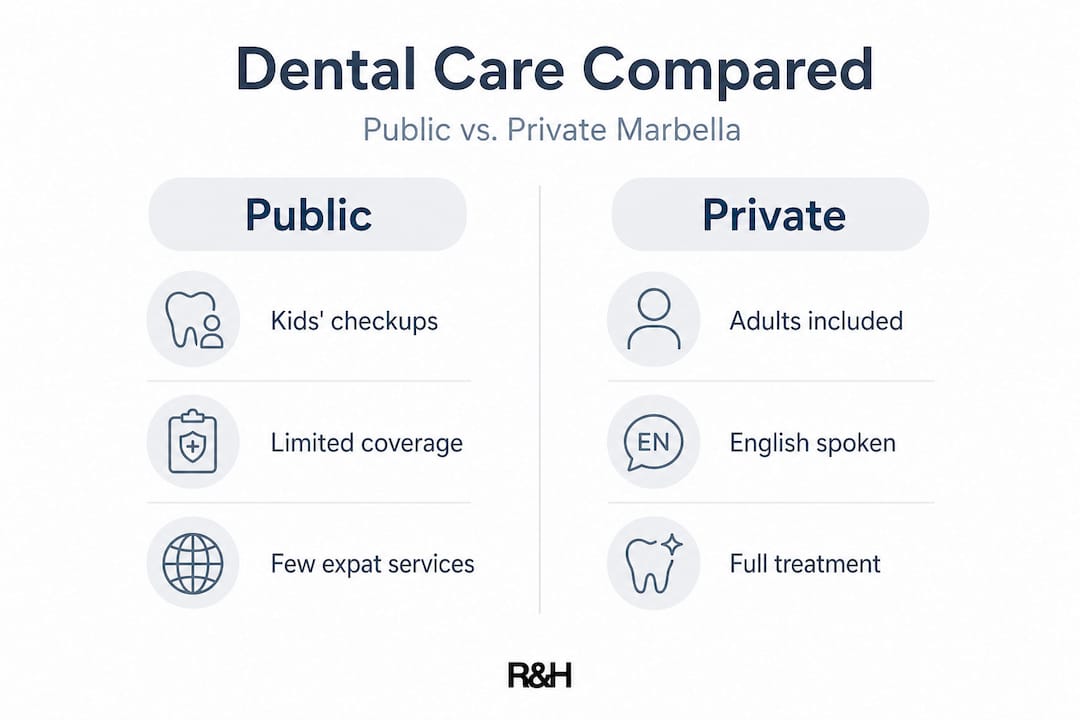
The contrast is stark. For expats, dental treatments for expat families in Marbella at private clinics offer something the public system simply cannot match: continuity of preventive care, accessible communication, and the security of knowing exactly what you’ll pay before treatment begins.
Key advantages of choosing private dental care in Marbella include:
- Preventive focus. Private clinics can monitor your oral health over time, tracking changes between visits and intervening before minor issues become major ones.
- Aesthetic options. Veneers, whitening, Invisalign, and implants are all available under one roof at leading clinics.
- Professional oral hygiene appointments. Dedicated hygienist sessions are structured around your specific gum and plaque profile, not a generic protocol.
- Clear pricing. Transparent itemised quotes mean you are never surprised by an invoice at checkout.
Choosing the right clinic and dentist in Marbella
With a clear comparison in mind, the next step is finding the right private provider for your needs. Not all private clinics are equal, and the Marbella area, being a popular destination for internationally mobile residents, has a wide range of options spanning very different quality levels.
Private checkups and negotiated insurance plans are often central to maintaining routine preventive care as an expat, which makes your initial clinic choice particularly consequential. Getting it right from the start saves time, money, and unnecessary stress.
When evaluating a clinic, look for these qualities:
- English-speaking staff throughout. This includes reception, dental assistants, and the dentist themselves. Miscommunication in a dental setting carries real clinical risk.
- Transparent, itemised pricing. Every recommended treatment should come with a written quote in advance. Any hesitation around pricing transparency is a warning sign.
- Written guarantees. Reputable clinics stand behind their work. A formal guarantee policy for treatments like implants, crowns, and composite restorations reflects genuine confidence in clinical standards.
- Verifiable credentials. Ask directly about the qualifications of your treating dentist, including specialist training and years of experience. A trustworthy clinic will share this without hesitation.
- Portfolio of patient cases. Before-and-after galleries and documented case studies give you a realistic expectation of outcomes for aesthetic and restorative work.
- Insurance compatibility. If you hold private health insurance through your employer or as an individual plan, confirm whether the clinic works with your provider before booking.
- Aftercare and follow-up. Treatment does not end when you leave the chair. Post-treatment check-ins and clear escalation paths for concerns are hallmarks of quality care.
Pro Tip: When researching dental implant guidance or any complex restorative treatment, always request a detailed consultation before committing. A second opinion is entirely appropriate for anything beyond a routine checkup, and good clinics actively encourage it.
Common pitfalls to avoid include accepting verbal-only quotes, choosing a clinic solely on the basis of price, and overlooking the importance of a clearly explained aftercare protocol. A clinic that is cheapest on day one can become the most expensive option if treatment fails or complications arise.
Cost of dental checkups and treatment: how to budget
Once you’ve chosen a clinic, it’s essential to understand and plan for the associated costs. Dental care in Marbella’s private sector is high quality, and pricing reflects that. However, it compares favourably with equivalent care in the United Kingdom, Ireland, or Scandinavia, which is one reason many expats from those countries schedule significant treatment during their time in Spain.
| Treatment | Typical private cost in Marbella |
|---|---|
| Routine checkup | €50 to €100 |
| Professional cleaning (hygienist) | €60 to €120 |
| Digital X-rays (full set) | €50 to €80 |
| Composite filling | €80 to €150 per tooth |
| Dental implant (single, full procedure) | €1,200 to €2,500 |
| Porcelain crown | €600 to €900 |
| Teeth whitening (in-clinic) | €300 to €500 |
These figures are indicative; exact pricing varies by clinic, complexity, and materials used. Most expats rely on private clinics and negotiated insurance plans for routine preventive care, so understanding how to access transparent dental pricing before you commit to a provider is genuinely important.
Here is a practical step-by-step guide to budgeting your dental care in Marbella:
- Register with a clinic early. Don’t wait until you have a problem. Registering promptly means your baseline records are established and any changes are monitored from a known starting point.
- Request a full cost breakdown in writing. Any recommended treatment should arrive as an itemised written quote, not a verbal estimate. This protects you and keeps expectations aligned.
- Check your health insurance policy. If you hold expat health insurance, review the dental clause carefully. Some plans cover checkups and basic treatments; others require a separate dental rider.
- Ask about membership or wellness plans. Some clinics offer annual programmes that bundle checkups, hygienist sessions, and discounts on additional treatments for a fixed monthly or annual fee. These can offer meaningful savings for regular attendees.
- Compare at least two quotes for major work. For implants, orthodontics, or cosmetic treatment, obtain written quotes from more than one provider. Price differences reflect varying materials, techniques, and guarantees, so compare like for like.
- Build a dental reserve fund. Even if your overall oral health is good, setting aside €200 to €400 annually for dental care helps you handle routine appointments and minor treatments without financial stress.
The truth about dental checkups in Marbella: what expats forget
Having understood the practical side, here is a candid perspective to help you avoid common mistakes and make the most of your dental care in Marbella.
The most consistent pattern seen among newcomers to the area is this: expats arrive intent on sorting accommodation, banking, schools, and bureaucracy, and dental health quietly slips off the list. Months pass. Sometimes years. Then a toothache arrives, and suddenly the search for a clinic happens under pressure, in discomfort, with limited time to evaluate options carefully.
This reactive approach is understandable. It is also, without exception, more expensive and more stressful than the alternative.
The clinics that serve expat dental care needs most effectively are not simply treatment centres. They function as long-term health partners. A dentist who has seen your gums, measured your bone levels, and taken your baseline X-rays is in a far better position to catch the early signs of periodontitis or enamel erosion than one meeting you for the first time while you’re in pain.
There is another truth worth stating plainly. Written guarantees and transparent pricing are not marketing luxuries in the dental world. They are the clearest signal that a clinic operates with integrity and stands confidently behind its clinical decisions. Any provider reluctant to commit to either in writing deserves scrutiny.
The most satisfied patients in Marbella’s private dental sector share a common approach. They identified a trusted provider before they needed urgent care. They attend regularly, ask informed questions, and treat their dentist as a genuine healthcare partner rather than a service to be accessed only in emergencies. That relationship, built over time and rooted in trust, is what actually protects your smile.
Get started with expert dental care in Marbella
If you’re ready to apply this knowledge, here are the next steps to arrange your professional dental care in Marbella.
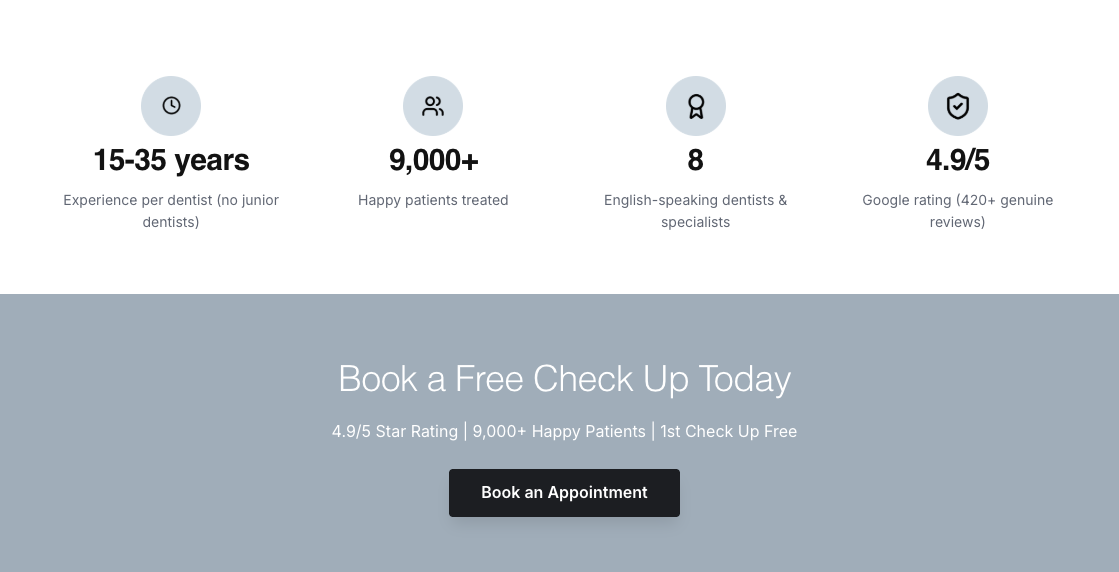
RH Dental Marbella offers English-speaking dental professionals, fully transparent pricing, and a formal guarantee policy that covers restorative and aesthetic treatments. You can explore the clinic before you arrive by taking a virtual tour of the clinic, review transparent pricing across all treatments with no hidden costs, and read the full terms of the guarantee policy in plain English. Whether you’re registering as a new patient for a straightforward first checkup or exploring options for more involved treatment, the team is equipped to support you from your very first contact. Booking is simple, communication is clear, and your oral health is in experienced hands.
Frequently asked questions
Is routine dental care covered by Spain’s public health system for adults?
No, routine preventive care is largely excluded from Spain’s public dental system for adults, so expats rely on private clinics for checkups, cleanings, and most treatments.
How often should expats schedule a dental checkup in Marbella?
Most dentists recommend a checkup every six to twelve months, though patients with gum disease, a history of cavities, or ongoing restorative work may benefit from more frequent visits.
Are English-speaking dentists common in Marbella?
Yes, many private clinics in Marbella actively cater to the international community with English-speaking clinical and administrative staff, making communication clear and comfortable throughout your care.
What is typically included in a dental checkup at a private clinic?
A standard private checkup covers oral and soft tissue examination, periodontal assessment, professional cleaning, diagnostic X-rays where indicated, and a personalised review of findings with a written treatment plan if follow-up care is needed.
How can expats budget for dental care in Marbella?
Request written, itemised estimates before agreeing to any treatment, explore negotiated insurance plans or annual membership programmes offered by your clinic, and set aside a modest annual reserve fund to cover routine preventive appointments without financial pressure.