

TL;DR:
- Establishing a consistent family dental routine in Marbella requires proper preparation, age-appropriate tools, and understanding local services. Regular brushing, interdental cleaning, diet management, and professional check-ups prevent decay and promote oral health for all ages. Proactive, personalized care from local clinics ensures long-term dental wellness beyond reactive treatments.
Whether you have just relocated to the Costa del Sol or you are visiting for an extended stay, establishing a solid dental care routine for every member of your family is one of the most important decisions you can make. Marbella brings sunshine, new schools, new schedules, and often, entirely new habits, which means previous dental routines can slip through the cracks before you notice. The good news is that with the right preparation, clear daily steps, and access to excellent professional care, keeping your family’s smiles healthy here is genuinely straightforward.
Table of Contents
- Preparing for family dental care: What you need before you start
- Step-by-step daily routine: Brushing, cleaning between teeth, and diet
- Advanced preventive care: Sealants, fluoride varnish, and regular check-ups
- Troubleshooting and common mistakes: Avoiding gaps in your dental care
- What most families overlook about dental care routines in Marbella
- Connect with Marbella’s dental specialists for family care
- Frequently asked questions
Key Takeaways
| Point | Details |
|---|---|
| Preparation is key | Gathering the right tools and understanding local options helps families start strong with dental care. |
| Routine steps matter | Consistent daily brushing, flossing, and mindful diet shape oral health for all ages. |
| Prevention saves money | Regular check-ups and preventive treatments avoid costly problems down the line. |
| Avoid common mistakes | Simplifying routines and using reminders ensures families stay on track and don’t skip crucial steps. |
| Local clinics support families | Marbella’s dental specialists offer care for residents, visitors, and expat families with advanced options. |
Preparing for family dental care: What you need before you start
Now you know why family dental care matters, let’s start with preparing the essentials. Getting organised before your first appointment, or before building a fresh routine, saves considerable time and prevents avoidable setbacks.
Start with the basics at home. Every family member needs an age-appropriate toothbrush: soft-bristled for adults, smaller-headed brushes for children, and an electric option where budget allows. Fluoride toothpaste is non-negotiable at every age group, though the concentration varies: a smear for children under three, a pea-sized amount for children aged three to six, and a full strip for everyone older. Stock interdental cleaners too. Traditional floss works well for most adults, while floss picks or water flossers tend to work better for teenagers and younger children learning the habit for the first time.
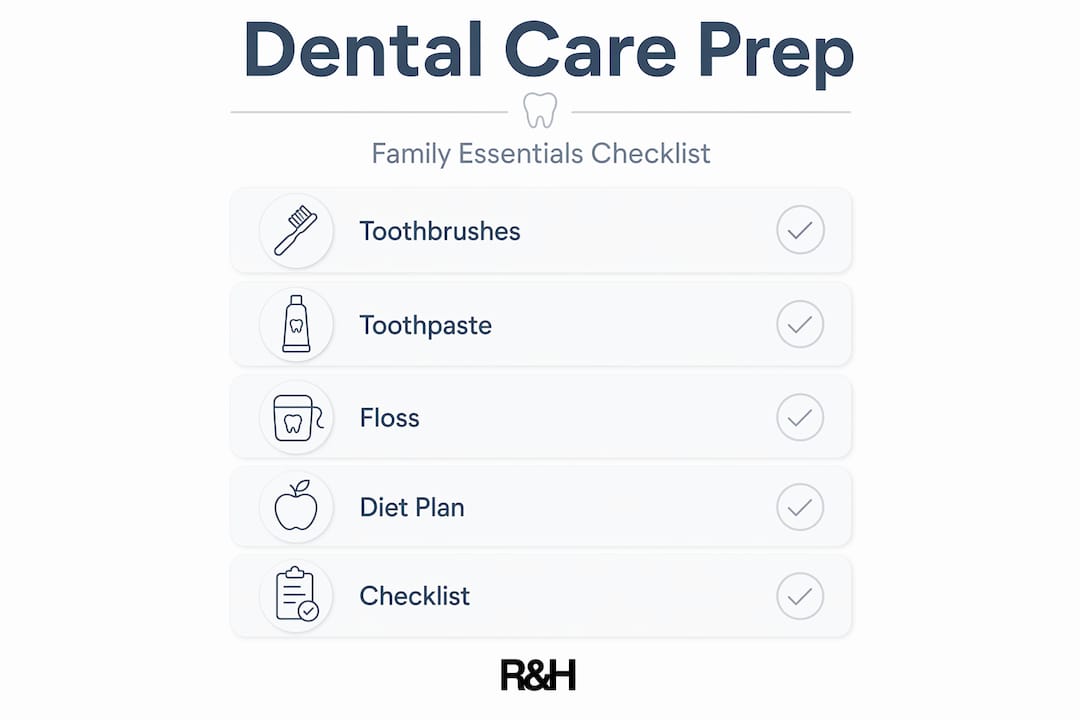
Diet is another area families often overlook during the preparation stage. Limiting sugary and starchy snacks is essential, but the goal is not simply to reduce the total amount of sugar consumed. As we will explore shortly, the frequency of exposure matters more than the quantity in a single sitting. Before your routine begins, identify the common snacking patterns in your household and plan alternatives such as cheese, raw vegetables, or unsweetened yoghurt.
On the professional side, understanding what is available locally gives you a significant advantage. According to general dentistry provision in the Marbella area, established providers position general dentistry as covering prevention, diagnosis, professional cleanings, preventive treatments such as sealants and fluoride application, and routine check-ups at least twice per year. This means families do not need to look far for thorough, preventive-focused care. For a broader understanding of what your family can access locally, family dentistry explained gives an excellent overview of age-specific care available in Marbella.
Before your first visit, use a dental cleaning checklist to ensure you are covering all bases at home between appointments.
Standard requirements vs local specialties: A quick comparison
| Dental care element | Standard requirement | What Marbella clinics often add |
|---|---|---|
| Toothbrushing | Twice daily with fluoride toothpaste | Technique guidance during check-ups |
| Interdental cleaning | Once daily | Product recommendations per age group |
| Dietary advice | Reduce sugar frequency | Specific snack alternatives from the clinic |
| Professional check-up | Twice yearly | Digital scanning and early detection tools |
| Preventive treatments | Sealants and fluoride varnish | Risk-stratified treatment planning |
| Cosmetic options | Not always available locally | Veneers, whitening, smile makeover services |
What to bring to your first appointment
- Dental records or X-rays from your previous dentist if available
- A list of any medications your family members take
- Dental insurance details or budget expectations
- A summary of any dental anxiety concerns, particularly for younger children
Step-by-step daily routine: Brushing, cleaning between teeth, and diet
With your supplies ready and local context understood, let’s move to the daily actions that build strong smiles. A robust daily routine involves four clear pillars: brushing twice daily with fluoride toothpaste, cleaning between teeth every day, managing sugar frequency in the diet, and attending regular professional check-ups. The first three happen at home, and each one supports the others.
The daily routine, step by step
- Morning brush: Brush for a full two minutes after breakfast, covering all surfaces of every tooth. Use a timer or an electric brush with a built-in alert. Children respond well to brushing apps or a favourite song timed at two minutes.
- Interdental cleaning: Floss or use an interdental brush once daily, ideally before bed. Slide gently between each tooth and curve around the base to reach under the gumline. For younger children, floss picks are easier to handle independently.
- Evening brush: Brush again before bed, after flossing. This is the most important brushing session because saliva production drops overnight, leaving teeth more vulnerable to acid and bacteria.
- Dietary monitoring: Note how often sugary or starchy food appears throughout the day, not just at mealtimes. Every time sugar enters the mouth, acid attacks last approximately twenty minutes. Three sugary snacks equal three separate acid attacks, each one independent of the others.
- Water throughout the day: Encourage water after meals and snacks to rinse residue and support saliva production. This is especially useful for school-age children who may eat snacks between lessons.
Brushing and cleaning frequency by age group
| Age group | Brushing frequency | Brushing duration | Interdental cleaning |
|---|---|---|---|
| Toddlers (1 to 3) | Twice daily | 1 to 2 minutes (assisted) | Floss when teeth touch |
| Children (4 to 12) | Twice daily | 2 minutes (supervised) | Once daily with floss picks |
| Teenagers | Twice daily | 2 minutes | Once daily, any method |
| Adults | Twice daily | 2 minutes | Once daily, floss or interdental brush |
For practical ideas on building habits early, kids’ dental hygiene routines offers well-researched guidance suited to different developmental stages.
Pro Tip: Link brushing time to existing family rituals rather than creating a separate event. If your family eats dinner together, flossing immediately after dinner becomes part of the wind-down sequence before bed. This habit stacking approach dramatically improves compliance for both children and adults because it removes the need to remember a standalone task.
The edge case most families miss is the snacking frequency trap. A child who eats a biscuit once at 4 pm causes one acid cycle. The same child who nibbles the same biscuit in three separate portions between 3 pm and 5 pm creates three acid cycles. Same total sugar, very different impact on enamel. Addressing this nuance in your household can reduce cavities significantly, even before any clinical intervention. For tailored guidance on children’s dentistry Marbella, dedicated paediatric-focused services are available locally to support this age group specifically.
Advanced preventive care: Sealants, fluoride varnish, and regular check-ups
Daily routines are foundational, but professional care adds expertise and specialised prevention. Here’s what families should know about the options available.
Beyond brushing and flossing, clinics in Marbella offer targeted preventive treatments that meaningfully reduce decay risk, especially for children and teenagers whose teeth are most vulnerable.
Key preventive treatments available
- Dental sealants: A thin protective coating applied to the biting surfaces of back teeth, where pits and fissures create spaces that brushing cannot fully reach
- Fluoride varnish: A concentrated fluoride treatment painted onto tooth surfaces to strengthen enamel and reduce sensitivity to acid
- Scale and polish: Professional removal of tartar (hardened plaque) that home brushing cannot remove
- Dental X-rays: Diagnostic imaging to detect decay, bone loss, or developmental concerns before they become visible or painful
- Oral cancer screening: A quick check included in most routine appointments, particularly valuable for adults
Research published by Cochrane evidence confirms that for children and adolescents at higher risk of decay, both sealants and fluoride varnish are effective preventive options. Importantly, the evidence does not show one is universally superior to the other, meaning the best approach depends on an individual child’s risk profile, tooth anatomy, and compliance with home care.
“Sealants and fluoride varnish are both effective for higher-risk patients. Neither is universally superior; the choice should be guided by risk stratification and clinical assessment.” — Cochrane systematic review
Sealants specifically target.pdf) the occlusal pits and fissures on back teeth where brushing and flossing simply cannot reach. They help keep out germs and can prevent decay before a filling ever becomes necessary. This makes them particularly valuable for newly erupted permanent molars in children aged six to twelve.
Sealants vs fluoride varnish: When each is recommended
| Factor | Sealants | Fluoride varnish |
|---|---|---|
| Primary target | Pits and fissures on back teeth | All tooth surfaces |
| Best suited to | Children with newly erupted molars | All ages, especially high-risk patients |
| Application | Applied once, lasts several years | Reapplied every 3 to 6 months |
| Requires dry field | Yes | No |
| Also useful for adults | Less commonly | Yes, including root surfaces |
Booking a dental check-up Marbella allows a clinician to assess which preventive treatments are appropriate for each family member individually. After that, a professional dental cleaning clears the tartar build-up that home care always leaves behind, regardless of how diligent a patient is. For further reading on the future of paediatric prevention, the landscape of innovations in paediatric dental care is evolving rapidly and worth understanding.
Troubleshooting and common mistakes: Avoiding gaps in your dental care
Even with a plan, mistakes happen. Here’s how families in Marbella can stay on track and avoid common pitfalls.
The most frequent gap is flossing avoidance. Families often brush reliably but skip interdental cleaning because it takes longer or feels uncomfortable. The result is that approximately 35% of each tooth’s surface is never cleaned at home, allowing decay and gum disease to develop in the spaces between teeth where it is hardest to spot. Families who simplify their routine into consistent, repeatable steps aligned with twice-daily brushing and daily interdental cleaning, supported by professional visits for tartar removal, see significantly better outcomes over time.
Common mistakes and how to fix them
- Skipping flossing: Replace traditional floss with water flossers or interdental brushes if technique or motivation is the barrier
- Sporadic dental visits: Book the next appointment before leaving the current one; treat it like a school term calendar entry
- Assuming children can brush independently too early: Most children need supervised brushing until at least age eight, when manual dexterity is sufficient
- Ignoring tooth sensitivity: Sensitivity is often an early signal of enamel erosion or gum recession, not just temperature sensitivity
- Brushing immediately after acidic food: Wait thirty minutes after citrus or fizzy drinks before brushing to avoid scrubbing softened enamel
For expat families navigating care in a new country, understanding how to access services confidently is essential. Detailed guidance on dental care for expat families addresses the practical questions around language, insurance, and continuity of care. And for ongoing hygiene maintenance between full check-ups, professional oral hygiene Marbella services offer targeted support from qualified dental hygienists.
Additionally, building effective oral care habits is a well-researched topic with practical frameworks families can adopt immediately.
Pro Tip: Create a shared family dental calendar, whether on the fridge or as a digital shared calendar, noting each family member’s next check-up, any planned treatments, and even a monthly reminder to replace toothbrushes. Toothbrushes should be swapped every three months, or after any illness. Tracking this visually keeps everyone accountable without the routine becoming a source of stress.
What most families overlook about dental care routines in Marbella
Having tackled troubleshooting, let’s step back and consider what genuinely sets Marbella family dental care apart from the generic guides you might find online.
Here is a perspective worth sitting with: families in Marbella are actually better positioned than most to maintain excellent dental health, yet many fail to take full advantage of that position. The Mediterranean lifestyle, characterised by a diet lower in processed sugars and richer in vegetables, olive oil, and lean proteins, is naturally more tooth-friendly than the average northern European or American diet. The challenge is not the environment; it is intention.
Most families underestimate frequency over quantity when it comes to snacking. This is not a minor nuance. It is arguably the single most important dietary concept in preventive dentistry, and it is almost never explained clearly at check-ups because there is rarely time. Clinics that invest in patient education, particularly around this concept, consistently see lower rates of childhood decay in their patient base.
The second overlooked issue is the assumption that sealants and fluoride varnish are either-or choices. They are not. Many children at moderate to high decay risk benefit from both treatments used in combination, with sealants protecting the structural vulnerabilities in back teeth and fluoride varnish strengthening all surfaces holistically. A thorough preventive strategy considers both simultaneously, guided by individual risk assessment. For a fuller picture of what family dentistry explained looks like for all ages, the level of service available locally is considerably more nuanced than many expat families realise before their first appointment.
Finally, many families approach dental care reactively. Pain leads to a phone call. Marbella’s best clinics operate very differently, focusing on identifying risk before symptoms appear, building relationships with each patient, and creating genuinely personalised prevention plans. That shift in mindset, from reactive to proactive, is what separates families who rarely face costly dental work from those who seem to cycle through problems repeatedly.
Connect with Marbella’s dental specialists for family care
You now have a clear framework: preparation, consistent daily practice, professional preventive care, and the awareness to avoid common pitfalls. The next step is finding the right clinical team to support every stage of that journey in Marbella.
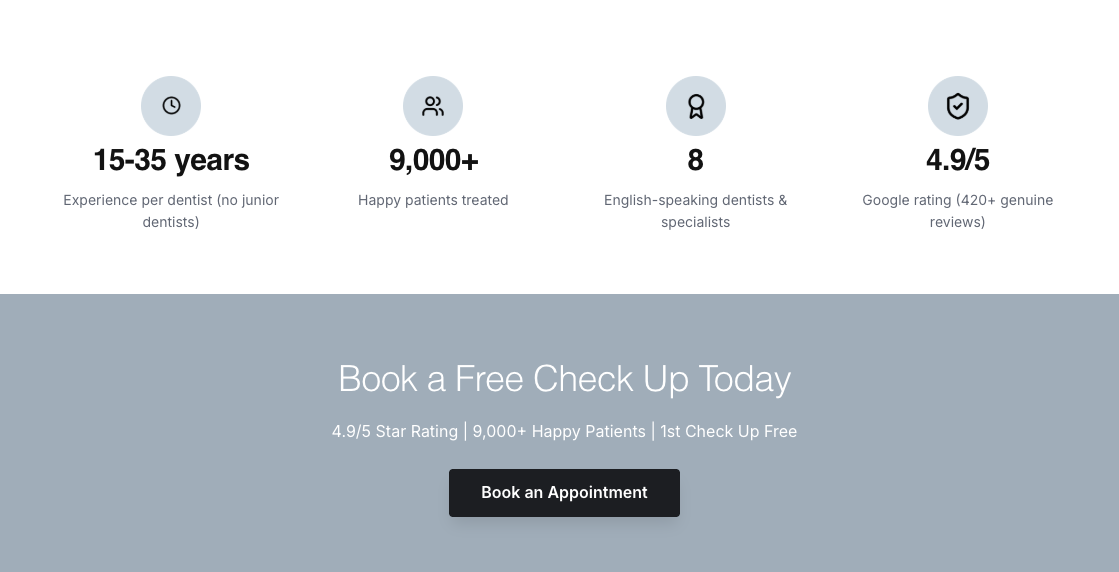
At RH Dental Marbella, families benefit from a full-service dental clinic Marbella environment where English-speaking specialists cover everything from children’s first check-ups to adult smile makeover Marbella treatments. The clinic’s advanced dental technology supports accurate diagnosis and comfortable, efficient treatment across all age groups. Whether you are building a long-term preventive plan for your family or exploring cosmetic options alongside routine care, booking an appointment is the straightforward first step. The team is here to make dental care in Marbella feel reassuring, not daunting.
Frequently asked questions
How often should families book dental check-ups in Marbella?
Families should visit the dentist at least twice a year for prevention, early detection, and professional cleaning. This frequency allows clinicians to catch developing issues before they require complex or costly treatment.
What is the best way to reduce cavities for children?
Both sealants and fluoride varnish are effective, and combining them with a reduction in sugary snack frequency delivers the strongest preventive outcome. A clinician can assess which option or combination suits your child’s specific risk profile.
Are cosmetic dental treatments available for families in Marbella?
Yes, cosmetic dentistry including veneers, whitening, and full smile makeovers is available at top-tier clinics in Marbella, often alongside standard preventive and restorative care.
Do Marbella clinics offer English-speaking dentists for expat families?
Yes, many leading Marbella clinics have fully English-speaking dental teams, ensuring that expat families receive clear communication, comfortable consultations, and transparent treatment planning without language barriers.
What’s the main cause of gaps in family dental care routines?
Skipping flossing and attending check-ups irregularly are the most common causes. Simplifying the routine into consistent daily steps and scheduling appointments well in advance closes most of those gaps reliably.