

Receiving a dental bill that bears no resemblance to what you expected is one of the most dispiriting experiences a patient can have. You agreed to a treatment, trusted the process, and then faced a figure that felt entirely disconnected from any prior conversation. What is dental pricing transparency, and why does it feel so rare? At its core, dental pricing transparency means giving patients clear, specific, written cost information before treatment begins, not after. For English-speaking expats in Marbella deciding between providers, that clarity is not a luxury. It is the foundation of a trustworthy clinical relationship.
Table of Contents
- Key takeaways
- Dental pricing transparency explained
- Recognising transparency in practice
- Transparent vs. traditional pricing models
- Navigating dental costs as a patient
- The real limits of pricing transparency
- My perspective on why this changes everything
- Transparent pricing at Rhdentalmarbella
- FAQ
Key takeaways
| Point | Details |
|---|---|
| Definition matters | Dental pricing transparency means itemised, written costs disclosed before treatment, not vague estimates afterwards. |
| Itemisation protects you | Separating provider fees from lab fees prevents the most common source of billing surprise. |
| Ask before you agree | Requesting a written estimate with CDT codes helps you predict insurance outcomes and compare providers fairly. |
| Transparency has limits | Insurance market complexity and opaque contracting mean even transparent clinics cannot eliminate every cost variable. |
| Clinics signal intent | Red flags such as “from” pricing and verbal-only quotes reveal how seriously a clinic takes cost clarity. |
Dental pricing transparency explained
Dental pricing transparency refers to the practice of disclosing full, accurate, and itemised cost information to patients before any treatment is agreed upon. It means more than publishing a rough price list on a website. True transparency includes the specific fees for each clinical procedure, any associated laboratory costs, whether the clinic operates within your insurance network, and what adjustments apply if you are paying privately.
The concept draws on broader healthcare pricing reforms. Hospital price transparency rules now require institutions to publish machine-readable pricing files including median allowed amounts, giving patients the ability to compare costs before committing to care. Dental clinics are not subject to exactly the same regulations, but the principle carries directly across: patients deserve real numbers, not ranges.
There are several key elements that define genuinely transparent dental pricing:
- Itemised cost breakdowns that separate each procedure rather than bundling everything into one total
- Fixed fees rather than “from” prices, which are often used to attract interest but rarely reflect what you will actually pay
- Separation of provider fees and laboratory fees, since outsourced lab work is one of the most common sources of unexpected charges
- Written estimates provided before treatment, not as an afterthought at checkout
- Clarity about insurance adjustments, including whether your plan covers the treatment at the quoted fee
Price transparency benefits patients by stimulating provider competition and empowering genuinely informed healthcare choices. When you can compare a crown at one clinic with a crown at another, on equal terms, you gain real decision-making power.
Pro Tip: When reviewing any dental price list, check whether it specifies whether the fee is for the clinical procedure only or includes laboratory fabrication. A porcelain crown, for example, often involves a separate lab fee that can rival the clinician’s own charge.
Recognising transparency in practice
Understanding the concept is one thing. Knowing what to look for when you sit across from a treatment coordinator is quite another. Here is a practical sequence that reflects what genuinely transparent dental care should look like from the patient’s perspective.
- A written, itemised estimate is provided before treatment begins. This document should list each procedure with its individual fee, not a single bundled total.
- Laboratory fees are disclosed separately. Separating provider fees from lab costs in written estimates reduces patient confusion and disputed charges later. If crowns, veneers, or implant components are being fabricated off-site, that cost belongs on your estimate.
- CDT procedure codes are included or available on request. Standardised CDT codes link clinical services to insurance payments, and confirming that your estimate aligns with these codes helps predict what your insurer will cover.
- Insurance adjustments are shown or clearly explained. A clinic that knows your plan details should be able to indicate what portion you are likely to pay after benefits are applied.
- Good Faith Estimate rights are honoured. For self-pay or uninsured patients, written pre-treatment estimates are a recognised patient right in many markets, giving you the chance to prepare financially and compare alternatives.
- The estimate reflects the technology being used. Clinics using in-house digital laboratories or 3D CBCT scanning should be able to explain how these tools factor into the total, and why they may justify a different price point.
Pro Tip: Ask specifically whether there is a separate charge for digital scans, anaesthesia, or post-treatment reviews. These items are sometimes presented as included in one clinic’s fee and billed separately at another. Getting this in writing removes any ambiguity.
Red flags are equally telling. Vague “from” pricing, verbal-only quotes, reluctance to issue written estimates, and bundled costs that do not break down by procedure all signal that a clinic is not operating with genuine dental cost transparency.
Transparent vs. traditional pricing models
To appreciate why dental pricing transparency matters, it helps to see the contrast with how dental pricing has traditionally worked.

| Pricing element | Traditional model | Transparent model |
|---|---|---|
| Price disclosure | Verbal estimate or ballpark figure | Written, itemised pre-treatment estimate |
| Laboratory fees | Often included without disclosure | Listed separately with specific amounts |
| Insurance information | Provided after adjudication | Estimated adjustment shown upfront |
| “From” pricing | Common for implants and cosmetic work | Replaced by fixed, procedure-specific fees |
| Payment plan terms | Discussed at checkout | Outlined in advance with total cost stated |
| Cash-pay vs. insured pricing | Often unarticulated | Clearly distinguished and published |
The distance between these two columns explains why so many patients feel anxious about dental costs. Transparent cash-pay pricing has become a competitive strategy for clinics serving self-pay patients, as the spread between insurer-negotiated rates and published private fees is often narrower than patients assume. When a clinic publishes clear self-pay rates, it removes the guesswork and signals confidence in the value it provides.
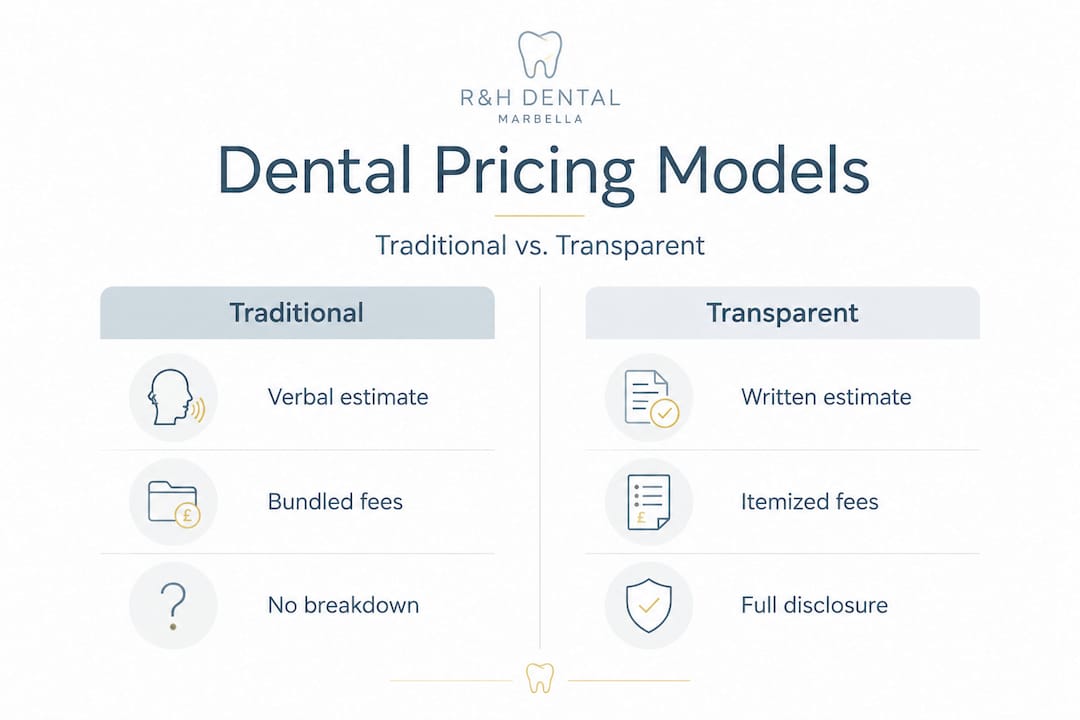
The benefits of dental transparency extend beyond individual transactions. Patients who receive clear cost information before treatment report higher satisfaction, greater trust in their clinician, and lower anxiety during care. That matters especially for expatriates who may be navigating dental care in a second language, in an unfamiliar healthcare system, and without the personal recommendations that come from living somewhere long-term.
Navigating dental costs as a patient
You do not need to be a billing expert to protect yourself. A handful of deliberate questions at the consultation stage can transform your experience of dental pricing entirely.
- Ask for a written, itemised estimate before agreeing to any treatment. This is a reasonable and professional request at any reputable clinic.
- Request that laboratory fees be listed separately from clinical fees, particularly for crowns, bridges, veneers, or implant components.
- Ask whether the quoted price includes all stages of treatment. For implants, for example, this means the surgical placement, the abutment, and the final crown, not just one element.
- Verify your insurance network status before your appointment. Knowing whether a clinic is in-network or out-of-network affects your out-of-pocket costs significantly, and a transparent clinic will tell you this clearly.
- Check whether a written guarantee is offered. A written treatment guarantee alongside transparent pricing is one of the strongest signals that a clinic stands behind the work it quotes.
- Compare the estimate against the final invoice after treatment. Any discrepancy deserves a clear explanation. Reputable clinics rarely deviate from a written estimate without informing you first.
- Ask about payment plans with full disclosure of terms. Spreading costs is entirely reasonable, but the total should remain the same as the quoted price, not higher due to undisclosed financing charges.
Exploring dental treatment options for expats in Marbella can also help you understand which procedures carry the most complexity around pricing, and where asking these questions is especially worth your time.
The real limits of pricing transparency
Transparency is a significant step forward, but it would be misleading to suggest it resolves every cost uncertainty in dental care. Some challenges persist regardless of how well a clinic communicates its fees.
- Insurance adjudication is unpredictable. Even with a detailed estimate, your insurer’s final determination of what is covered depends on plan rules, annual maximums, and waiting periods that the clinic cannot fully control.
- Opaque contracting practices in the dental insurance market limit what both patients and providers can understand about real costs and benefits. The ADA has formally urged the FTC to scrutinise these markets, citing concerns about limited patient choice and restricted access to pricing information.
- Treatment plans evolve. What begins as a straightforward restoration may reveal additional clinical needs once work is underway. A good clinic will pause and communicate any change before proceeding, but this requires active disclosure, not assumption.
- True comparison between pricing models requires both insurer-negotiated and cash-pay prices to be visible. In many markets, only one of these is published, making fair comparison genuinely difficult.
Realistic expectations serve you well here. Dental cost transparency is not a guarantee that your final bill will never differ from your estimate. It is a commitment from your clinician that you will not be surprised without warning, and that every meaningful cost is communicated before it is incurred.
My perspective on why this changes everything
I have worked with patients from across Europe and beyond who arrive at their first consultation carrying a particular kind of tension. It is not just uncertainty about treatment. It is the residue of a previous experience where the final bill felt like an ambush.
What I have learned over time is that pricing transparency is not primarily a financial conversation. It is a trust conversation. The moment a patient sees a clear, written estimate that accounts for every element of their treatment, something shifts. Their questions become more specific. Their concerns become more clinical. The relationship moves from wariness to genuine collaboration.
In my experience, patients who receive clear pricing information upfront are more likely to follow through with recommended treatment, more likely to ask about prevention, and more likely to return. The financial clarity removes the one variable that makes people delay care they actually need. For expats in Marbella in particular, who may be comparing clinics across different countries and weighing costs in multiple currencies, that clarity is not just welcome. It is what allows them to make a genuinely informed decision.
The role of technology matters here more than most patients realise. In-house digital laboratories, 3D scanning, and advanced digital technology do not just improve clinical outcomes. They make pricing more predictable, because fewer external variables are involved in fabrication and planning. When everything from diagnosis to delivery happens under one roof, the cost structure becomes far easier to explain and to honour.
— Hami
Transparent pricing at Rhdentalmarbella
If everything in this article has made you more determined to find a clinic where the numbers are as clear as the clinical advice, Rhdentalmarbella is worth your attention.
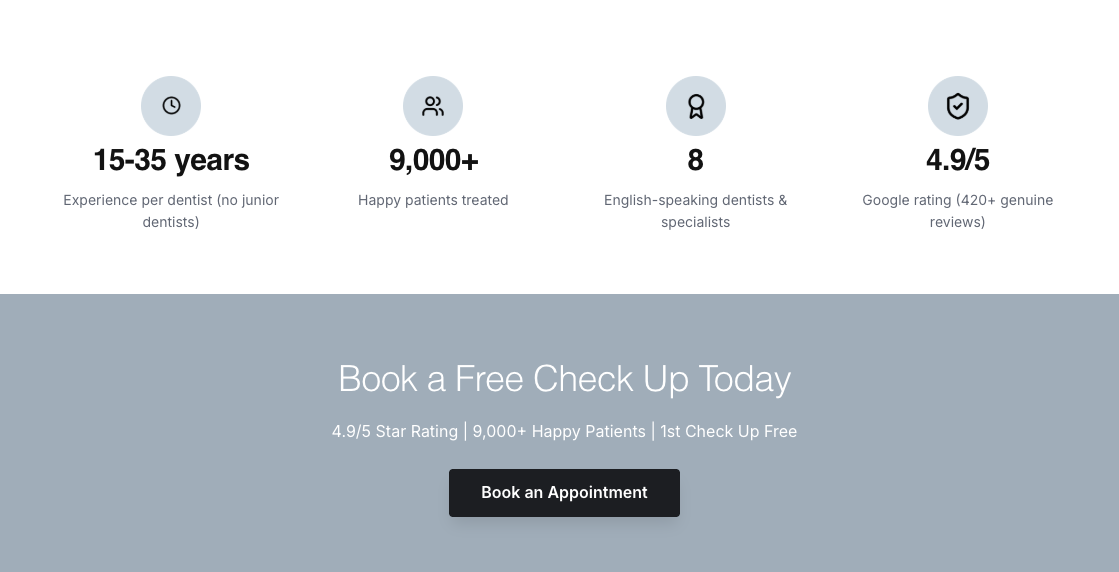
At Rhdentalmarbella, transparent dental pricing in Marbella is published clearly, covering treatments from routine hygiene appointments to full-arch implant restorations. The clinic’s team of experienced English-speaking dentists from Finland, New Zealand, Ireland, Portugal, and Spain brings between 15 and 35 years of expertise each. Combined with an in-house digital laboratory and 3D CBCT scanning, treatment planning becomes considerably more predictable, and so does the cost.
Every treatment is backed by a written guarantee policy, and consultations are designed to give you complete clarity before any decision is made. For expat patients navigating dental care in Spain, that combination of English-language communication, published pricing, and clinical accountability makes a genuinely meaningful difference. Reach out to the Rhdentalmarbella team to arrange a consultation and experience what honest dental pricing actually feels like.
FAQ
What does dental pricing transparency mean?
Dental pricing transparency means providing patients with written, itemised cost information for all planned treatments before care begins, including separate disclosure of clinical fees, laboratory fees, and expected insurance adjustments.
Why does transparent dental pricing matter for expats?
Expats often lack local knowledge about typical dental costs and cannot rely on personal referrals, making upfront written pricing particularly important for comparing providers and avoiding billing surprises in an unfamiliar healthcare system.
What should a transparent dental estimate include?
A transparent estimate should list each procedure individually with its fee, separate laboratory costs, include relevant CDT codes if insurance is involved, and state clearly whether the quoted price covers all stages of treatment.
Are there limits to what dental transparency can guarantee?
Yes. Insurance adjudication, treatment plan changes, and opaque insurer contracting practices mean that even a fully transparent clinic cannot guarantee a final bill will never differ from an initial estimate. The commitment is that any change will be communicated before it is charged.
How can I tell if a clinic genuinely practises cost transparency?
Look for published fixed-fee pricing rather than “from” prices, written pre-treatment estimates that separate provider and lab costs, and a willingness to explain how technology and insurance affect your specific total. A written treatment guarantee alongside clear pricing is one of the strongest confirmations of genuine transparency.