

Knowing how to compare dental clinic prices is one of the most practically useful skills you can develop before committing to dental treatment. Pricing across clinics varies far more than most patients expect, and without a clear framework, it is easy to make decisions based on an incomplete picture. A quote that looks competitive on the surface may exclude diagnostics, temporary restorations, or follow-up appointments. A higher figure may include premium materials, written guarantees, and specialist-level care that protect you far into the future. This guide walks you through the entire process, from understanding what drives price variation to making a confident, well-informed final decision.
Table of Contents
- Key takeaways
- What drives dental clinic price differences
- Preparing to compare: what to gather first
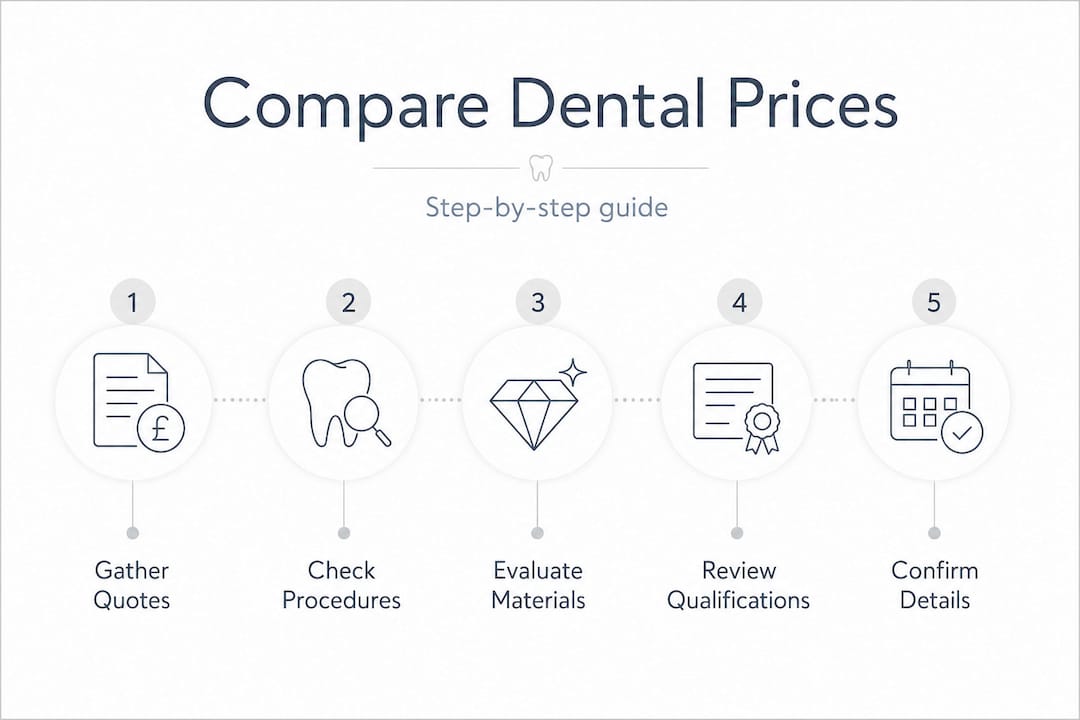
- Step-by-step: comparing dental clinic prices
- Common pitfalls when comparing dental prices
- What good clinic transparency looks like
- My perspective on comparing dental clinic prices
- Rhdentalmarbella: transparent pricing and quality care
- FAQ
Key takeaways
| Point | Details |
|---|---|
| Price variation is wide | Within-city variation of 30 to 80% means comparing multiple clinics is not optional, it is necessary. |
| Standardise before comparing | Always request itemised treatment plans specifying materials, services, and guarantees for a true like-for-like comparison. |
| Look beyond the headline figure | Included services such as scans, aftercare, and written guarantees can shift the real cost significantly. |
| Insurance affects your cost | Whether a dentist is in-network or out-of-network can change your out-of-pocket total considerably. |
| Red flags are real | Clinics quoting 40 to 50% less than comparable providers in the same area may be cutting corners on materials or aftercare. |
What drives dental clinic price differences
Before you can compare clinics meaningfully, you need to understand why prices differ so dramatically in the first place. Dental treatment costs in 2026 vary enormously even for identical procedures, with implants alone ranging from £2,400 to £5,000 depending on the provider. That range is not arbitrary. It reflects a series of structural differences between clinics.
Clinic overheads and location play a significant role. A clinic operating in a city centre with a dedicated digital laboratory, in-house 3D CBCT scanning, and a photography studio carries substantially higher overheads than a smaller practice. Those costs are embedded in the fee structure.

Dentist experience and qualifications are another major variable. A specialist with 25 years of implant experience commands different fees from a general practitioner offering the same procedure. That distinction matters enormously for complex or multi-stage treatments.
Beyond personnel, the materials used shape costs considerably. There is a real difference between a zirconia crown from a premium European laboratory and a lower-grade alternative sourced cheaply. The same applies to implant fixtures: established brands with documented clinical track records cost more than unbranded equivalents. Technology such as intraoral scanners, CBCT imaging, and CAD/CAM milling also adds cost but reduces error and rework.
Key factors that drive price variation include:
- Clinic location and size of facilities
- Dentist specialisation and years of experience
- Material grades used for crowns, veneers, and implant components
- In-house versus outsourced laboratory work
- Inclusion or exclusion of diagnostics, X-rays, and consultations
- Technology available, including digital scanning and 3D imaging
- Whether the clinic is in your insurance network
Pro Tip: Ask specifically which brand of implant or crown material is being quoted. Two implant quotes can differ by £1,500 and reflect entirely different long-term outcomes based on brand and material choice alone.
Preparing to compare: what to gather first
The most common mistake patients make when comparing dental clinics is comparing quotes that are not actually comparable. Itemised treatment plans listing materials, included services, and guarantees are the only reliable basis for a true cost comparison.
Before you contact a second clinic, collect the following:
- A full itemised treatment plan from each clinic, specifying procedures, materials, and what is included
- Clarification on whether diagnostics, X-rays, or CBCT scans are included or billed separately
- Details of any guarantee or warranty policy, including duration and what it covers
- Your most recent dental records and X-rays, which can often be transferred to avoid duplication costs
- Your insurance details, including your plan type and annual maximum, to calculate realistic out-of-pocket costs
On the insurance point, it is worth understanding that annual caps and deductibles affect your final cost regardless of which clinic you choose. A plan with a £1,000 annual maximum will cap your benefit even if treatment costs £4,000. Many patients are genuinely surprised by this.
For treatments exceeding a certain threshold, consider requesting a pre-treatment estimate from your insurer. Pre-treatment estimates clarify precisely what your plan will contribute before any treatment begins. The process typically takes two to three weeks but removes a great deal of financial uncertainty.
| Information to request | Why it matters |
|---|---|
| Itemised procedure list | Reveals whether scans, temporaries, and aftercare are included |
| Material specifications | Enables quality comparison between clinics |
| Guarantee terms | Shows what protection you have if complications arise |
| Insurance network status | Determines your real out-of-pocket contribution |
| Payment and financing options | Helps you plan cash flow for multi-stage treatments |
Pro Tip: When you request a quote, ask the clinic to confirm the information in writing. Verbal quotes are difficult to compare and even harder to dispute later.
Step-by-step: comparing dental clinic prices
Once you have gathered standardised information from each clinic, the comparison process becomes far more manageable. Work through the following steps carefully.
-
Compare per-unit pricing. When comparing implants, look at the cost per implant including the abutment and crown, not just the fixture itself. Package prices can obscure the true per-tooth cost.
-
Map included and excluded services. Create a simple list of what each clinic includes. One clinic may bundle CBCT scanning, temporary crowns, and two follow-up visits. Another may charge for each separately. The apparent price gap often narrows or reverses entirely at this stage.
-
Evaluate credentials and specialist involvement. Understanding why specialist dentists deliver better outcomes is not just reassuring, it is financially relevant. Retreatment due to initial failure costs far more than paying appropriately from the outset. Look for verifiable qualifications, years of experience, and specific training in the procedure you need.
-
Review guarantee and retreatment policies. A written guarantee is one of the most financially meaningful inclusions in a treatment plan. Confirm the duration, what triggers it, and whether it requires you to attend follow-up appointments to remain valid. Reading a clinic’s written guarantee policy in full before committing is time well spent.
-
Assess payment and financing options. For multi-stage or complex treatments, ask whether the clinic offers interest-free payment plans. This affects affordability considerably when treatment runs across several months.
-
Build a comparison table. Organise your findings in a format you can scan at a glance. A table with rows for each clinic and columns for per-unit cost, included services, materials, guarantee length, and total estimated cost will clarify the picture faster than any other approach.
-
Book consultations to resolve ambiguities. A brief consultation, whether in person or by video, will surface details that do not appear in written quotes. It also gives you a direct sense of how the clinic communicates and whether the care feels personal or transactional.
Pro Tip: Do not compare total package prices across clinics without first confirming the packages contain the same components. A difference of £800 may entirely disappear once excluded services are added back in.
Common pitfalls when comparing dental prices
Even well-prepared patients fall into the same traps when conducting a dental clinic price comparison. Awareness is the best protection.
- Comparing incomplete quotes. If one clinic has included diagnostics and another has not, you are not comparing equivalent services. Always confirm the scope of each quote before drawing conclusions.
- Choosing on price alone. A higher price may include premium implant brands, comprehensive services, and longer guarantees that reduce long-term risk considerably. The cheapest option at the point of purchase is frequently the most expensive over a five-year horizon.
- Ignoring travel and accommodation costs. If you are travelling to access budget dental care, factor in realistic costs for multiple appointments across the treatment timeline. What appears to be a saving can be quickly absorbed.
- Overlooking insurance compatibility. Confirming in-network versus out-of-network status before comparing quotes is not optional if you are using insurance. The difference in your actual out-of-pocket cost can be substantial.
- Ignoring patient reviews and outcome quality. Price tells you what you will pay. Reviews, before-and-after documentation, and patient testimonials tell you what you are likely to receive.
“Clinics quoting 40 to 50% less than comparable providers without a clear explanation are a meaningful red flag. That gap almost always reflects a compromise somewhere, whether in materials, experience, or aftercare.” Dental clinic comparison guidance
What good clinic transparency looks like
Once you have done the work of comparison, you should feel confident recognising which clinic is offering genuine value. A well-managed, transparent clinic will make the following clear without you needing to ask repeatedly:
- Detailed, itemised treatment plans provided in writing before any commitment
- Explicit material specifications, including implant brand, crown type, and laboratory origin
- Clear timelines covering the number of appointments and their sequencing
- A written guarantee with documented terms covering complications and retreatment
- Friendly, knowledgeable communication that adapts to your questions and concerns
- Total cost breakdowns that factor in your insurance contribution and personal liability
When a clinic meets all of these criteria, price confidence follows naturally. You are not choosing blindly. You are making a decision grounded in evidence.
For expats in particular, navigating dental checkups abroad involves an additional layer of uncertainty around language, systems, and professional standards. Choosing a clinic that communicates clearly in English and operates to documented clinical standards removes that uncertainty entirely.
My perspective on comparing dental clinic prices
I have spent a long time advising patients who arrive having done considerable research but still feeling uncertain. The uncertainty is rarely about the price itself. It is about whether the price is honest.
What I have learned, working with expat patients over many years, is that the most common source of dissatisfaction is not paying too much. It is paying what seemed like a reasonable amount for treatment that did not include what the patient assumed it did. A missing follow-up, an unguaranteed crown, a diagnostic charge that appeared on the final bill. These are not surprises born of bad intentions. They are surprises born of assumptions on both sides.
My honest advice is this: a clinic that makes you work hard to extract basic information is telling you something. Transparency at the comparison stage almost always predicts transparency throughout treatment. When a clinic publishes its fee structure clearly, specifies materials without prompting, and offers a written guarantee as standard, that is not a marketing gesture. That is a clinical culture you want to be treated within.
Price matters. Of course it does. But the question worth asking is not “who is cheapest?” but rather “which clinic gives me the clearest picture of what I am getting?” Those two questions lead to very different decisions, and in my experience, the second one consistently produces better outcomes.
— Hami
Rhdentalmarbella: transparent pricing and quality care
At Rhdentalmarbella in Marbella, Spain, the approach to pricing is built on clarity from the very first contact. Patients can review the clinic’s dental prices in Marbella before any consultation, covering the full range of treatments from general dentistry through to implants and orthodontics.
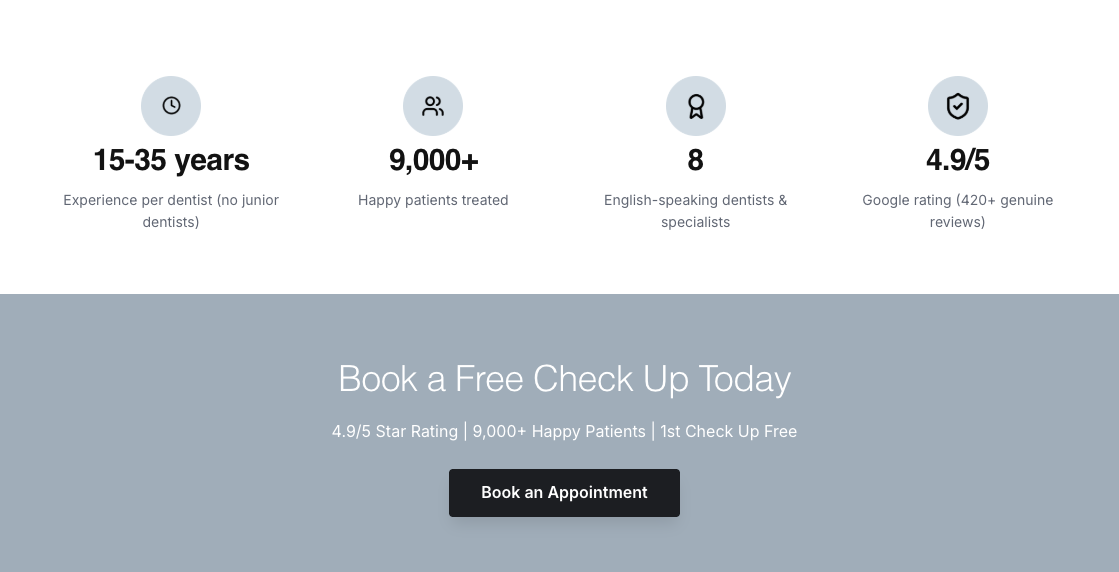
The team of English-speaking dentists, trained across Finland, New Zealand, Ireland, Portugal, and Spain, brings 15 to 35 years of experience each to every treatment plan. In-house technology including 3D CBCT scanning and a digital laboratory allows for precise diagnostics and consistent, natural-looking results. All major treatments are supported by a written guarantee policy that gives patients documented confidence in their investment. For patients comparing dental implants in Marbella or considering a full range of treatments, a consultation with the Rhdentalmarbella team is a straightforward, no-pressure starting point.
FAQ
Why do dental prices vary so much between clinics?
Price variation of 30 to 80% within the same city is common and reflects differences in overhead, material quality, dentist specialisation, technology, and what services are included in the quoted fee.
How do I make sure I am comparing quotes fairly?
Request fully itemised treatment plans from each clinic, specifying procedures, materials, and all included services. Quotes that lack this detail cannot be compared reliably.
What should I watch out for in unusually low quotes?
Clinics quoting significantly less than comparable providers may be excluding diagnostics, using lower-grade materials, or offering no guarantee. Suspiciously low prices are a documented risk factor in dental price comparison.
Does insurance always reduce my costs?
Not automatically. Annual maximum limits and deductibles mean that out-of-pocket costs can remain significant even with coverage. Confirm your network status and plan limits before assuming a particular level of benefit.
Is a written guarantee worth paying more for?
Yes. A written guarantee covering retreatment or complications can save considerably more than its cost differential over the life of the treatment, particularly for implants, crowns, and multi-stage restorations.